
New sh100m WASH facility targets menstrual-related absenteeism in Abim
The new facility, according to Omara, is therefore intended not simply as a sanitation improvement but as an intervention to reduce the amount of learning lost by girls because they cannot comfortably manage menstruation at school.
The WASH facilities commissioned by Absa Bank & World Vision included water points for the pupils. (Courtesy photos)
________________
Girls at Kanu Primary School in Abim district who previously went home or missed lessons during their menstrual periods now have a dedicated changing and washing facility intended to help them remain in class.
The sh100m water, sanitation and hygiene (WASH) intervention, commissioned on August 20, 2026, by World Vision Uganda in partnership with Absa Bank Uganda, is targeting schools in the area.
The facility includes girls' changing rooms, showers, toilets, water, beds for girls who experience menstrual pain, space for hygiene-related materials, emergency uniforms and reusable sanitary pads made by pupils following training by World Vision.
A separate five-stance washroom with water infrastructure has also been constructed at Arembwola Primary School. The two facilities are expected to benefit more than 3,519 learners.
The intervention comes against a background of significant absenteeism linked to menstrual hygiene challenges among girls at Kanu. The school headteacher, Gideon Omara, said some girls have missed school during menstruation because of inadequate water, privacy and sanitation.
“Most girls have dropped out due to menstruation,” he said, adding that about 50 girls could be absent during their periods but later return to school.
Omara noted that at least 10 girls had failed to return for the second term before the new facility was constructed. For girls who remained in school, the absence of adequate water also affected the time available for learning.
“Girls lost learning time because of water shortages, and we’ve been losing nearly two hours a day for the girl child since some girls arrived late after collecting water from distant sources, resulting in learning starting late.”
The school currently has about 1,010 pupils in attendance, including 514 girls and approximately 306 adolescent girls.
Pupils at Kanu Primary School perform a skit on breaking the stigma around Menstrual Hygiene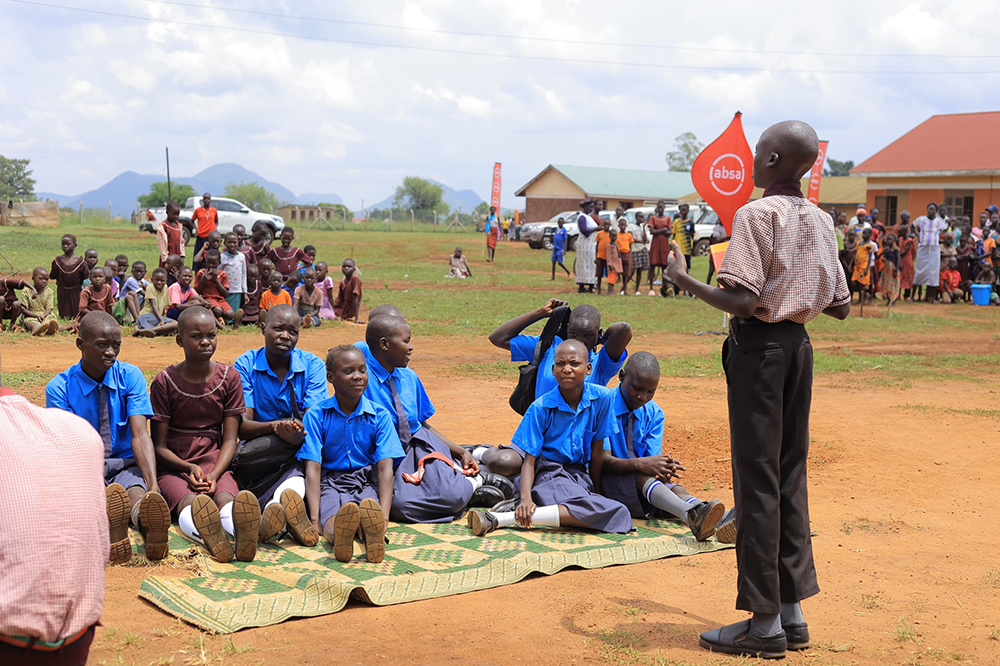
The new facility, according to Omara, is therefore intended not simply as a sanitation improvement but as an intervention to reduce the amount of learning lost by girls because they cannot comfortably manage menstruation at school.
Meanwhile, Felista Mary Acayo, a Primary Seven pupil at Kanu, said girls previously feared being laughed at by boys when they stained their clothes or needed to manage their periods at school and would miss lessons because they feared embarrassment.
“Now we have privacy. We have also restored our dignity and confidence,” she said.
Girls stayed home until the bleeding stopped
Janet Akongo, the school's senior woman teacher, said before the facility was built, some girls went home when their periods began and stayed there until the bleeding stopped.
“Once a girl child gets into that menstruation period, she tends to go back home in fear of these boys laughing at them,” she said.
Akongo added that girls who remained at school sometimes changed in bathrooms, dormitories or latrines, where they lacked privacy.
“Water shortages also compounded the problem, and when the borehole breaks down, it's a challenge again,” she explained.
The new facility is expected to provide girls with a private place to change and wash, while those experiencing menstrual pain can rest before returning to class.
Working together
World Vision Uganda national director Jeremiah Nyagah said the organisation chose to work in Abim because of the challenges facing children in the district and the wider Karamoja region, including poverty and school dropout.
“We could not address these challenges alone, and we have partnered with Absa Bank Uganda for similar interventions in the last three years.”
Nyagah noted that Absa contributed through its fundraising initiative to support the project, which also includes water infrastructure, sanitation facilities and hygiene training.
“The programme had reached more than 6,000 children and community members in districts, including through training in making reusable sanitary pads, soap and other hygiene products, and we hope to extend these services in more hard-to-reach areas.”
The intervention extends beyond Kanu.
Absa Bank Uganda managing director David Wandera said the initiative was aimed at removing practical barriers that can keep girls out of school.
“Keeping a girl in school sometimes means addressing practical challenges that are easy to overlook,” he noted.
Wandera explained that lack of water, sanitation and privacy could translate into missed school days, missed lessons and, eventually, dropout.
The money for the project was raised through Absa's 7 Hills Run, which the bank says has supported interventions including scholastic materials, bicycles for girls travelling long distances, assistive devices, support for young mothers returning to education, menstrual hygiene and WASH facilities.
The latest intervention builds on earlier work by the two organisations in Abim.
In 2024, they commissioned a borehole and changing-room facility at Awach Primary School, which benefited more than 5,700 people, including nearly 900 girls.
District education officer Charles Dickens Owiny said schools still lacked adequate classrooms and other facilities despite government support and interventions by development partners.
“If you move all over to our schools right now in Abim, you will realise that we still have serious gaps with infrastructural development.”
The district has also been grappling with dropout linked to food insecurity, child labour, early pregnancy and early marriage.
William Adiama, the Abim resident district commissioner, urged communities to protect the new facility and encourage children to remain in school.
“Why should our children be dropping out of school?” he asked.
The WASH challenge is particularly significant in Karamoja.
The 2025/26 Uganda WASH Sector Budget Brief shows that 60.2 per cent of households in the region lack access to a sanitation facility, compared with 6.7 per cent nationally.
For Kanu's girls, the immediate hope is that managing menstruation will no longer require leaving the classroom because the new facility addresses a barrier they have long had to confront in silence.
Acayo, who now wants to become a nurse, believes the facility will help girls remain at school because they can now change and clean themselves privately.