
Uganda, Italy launch 12.75m euros initiative to transform healthcare in Northern
Over 36 months, from July 2026 to June 2029, the project will operate in 11 districts across West Nile, Acholi, Lango and Karamoja, with more than half a million people expected to benefit directly.
Second Deputy Prime Minister Dr Crispus Kiyonga said the programme was timely because most Ugandans live in rural areas, where healthcare delivery must account for distance, mobility and difficult terrain. (Courtesy photos)
________________
For a pregnant woman in rural Karamoja, reaching a health facility can mean travelling across vast, dry plains. In the mountainous communities of the Kigezi highlands, a sick child may have to be carried along steep ridges before receiving medical attention.
For many families in underserved parts of Uganda, the distance between illness and treatment is measured not only in kilometres but also in time, money and the availability of transport.
A new partnership between Uganda and Italy is seeking to narrow that gap, with a €12.75 million investment in maternal and child health, cancer prevention and treatment, and the strengthening of healthcare services in northern Uganda.
The initiative, known as the Prevention, Research and Integrated Services for Maternal, Child and Cancer Health project, or PRISMA, was launched in Kampala. Funded by the Italian Ministry of Foreign Affairs and International Cooperation through the Italian Agency for Development Cooperation, the programme is led by the University of Milano-Bicocca.
Over 36 months, from July 2026 to June 2029, the project will operate in 11 districts across West Nile, Acholi, Lango and Karamoja, with more than half a million people expected to benefit directly.
Its objectives extend beyond improving access to medical care. The programme will strengthen maternal, newborn and child health services, improve cancer prevention and screening, and expand pathways for diagnosis and treatment, particularly for women and children.
It will also invest in training, research and coordination across the health sector. Infection prevention and control, alongside more responsible antibiotic use, will form part of the effort to reduce avoidable complications and improve patient safety.
The partnership brings together Gulu University, the Uganda Cancer Institute, AVSI Foundation, Doctors with Africa CUAMM, the Dr Ambrosoli Memorial Hospital Foundation and the Piero and Lucille Corti Foundation. Activities will involve hospitals, health centres and midwifery schools.
A health system under growing pressure
Health Minister Dr Chris Baryomunsi welcomed the programme, describing maternal health, child health and cancer as urgent national priorities.
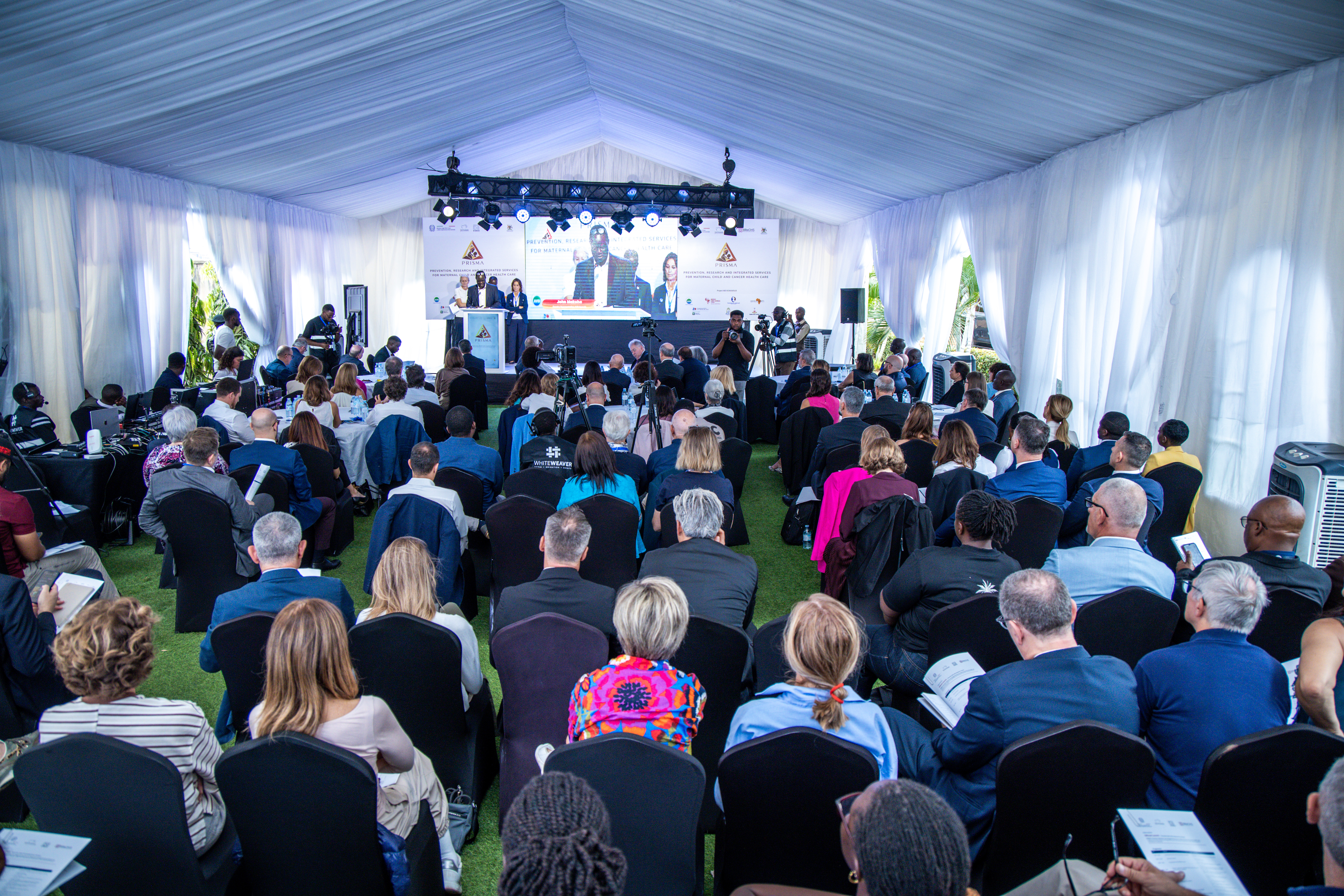
He said Uganda was confronting a double burden of disease: infectious illnesses such as malaria and tuberculosis remained widespread even as noncommunicable diseases, including cancer, diabetes and hypertension, continued to increase.
The pressure is compounded by population growth. Uganda's population is expanding by approximately 3.2 per cent annually, while the fertility rate stands at about 5.2 children per woman, increasing demand for services, particularly those serving mothers and young children.
“Nobody should die when they are giving birth,” he said, adding that Uganda must continue working towards eliminating preventable maternal deaths.
The challenge is particularly acute in rural communities, where the availability of healthcare is often shaped by geography, transport and the ability of families to reach facilities in time.
Second Deputy Prime Minister Dr Crispus Kiyonga said the programme was timely because most Ugandans live in rural areas, where healthcare delivery must account for distance, mobility and difficult terrain.
He pointed to Karamoja, where families sometimes move in search of water during drought, making it difficult for health workers to maintain immunisation schedules and follow up with patients.
In mountainous areas, poor roads create additional obstacles, particularly for households that need urgent medical attention.
Connecting communities to hospitals
For AVSI Foundation, one of the organisations supporting implementation, the central concern is ensuring that access to healthcare does not depend on a person's income or geographical location.
Country Representative John Makoha said quality healthcare should be available regardless of where people live, their financial circumstances or their ability to navigate the health system.
He said PRISMA would strengthen connections between community health workers, local health facilities and referral hospitals, helping patients move between levels of care without being lost along the way.
That approach is particularly important for patients whose conditions require specialised diagnosis and treatment, including those suspected of having cancer.
The programme will focus on cervical and breast cancers among women and Burkitt lymphoma among children, supporting screening, early diagnosis and referral.
The Uganda Cancer Institute will contribute technical expertise, helping health facilities improve screening guidelines, diagnostic pathways and access to laboratory services.
Dr Nixon Niyonzima, representing the institute, said screening would have little value if patients could not subsequently access treatment.
Under the programme, samples collected at facilities without laboratory capacity will be referred to centres with pathology services, helping patients obtain the diagnostic services they need.
The emphasis on connecting screening to diagnosis and treatment reflects a broader challenge in cancer care: identifying a suspected illness is only the beginning if patients cannot access the next stage of care.
Beyond immediate improvements in service delivery, PRISMA is intended to strengthen the country's capacity to manage its health challenges long after the project ends.
Gulu University and the University of Milano-Bicocca will deepen academic cooperation, bringing together clinical practice, research and health data to address problems emerging from local communities.
One of the programme's notable initiatives is Gulu University's development of a Master of Science in Cancer Epidemiology, which university representatives describe as the first programme of its kind in Africa.
The course is intended to train professionals to study patterns of cancer, understand the factors contributing to its spread and strengthen prevention strategies.
Dr Amos Deogratius Mwaka, dean of Gulu University's medical faculty, said the initiative would help build a stronger local response to cancer.
He recalled cycling from Kitgum to Kalongo Hospital in 1991 to seek medical treatment, an experience that illustrated the difficulties faced by people living far from specialised health services.
His account reflects a problem the programme hopes to address: ensuring that access to medical expertise is not determined by how far a patient lives from a major hospital.
A partnership with a longer history
Italy's involvement in Uganda's health sector builds on decades of cooperation.
Italy's Ambassador to Uganda, Mauro Massoni, said PRISMA represented a new chapter in more than six decades of collaboration between the two countries.
He cited St Mary's Hospital Lacor in Gulu, Dr Ambrosoli Memorial Hospital in Kalongo and Matany Hospital in Karamoja as examples of the contribution Italian partners have made to Uganda's healthcare system.
Giuseppe Gorini, Vice-Rector for International Development and Academic Cooperation at the University of Milano-Bicocca, said universities had an important role in bringing education, research, healthcare and innovation together in service of human dignity.
The Ministry of Health will oversee the programme, with monitoring mechanisms intended to track implementation and progress.
But the project's longer-term value will depend on whether the systems and expertise it establishes can survive beyond the funding period. Organisers say sustainability will require stronger local institutions, trained health workers and partnerships capable of continuing the work after external support ends.
For communities across northern Uganda, the measure of success will be found in ordinary but consequential encounters with the health system: a pregnant woman receiving antenatal care without travelling prohibitively long distances, a child reaching treatment earlier, or a patient with suspected cancer moving from screening to diagnosis and treatment without unnecessary delays.
The €12.75 million investment will run for three years. Whether its impact lasts longer will depend on what remains when the programme closes in June 2029: the health workers it trains, the referral networks it strengthens and the local institutions equipped to carry its work forward.