
Government readies 3.3 million mosquito nets for Kampala, Wakiso
The three-day exercise, scheduled for November 20 to 22th will see Kampala receive 1,168,700 mosquito nets to cover an estimated two million people, while Wakiso will get 2,216,300 nets targeting approximately 3.9 million residents.
Dr Richard Kabanda, the Commissioner for Health Promotion, Education and Communication at the Ministry of Health, said the distribution was intended to extend malaria prevention services to vulnerable urban communities, including residents of informal settlements. (Credit: Nancy Nanyonga)
KAMPALA - The Ugandan government is set to distribute more than 3.3 million mosquito nets to households in Kampala and Wakiso to protect nearly six million people, particularly low-income urban residents who cannot afford to buy them.
The three-day exercise, scheduled for November 20 to 22th will see Kampala receive 1,168,700 mosquito nets to cover an estimated two million people, while Wakiso will get 2,216,300 nets targeting approximately 3.9 million residents.
Dr Richard Kabanda, the Commissioner for Health Promotion, Education and Communication at the Ministry of Health, said the distribution was intended to extend malaria prevention services to vulnerable urban communities, including residents of informal settlements.
He said Kampala and Wakiso were scheduled for the final phase of the national distribution campaign because of the logistical challenges of urbanisation and their relatively lower malaria burden compared with other parts of the country.
“Kampala and Wakiso have many urban poor people who are not able to buy mosquito nets on their own. So the government, with support from partners, once again is here to provide that support,” Kabanda said during a press briefing at the Uganda Media Centre on November 17th.
The exercise, which marks the fifth and final wave of the 2026 national mosquito net distribution campaign, will be implemented through 32 operational units, comprising five administrative divisions in Kampala and 27 units in Wakiso.
The Ministry has organised the distribution around administrative divisions, town councils and sub-counties to address the complex settlement patterns in the two urban districts, including gated communities, informal settlements and fishing communities.
Kabanda said Village Health Teams (VHTs) would inform residents of the specific dates and locations for collecting the nets in their respective villages.
In 2025, Uganda recorded more than 11.7 million malaria cases and 2,342 deaths, with children below five years accounting for more than 55% of the fatalities.
Kabanda said the figures demonstrated the importance of continuing prevention interventions, particularly for vulnerable groups such as young children and pregnant women.
He said properly used mosquito nets could break malaria transmission by 50 per cent, reduce illness and deaths by 25 per cent and lower childhood mortality by up to 25 per cent.
“Malaria remains our biggest public health threat in the country. What is also sad is that many of our people still take malaria not seriously, even though many of us fall sick more regularly, and we are also losing many people in our country,” he said.
In January, the government distributed 3.4 million nets across 20 districts, followed by 4.8 million in April across 32 districts. Another 4.2 million were distributed in May, while 5.4 million were distributed during the fourth wave in October, according to Kabanda.
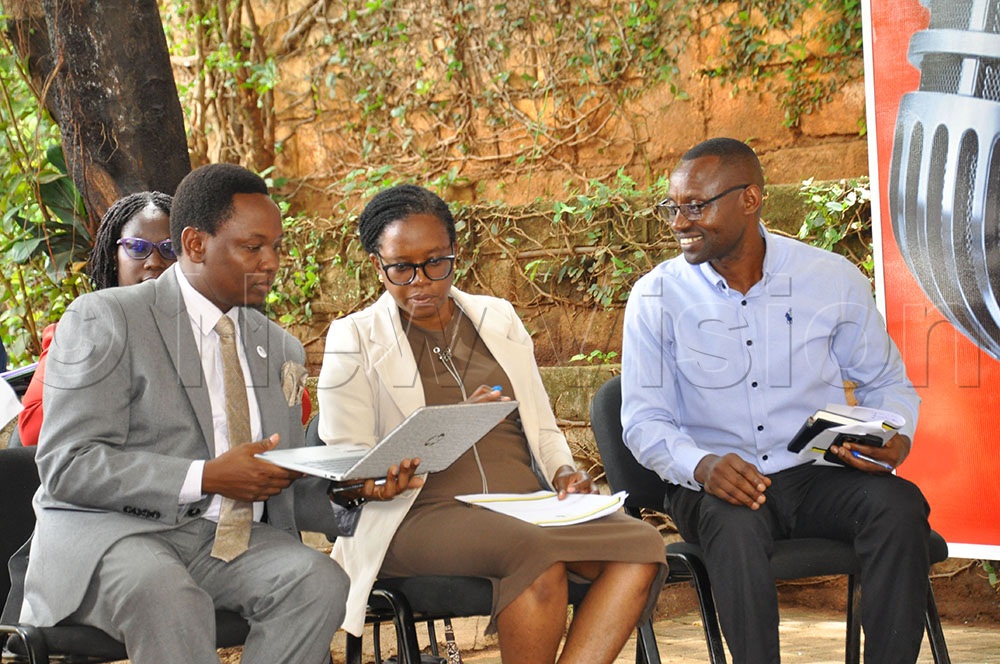
In January, the government distributed 3.4 million nets across 20 districts, followed by 4.8 million in April across 32 districts. Another 4.2 million were distributed in May, while 5.4 million were distributed during the fourth wave in October, according to Kabanda. (Credit: Nancy Nayonga)
Urban malaria prevention
Although Kampala and Wakiso have a relatively lower malaria burden than several other parts of the country, health officials say residents remain exposed to mosquito bites, particularly in densely populated and low-income communities.
The Ministry said the decision to distribute the nets in the two areas was also informed by the difficulties some urban households face in purchasing their own protection.
Residents have also been advised to hang the nets in a shaded area for 24 hours before installing them over their beds.
Dr Catherine Maiteki Sebuguzi, the Deputy Programme Manager at the National Malaria Elimination Division, has previously emphasised the importance of community involvement in reducing malaria transmission
She said households needed to eliminate mosquito breeding sites, including stagnant water, bushes and discarded containers around homes.
“Everyone has a role to play towards achieving a malaria-free Uganda,” Sebuguzi said.
Beyond mosquito nets
Health experts say mosquito nets remain an important malaria prevention intervention, but their effectiveness depends on consistent use and combining them with other measures, including early diagnosis, prompt treatment, vaccination and environmental management.
Dr Jane Achan, a senior scientist at the Infectious Diseases Research Collaboration and a member of the World Health Organisation’s Malaria Vaccine Implementation Programme, said recurrent malaria infections could occur when parasites survive treatment and multiply again or when a person is bitten by another infected mosquito.}
She said severe malaria should be treated as an emergency and urged health workers to ensure patients are properly tested and receive appropriate medicines promptly.
Achan also encouraged parents to ensure eligible children receive recommended malaria vaccines, stressing that vaccination should complement rather than replace mosquito nets and other established prevention measures.