
Uganda Cancer Society seek Sh1b for mobile screening van
“We receive patients presenting with late-stage cancer. One of the reasons is the lack of access to cancer diagnostic facilities in different parts of the country, especially in rural areas,” Dr Alfred Jatho, Head Community Cancer Services at Uganda Cancer Institute (UCI), revealed on Tuesday.
The Managing Director of Centenary Bank, Godfrey Byekwaso, committed support for the initiative. The partnership, he said, is part of the Bank's environmental, social and governance agenda, through which the bank allocates part of its annual profits to support health, education, community initiatives and environmental programmes. (Credit: Violet Nabatanzi)
KAMPALA - Uganda Cancer Society (UCS) hopes to raise Sh1 billion for a mobile cancer screening van.
The vehicle, equipped with different accessories, will improve access to early detection services across the country.
The initiative is aimed at making cancer screening, early detection and timely diagnosis more accessible in Uganda, particularly for vulnerable and underserved populations.
“We receive patients presenting with late-stage cancer. One of the reasons is the lack of access to cancer diagnostic facilities in different parts of the country, especially in rural areas,” Dr Alfred Jatho, Head Community Cancer Services at Uganda Cancer Institute (UCI), revealed on Tuesday.
He explained that the mobile van, equipped with different screening facilities, will have medical teams to traverse various districts, screen people and identify suspected cancer cases early.
Those requiring further investigations will be referred to regional cancer centres for confirmatory diagnosis and treatment.
At the Cancer Early Detection Fund Breakfast meeting at Four Points by Sheraton on November 17th, Jatho said the van will initially focus on some of the most common cancers in Uganda, including breast, cervical and prostate cancers.
It will have facilities for breast cancer screening, cervical cancer screening and a laboratory workstation for tests related to prostate cancer. “Whether you are a man or a woman in the eligible age group for screening, we shall be able to attend to you,” Jatho said.
He added that the van will also have a doctor and other specialists, including radiographers and radiologists, who will help address other cancer-related needs identified in the communities.
Jatho said cancer screening is important because many cancers, particularly in adults, rarely present noticeable signs and symptoms during their early stages.
He explained that symptoms often become apparent when the disease has already advanced, making treatment more difficult.
He said early detection increases the chances of successful treatment and cure while reducing the financial burden associated with managing advanced cancer.
Jatho noted that Ugandans who travel abroad for cancer treatment spend an average of Sh300m during one year of active treatment.
He said published studies and cost estimates also put the cost of cancer treatment abroad at between Sh300m and Sh400m, although treatment in Uganda is relatively cheaper.
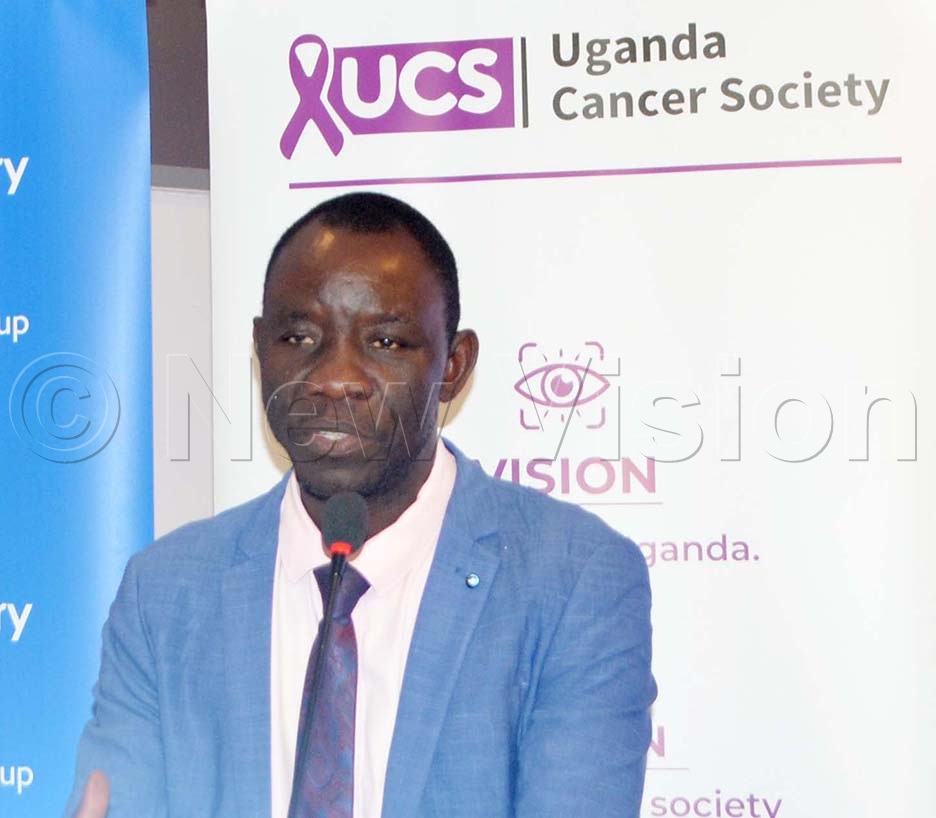
At the Cancer Early Detection Fund Breakfast meeting at Four Points by Sheraton on November 17th, Jatho said the van will initially focus on some of the most common cancers in Uganda, including breast, cervical and prostate cancers. (Credit: Violet Nabatanzi)
Statistics
Uganda is estimated to record 29,966 new cancer cases and 18,205 cancer deaths.
Richard Baguma Tinkasimire, the Chairperson of the Uganda Cancer Society Board of Directors, said cancer diagnosis is more complicated than testing for common infectious diseases and requires specialised equipment, reagents, supplies and trained personnel.
He said the society wants to take screening services closer to communities because many people, particularly those in rural areas, cannot afford the cost of travelling to facilities offering cancer diagnosis and treatment.
He noted that most specialised cancer services are concentrated at the Uganda Cancer Institute in Kampala and a few regional centres
Baguma said early diagnosis makes treatment cheaper and increases the chances of survival.
“When you test early and find that you have cancer while it is still in the early stages, it is way cheaper and a lot easier for you to survive,” he said.
The Managing Director of Centenary Bank, Godfrey Byekwaso, committed support for the initiative. The partnership, he said, is part of the Bank's environmental, social and governance agenda, through which the bank allocates part of its annual profits to support health, education, community initiatives and environmental programmes.
He said bringing screening services closer to communities was an important and practical intervention because access remains one of the biggest barriers to early detection.
Byekwaso called for increased investment in awareness, prevention, early detection, treatment and compassionate care for people affected by cancer.
To kick-start the fundraising drive, Centenary Bank committed Sh50m towards the acquisition of the mobile screening van.
“I am pleased to reaffirm Centenary Bank's commitment to this important cause. To start this journey, the bank is committing Sh50m towards this fund, and we are proud to stand with the Uganda Cancer Society and other partners in this initiative,” Byekwaso said.