
Ebola: Uganda to deploy 40 health workers to DR Congo
The deployment comes as Uganda's Ebola caseload rose to 19 confirmed infections on June 5, including 13 active cases, two deaths and four recoveries. Across the border, the DRC has recorded 363 confirmed cases and 62 deaths from the Bundibugyo strain of Ebola, according to figures released by Congolese authorities.
Dr Atwiine in a group photo with a delegation from the Consulate of the Democratic Republic of Congo and representatives of the Congolese Community in Uganda on June 5, 2026. (Courtesy: MoH)
______________
Uganda is set to deploy at least 40 medical experts and a technical response team to the Democratic Republic of Congo (DRC) in the first phase of a cross-border Ebola response aimed at containing the outbreak at its source, the Ministry of Health has announced.
The deployment comes as Uganda's Ebola caseload rose to 19 confirmed infections on June 5, including 13 active cases, two deaths and four recoveries. Across the border, the DRC has recorded 363 confirmed cases and 62 deaths from the Bundibugyo strain of Ebola, according to figures released by Congolese authorities.
Health officials said the outbreak in eastern DRC is increasingly driving infected patients across the border into Uganda seeking treatment, creating additional challenges for surveillance and containment efforts.
The planned deployment marks one of Uganda's most direct interventions in a neighbouring country's Ebola response and reflects growing concern that continued transmission in eastern DRC could fuel further imported cases.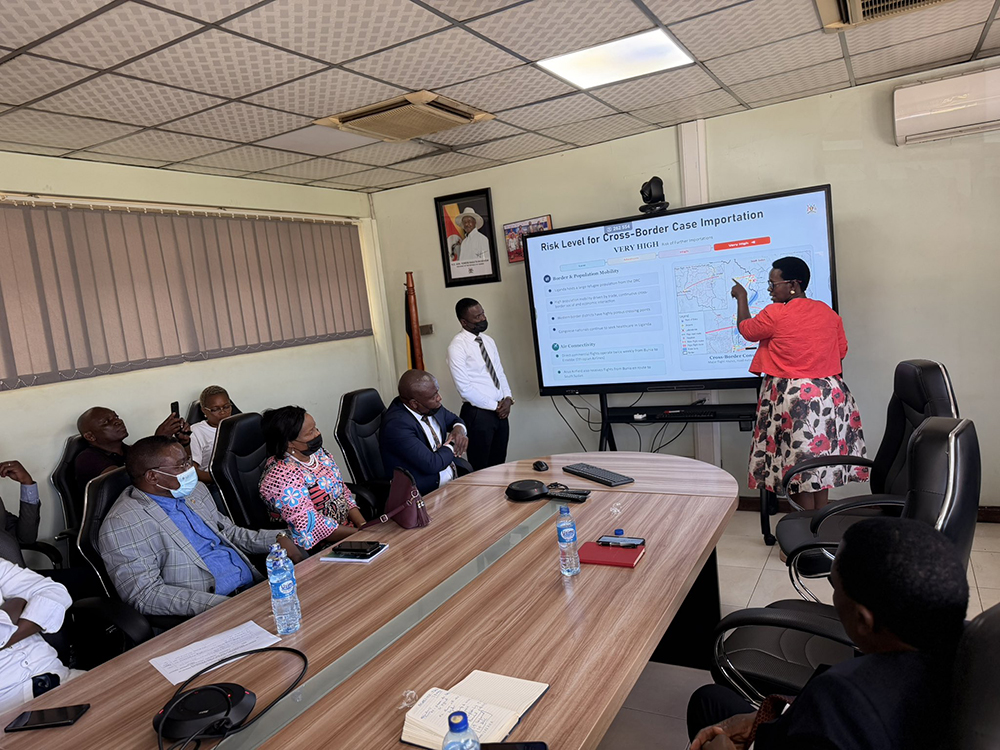
Dr Diana Atwiine interacting with a delegation from the Consulate of the Democratic Republic of Congo and representatives of the Congolese Community in Uganda. (Courtesy: MoH)
On Friday, Permanent Secretary Diana Atwine said Uganda had decided to support the response inside the DRC after consultations with Congolese authorities, arguing that controlling the outbreak at its source would offer the most effective protection for both countries.
According to Atwine, the majority of the recent Ebola patients detected in Uganda travelled from the DRC in search of medical care, exposing fellow passengers and communities along their routes and creating a complex contact-tracing burden for response teams. She said helping strengthen case management and surveillance in eastern Congo would reduce the need for patients to undertake long journeys into Uganda.
As part of the intervention, Uganda plans to establish a diagnostic laboratory inside eastern DRC to speed up Ebola testing and reduce delays in confirming suspected cases. Dr Atwine observed that faster testing will help break chains of transmission in areas where health services are under pressure from the growing number of infections.
“We are going to set up a laboratory inside DRC. If we can test quickly, because the numbers there are overwhelming and the affected area is very large, we shall be able to reduce the spread of infection,” Atwine said.
“We will be able to reduce the duration of this epidemic in both countries if we go to the other side rather than waiting. It will also help us prevent people from travelling long distances from DRC to Uganda seeking care and causing more infections here because they come through taxis and pass through border points,” she said.
“That movement creates a lot of work for us because we have to track all those contacts,” she added.
Dr Atwine did not disclose the source of funding, nor the amounts needed for the emergency interventions in DRC. She, however, said that the Ministry of Finance will soon release funds to facilitate the deployment, while the government continues discussions with development partners expected to support the operation.
“We are going to put in some money because we cannot predict exactly how much support we are likely to receive from partners willing to support us. We met them yesterday and shared our plans, and I believe they will support this intervention,” Atwine said.
The deployment comes as Uganda intensifies measures to prevent local transmission of the virus. Authorities have already suspended passenger movement across parts of the Uganda-DRC border while maintaining cargo operations under strict screening procedures.
Meanwhile, the government has strengthened surveillance, laboratory testing and contact tracing across high-risk districts. Atwine said Ebola differs significantly from COVID-19 and does not require lockdowns or widespread closure of educational institutions.
“We shall continue with surveillance, testing, isolation and monitoring. If anyone develops symptoms, they should report immediately so that health teams can respond.”
On Friday, Dr Atwiine hosted a meeting with a delegation from the Consulate of the Democratic Republic of Congo and representatives of the Congolese Community in Uganda.
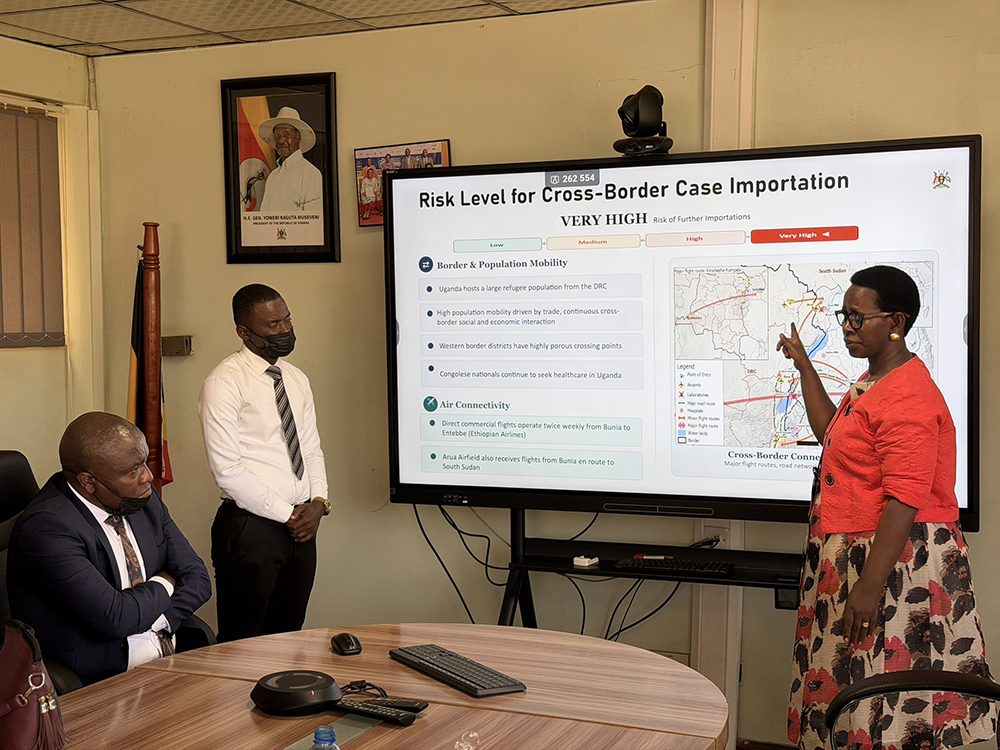
Dr Diana Atwiine interacting with a delegation from the Consulate of the Democratic Republic of Congo and representatives of the Congolese Community in Uganda whom she hosted on June 5, 2026. (Courtesy: MoH)
A post on the ministry's social media X states that the engagement was "to provide an update on the current Ebola situation, provide accurate information and also garner the group's support in dispelling myths and misconceptions surrounding the disease".
The Bundibugyo strain of Ebola causes symptoms including high fever, severe headache, fatigue, muscle and joint pain, sore throat and loss of appetite. Patients may later develop vomiting, diarrhoea and internal or external bleeding.