
Uganda, South Sudan leaders seek joint action on border guns, land disputes
Speaking during a cross-border meeting on October 15, 2026, at Pogee in South Sudan, the Lamwo Resident District Commissioner (RDC), William Komakech, said the continued presence of illegal firearms in border areas, particularly Agoro, Aswa and Maleso, remained a security concern requiring coordinated intervention by authorities from both countries.
Komakech said border security could not be addressed effectively through isolated efforts, calling for stronger cooperation between Ugandan and South Sudanese authorities to deal with challenges affecting communities on both sides. (Credit: Vincent Kaguta)
Leaders from Uganda and South Sudan have called for joint action to address illegal firearms, land-related concerns and security challenges along their shared border, warning that unresolved disputes could undermine peaceful co-existence and cross-border development.
The leaders said sustained dialogue, coordinated security operations and consultations with local communities were necessary to prevent misunderstandings and strengthen relations between the neighbouring countries.
Speaking during a cross-border meeting on October 15, 2026, at Pogee in South Sudan, the Lamwo Resident District Commissioner (RDC), William Komakech, said the continued presence of illegal firearms in border areas, particularly Agoro, Aswa and Maleso, remained a security concern requiring coordinated intervention by authorities from both countries.
He warned that the movement of illegal guns across the border could fuel insecurity and threaten the safety of residents, urging security agencies to work together to prevent armed violence and promote peaceful co-existence.
Komakech said border security could not be addressed effectively through isolated efforts, calling for stronger cooperation between Ugandan and South Sudanese authorities to deal with challenges affecting communities on both sides.
He also urged South Sudanese officials to maintain regular engagement with their Ugandan counterparts to ensure that security concerns were discussed and addressed through established channels.
The RDC noted that an earlier meeting organised in Uganda had not proceeded as expected because the South Sudanese official, who was scheduled to lead the delegation, did not attend.
He expressed hope that future engagements would receive the necessary attention from both governments to strengthen coordination and prevent disagreements from escalating.
South Sudan's Caretaker State Minister for Roads and Bridges in Eastern Equatoria State, Elia John Ahaji, cautioned against using force or threatening language when pursuing development initiatives, saying such approaches could create suspicion and strain relations between neighbouring communities.
Ahaji said disagreements should be resolved through dialogue and mutual understanding rather than coercion. He questioned the description of some border areas as 'no-man's land', arguing that the term should not automatically be interpreted to mean that local communities have no rights to the land.
The minister explained that the term was associated with areas where neither government exercises effective control for particular security purposes, rather than necessarily referring to unoccupied land.
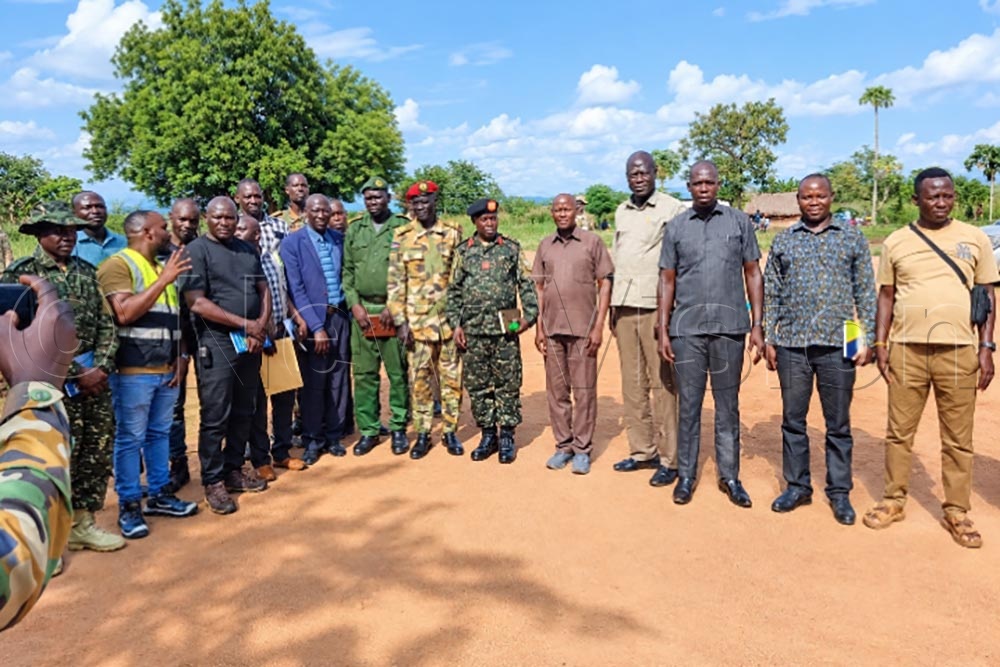
Lam said South Sudanese authorities wanted to work with their Ugandan counterparts to resolve concerns surrounding the proposed road extension, including issues relating to the initial denial of the contract to the South Sudanese side. (Credit: Vincent Kaguta)
He called for continued engagement between the two countries to clarify the issue and avoid misunderstandings that could affect residents and cross-border development projects.
The land concerns come as leaders from Uganda and South Sudan seek to advance infrastructure development intended to improve connectivity, trade and economic relations between border communities.
The proposed Kitgum–Ngomoromo border road and its planned extension towards Pogee and Pajok in South Sudan has been identified by local leaders as an opportunity to strengthen commercial links and improve the movement of people and goods.
However, leaders have stressed that the project should be implemented through consultations with local authorities, security agencies and affected communities to prevent disputes.
Magwi County Commissioner Francis Gabriel Lam called for community sensitisation and coordination with security agencies before road construction activities are undertaken.
He acknowledged Uganda's support towards refugees and facilitating the movement of vehicles involved in humanitarian operations, stressing the importance of cooperation between the two countries
Lam said South Sudanese authorities wanted to work with their Ugandan counterparts to resolve concerns surrounding the proposed road extension, including issues relating to the initial denial of the contract to the South Sudanese side.
He also said there was no rebel activity in Madi County and urged authorities on both sides to cooperate and avoid unnecessary security concerns that could affect development initiatives.
Lamwo district chairperson Oyet Sisto Ocen also called for peaceful co-existence between the two countries, citing the longstanding social and economic ties among Acholi communities living on both sides of the border.
Ocen urged residents to embrace entrepreneurship, trade and financial literacy to benefit from opportunities that could arise from improved road connectivity.
He said communities needed to develop business skills to participate meaningfully in cross-border commerce rather than depend entirely on traditional livelihoods.
The leaders' concerns highlight the need for clear communication between the two governments on border security, land-related questions and infrastructure development.
However, observers say that strengthening cooperation along the border will require more than statements of commitment.
Sustained dialogue, coordinated action against illegal firearms and clear mechanisms for addressing land-related concerns will be essential to protecting communities and ensuring that development initiatives serve their intended purpose.