
Uganda, Algeria toast to deepening relations
The partnership is already gaining momentum through trade in coffee and dairy products, with a renewed push for direct purchases of Ugandan coffee expected to improve market access for farmers and strengthen commercial ties between Kampala and Algiers.
L-R: Algeria’s Minister of State for Hydrocarbons and Mines and chief guest, Mohamed Arkab; Senator Mohamed Salah; Uganda’s Ambassador to Algeria, John Chrysostom Alintuma Nsambu; and other officials during celebrations to mark Uganda’s 64th Independence Anniversary in Algiers. (Courtesy)
_________________ Uganda’s Ambassador to Algeria, John Chrysostom Alintuma Nsambu (Second-right) with the Tanzania’s Ambassador to Algeria, Mobhare Matinyi (right) and other officials during celebrations marking Uganda’s 64th Independence Anniversary in Algiers. (Courtesy) Officers during celebrations to mark Uganda’s 64th Independence Anniversary in Algiers, Algeria. (Courtesy)
Uganda and Algeria are seeking to expand trade and economic cooperation, building on more than six decades of diplomatic relations and growing efforts to translate political goodwill into tangible benefits for their citizens.
The partnership is already gaining momentum through trade in coffee and dairy products, with a renewed push for direct purchases of Ugandan coffee expected to improve market access for farmers and strengthen commercial ties between Kampala and Algiers.
Uganda’s Ambassador to Algeria, John Chrysostom Alintuma Nsambu, highlighted the growing cooperation on Friday, October 9, 2026, during celebrations marking Uganda’s 64th Independence Anniversary in Algiers.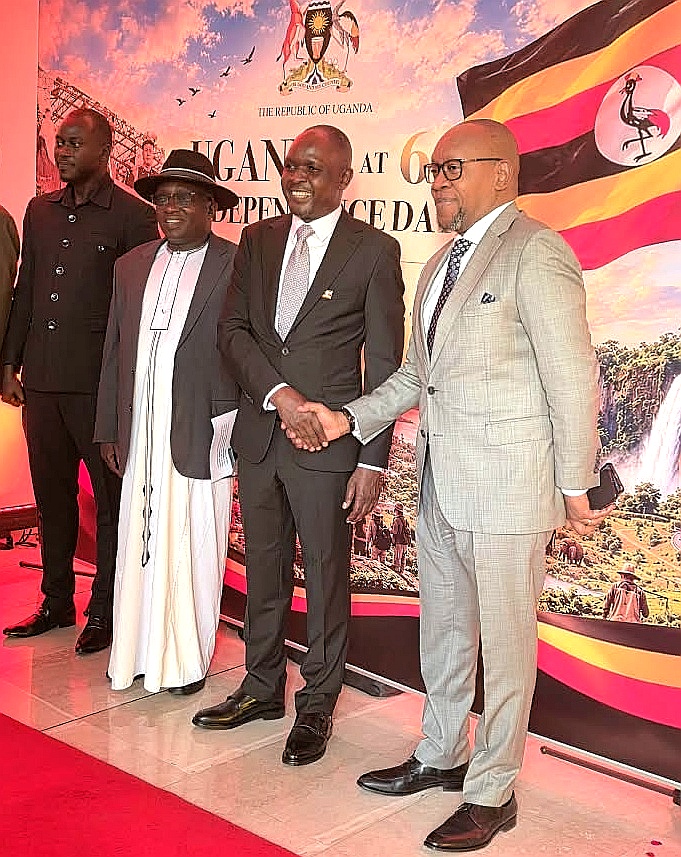
The event was presided over by Algeria’s Minister of State for Hydrocarbons and Mines, Mohamed Arkab, as chief guest. It also brought together diplomats, representatives of international organisations, Ugandans living in Algeria and other invited guests.
Nsambu cited Algerian President Abdelmadjid Tebboune’s directive for state-owned coffee importers to source Ugandan coffee directly from farmers, bypassing European intermediaries, as a significant step towards deepening economic cooperation.
The Envoy said the arrangement would enable Ugandan coffee growers to retain a greater share of the value generated by their produce, potentially improving household incomes while strengthening access to the Algerian market.
In September 2025, Uganda’s Ministry of Foreign Affairs reported that Algeria had received 400 tonnes of Ugandan powdered milk, while four Ugandan companies were engaged in coffee-sector cooperation.
“Uganda and Algeria have maintained warm and cordial relations for over six decades; these ties continue to strengthen, as evidenced notably by frequent high-level visits between our respective capitals,” Nsambu said.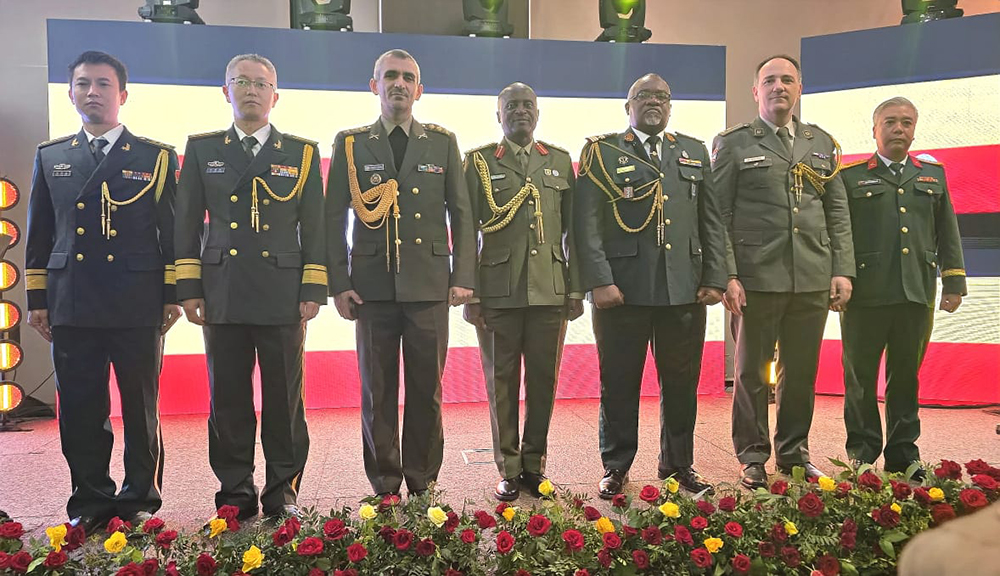
A partnership rooted in African solidarity
Their relationship has since been shaped by Pan-African solidarity, cultural connections and shared positions on selected international issues.
Nsambu said the two countries shared respect for African traditions and values, alongside common positions on Western Sahara and support for a two-state solution to the Israeli-Palestinian conflict.
He added that Uganda’s membership in the Organisation of Islamic Cooperation had provided another avenue for strengthening relations between the two peoples.
In March 2023, President Yoweri Museveni visited Algeria for talks with President Tebboune aimed at strengthening political and economic cooperation.
Further engagements have focused on agriculture, trade and security.
In January 2025, Museveni met Algeria’s then Minister of Agriculture and Rural Development, Youcef Cherfa, in Kampala to explore commercial opportunities, including coffee and milk exports.
Later that month, a Ugandan military delegation led by Chief of Defence Forces (CDF) Gen. Muhoozi Kainerugaba visited Algeria for discussions on defence cooperation, including a proposed agreement between the two countries’ armed forces.
The exchanges reflected efforts by both countries to broaden bilateral relations beyond diplomatic engagement into practical cooperation across strategic sectors.
Scholarships strengthen people-to-people ties
Human-resource development remains another important pillar of the relationship, with Algeria supporting Ugandan students through scholarships and providing professional training opportunities.
Nsambu thanked the Algerian government and people for their contribution to Uganda’s human-resource development, saying more than 500 Ugandan students had benefited from Algerian scholarships at undergraduate and postgraduate levels.
He also commended Algeria for training members of Uganda’s security sector, describing the support as valuable to the country’s development.
Sports diplomacy ahead of AFCON 2027
Sport is also emerging as a channel for strengthening bilateral relations and encouraging people-to-people engagement.
Nsambu cited the 2025 African Nations Championship (CHAN), hosted in Kampala, and Algeria’s hosting of Uganda’s national football team for a World Cup qualifying match in Tizi Ouzou as examples of sporting exchanges between the countries.
Uganda is preparing to co-host the 2027 Africa Cup of Nations (AFCON) with Kenya and Tanzania, an undertaking expected to create further opportunities for regional cooperation and international engagement.
Reaffirming Uganda’s readiness to host the continental tournament, Nsambu said the country would welcome Algeria’s team and supporters if the tournament draw placed the two nations in the same group.
“Uganda is ready!” he declared.
Such encounters, he suggested, could strengthen sporting links while bringing the two populations closer through shared experiences beyond formal diplomatic channels.
Independence as a commitment to development
Reflecting on Uganda’s independence, Nsambu described the anniversary as both a celebration of freedom and a reminder of the responsibility to safeguard its achievements.
“Independence Day is both a moment of commemoration and a solemn commitment,” he said, calling for vigilance, fairness and responsibility.
He acknowledged that Uganda’s first two decades of independence were marked by political turmoil and economic decline, before the National Resistance Movement government came to power in 1986 under Museveni.
Nsambu cited average annual economic growth of about five per cent since then as evidence of progress, while emphasising the need to ensure that development translates into meaningful improvements in citizens’ lives.