
Gen. Muhoozi calls on African militaries to adapt to emerging security threats
For Uganda, Kainerugaba said the broader objective is to develop professional, adaptable and technologically capable armed forces capable of protecting national sovereignty while contributing to peace, stability, prosperity and human security.
The Chief of Defence Forces (CDF), Gen. Muhoozi Kainerugaba in attendance at the African Defence Chiefs Conference at Speke Resort Munyonyo in Kampala on Thursday, October 8, 2026. (Credit: Mpalanyi Ssentongo)
____________________ President Yoweri Museveni addresses military delegations from more than 18 countries during the African Defence Chiefs Conference at Speke Resort Munyonyo in Kampala on Thursday, October 8, 2026. (Credit: Mpalanyi Ssentongo) The Chief of Defence Forces (CDF), Gen. Muhoozi Kainerugaba making remarks at the conference. (Credit: Mpalanyi Ssentongo)
The Chief of Defence Forces (CDF), Gen. Muhoozi Kainerugaba, has called for a broader understanding of the role of African armed forces, saying modern security challenges increasingly require militaries to operate beyond traditional combat missions.
Speaking at the African Defence Chiefs Conference at Speke Resort Munyonyo in Kampala on Thursday, October 8, 2026, Kainerugaba said armed forces are increasingly being called upon to support law enforcement, provide humanitarian assistance, respond to disasters, provide maritime security, manage emergencies and participate in international cooperation.
The four-day (October 5-8) conference on Military Operations Other Than War (MOOTW) concludes today (October 8) with President Yoweri Museveni addressing military delegations from over 18 countries.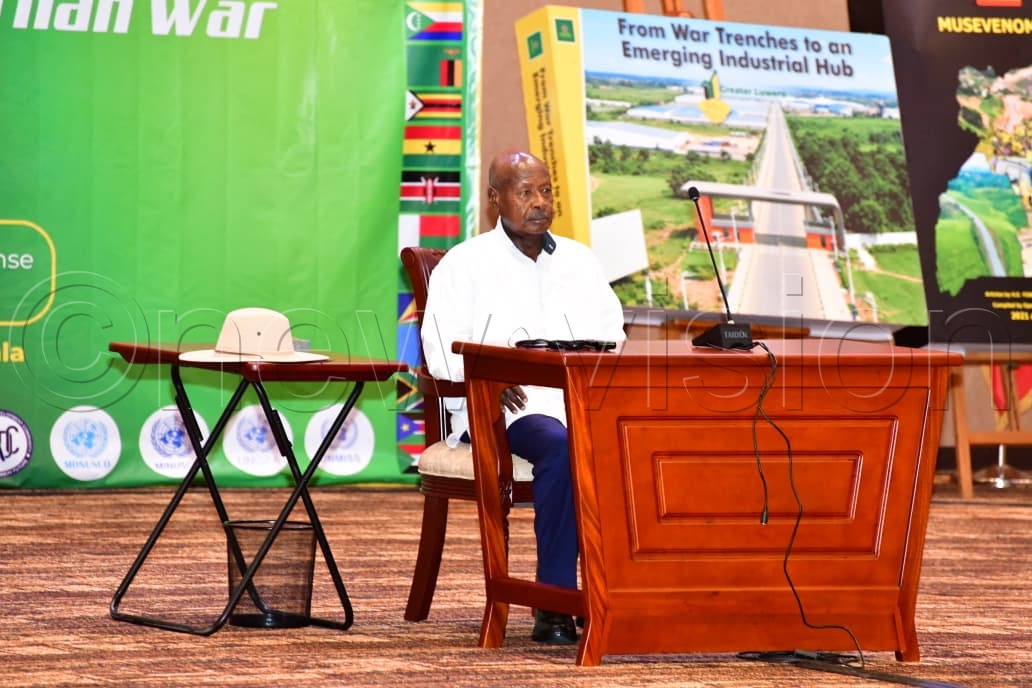
Kainerugaba said these responsibilities that armies take on may be described differently from one country to another, but they share a common feature: military capabilities are increasingly being deployed to address situations outside conventional warfare.
The CDF defined Military Operations Other Than War as the application of military capabilities, primarily in non-combat environments, to achieve political, humanitarian, security and societal objectives.
In Uganda, Kainerugaba proposed the term Military Support to Peace and Security to describe the broader range of military activities.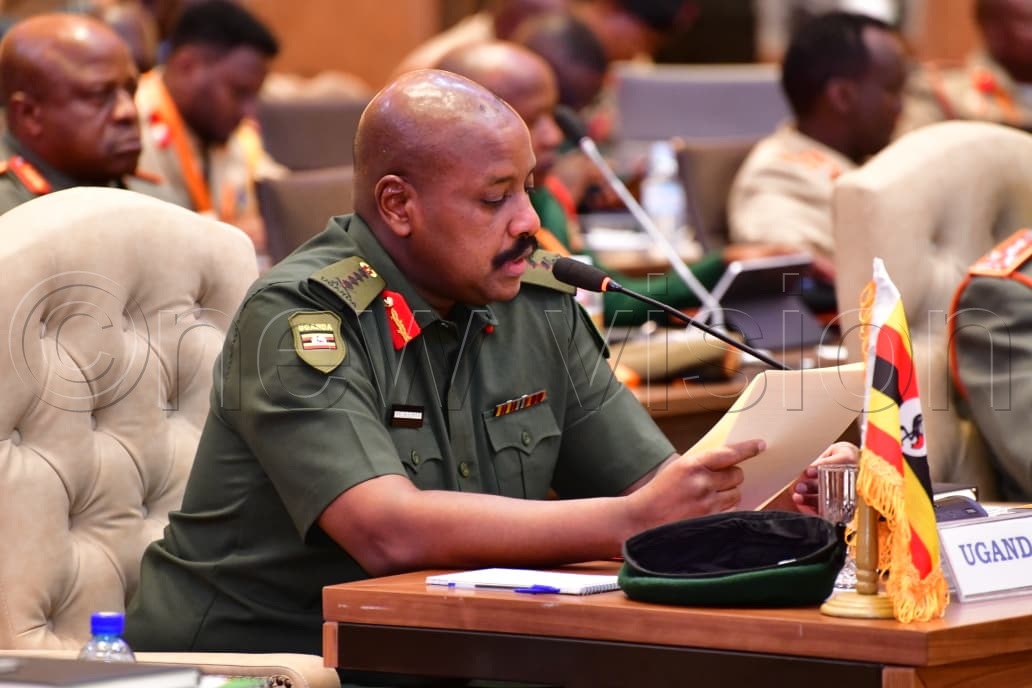
He said the proposed concept would encompass humanitarian assistance, disaster response, peace-support operations, support to civilian authorities and other military engagements designed to promote national and regional stability.
Regardless of the terminology adopted, the CDF said such missions must be guided by unity of effort, legitimacy, perseverance and strict adherence to national and international law.
He also stressed the importance of cooperation between the military and civilian institutions, saying armed forces must work closely with civilian authorities, humanitarian organisations, local communities and international partners.
The CDF said the changing responsibilities of militaries are already evident in different parts of the world.
“Armed forces have helped civilian authorities respond to disease outbreaks, conducted search-and-rescue missions following floods, earthquakes and landslides, protected maritime trade routes against piracy, evacuate civilians from conflict zones, delivered humanitarian assistance and supported peacekeeping and post-conflict stabilisation,” he said.
Kainerugaba cited Uganda's experience during the COVID-19 pandemic and the recent Ebola outbreak as examples of situations in which the military has been involved in national emergency responses.
“The contemporary soldier must be prepared not only to fight and win wars, but also to save lives, restore order, protect critical infrastructure, and strengthen national disaster response.”
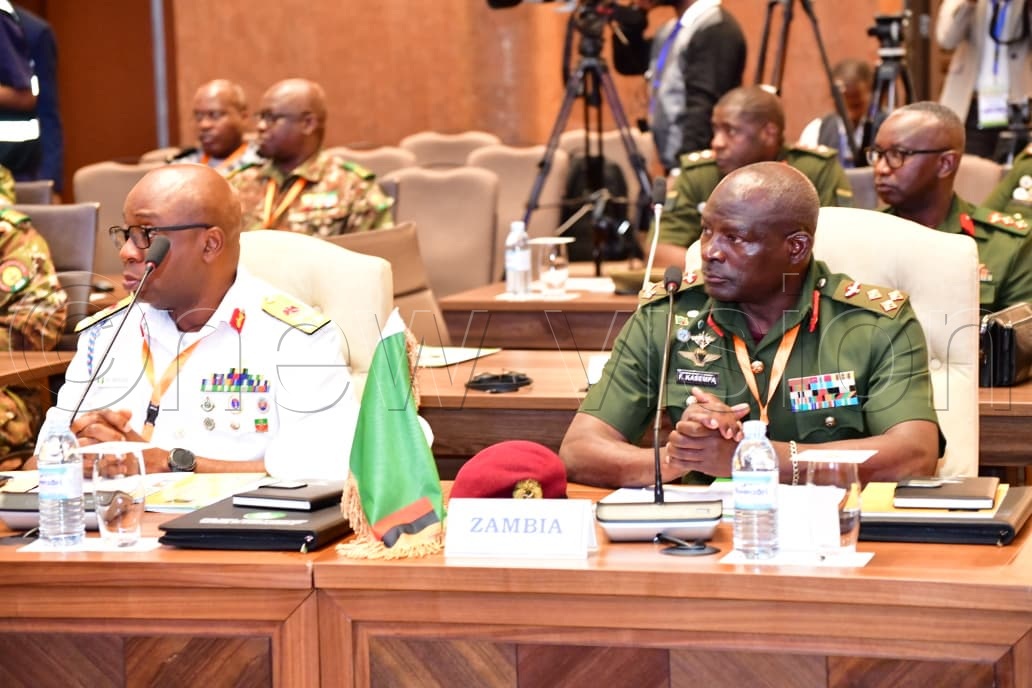
African Defence Chiefs at the conference. (Credit: Mpalanyi Sentongo)
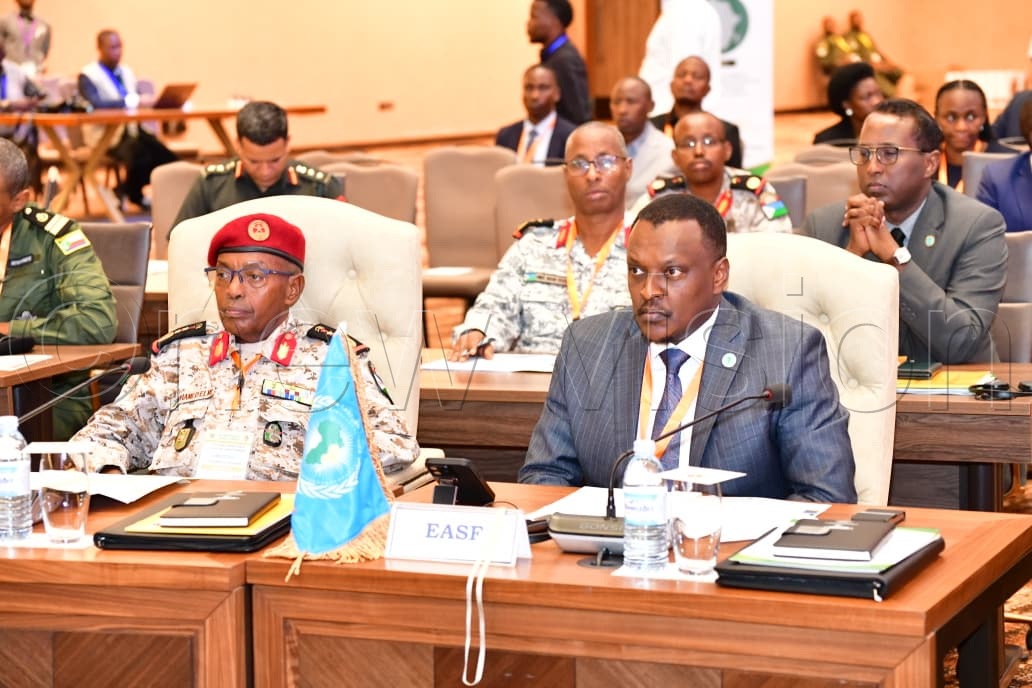
African Defence Chiefs at the conference. (Credit: Mpalanyi Sentongo)
The CDF said the conference was important because it brought together several areas of military operations that have previously been considered separately.
He said previous conferences had often focused on individual subjects such as disaster response, military support to civilian authorities, peacekeeping, cybersecurity and artificial intelligence.
The Kampala meeting, Kainerugaba said, offered an opportunity to consider these issues collectively and understand their relationship within the broader concept of military operations other than war.
However, the CDF warned that these missions present complex operational, legal and political challenges.
“One of the challenges is the need to operate under restrictive rules of engagement. Commanders and soldiers must balance their right to self-defence with political and operational restraint,” he said.
He cautioned against mission creep, where an operation that begins with a limited objective gradually expands into prolonged stabilisation, nation-building or counter-insurgency commitments.
Another challenge is what he described as “mission turbulence”, where a relatively peaceful situation suddenly deteriorates into an armed confrontation.
"A military force initially deployed for humanitarian assistance, civilian evacuation or peacekeeping could quickly find itself required to protect civilians, defend critical installations or respond to hostile action. These realities demand adaptable doctrine, flexible command arrangements, reliable intelligence, disciplined forces, and effective civil-military coordination,” he pointed out.
Kainerugaba said commanders at every level must also appreciate the political, cultural and humanitarian consequences of military action.
He said Africa's security environment is becoming increasingly complicated because of transnational, intrastate and non-traditional threats.
Addressing such threats, he argued, requires cooperation among defence forces, intelligence services, police, civilian authorities, humanitarian organisations, regional institutions and affected communities.
He said the conference should therefore contribute to strengthening African countries' capacity to conduct military operations other than war.
Among the priorities he identified was the need for African armed forces to develop a shared understanding of the concept, scope and strategic importance of MOOTW.
He also called for harmonisation of doctrine, training standards and operational procedures among armed forces, as well as stronger civil-military and inter-agency coordination at national and regional levels.
Another priority, he said, is improving intelligence sharing, early-warning systems and joint contingency planning.
Kainerugaba urged African countries to expand joint training and simulation exercises and to share operational experiences and lessons learned.
He said countries should also identify appropriate technologies and equipment for humanitarian assistance, disaster response, cybersecurity, maritime security and other non-war missions.
He called for stronger bilateral and multilateral security partnerships while ensuring that Africa's strategic interests and autonomy are protected.
The CDF also encouraged greater defence research, innovation and development to ensure that military capabilities respond to Africa's particular security needs.
For Uganda, Kainerugaba said the broader objective is to develop professional, adaptable and technologically capable armed forces capable of protecting national sovereignty while contributing to peace, stability, prosperity and human security.
He linked the approach to the continuing transformation of the Uganda People's Defence Forces into a modern force capable of responding to a full spectrum of contemporary threats.
The initiative, he said, also supports Uganda's wider commitment to regional cooperation, defence diplomacy and African-led solutions to African security challenges.
He encouraged participants to share not only their successes, but also the challenges they have encountered during military engagements.
According to Kainerugaba, candid discussions could help African defence establishments develop common approaches to emerging security challenges.
“Through candid dialogue, mutual respect, and sustained cooperation, we can develop a common strategic approach that strengthens our armed forces' capacity to respond to contemporary threats," he noted.
He said the approach should remain rooted in professionalism, legitimacy, respect for Africa's diverse histories and service to the people.