Toro region forms first ever coffee cooperative union
The launch of the Toro Coffee Cooperative Union marks a turning point for the region’s coffee farmers.
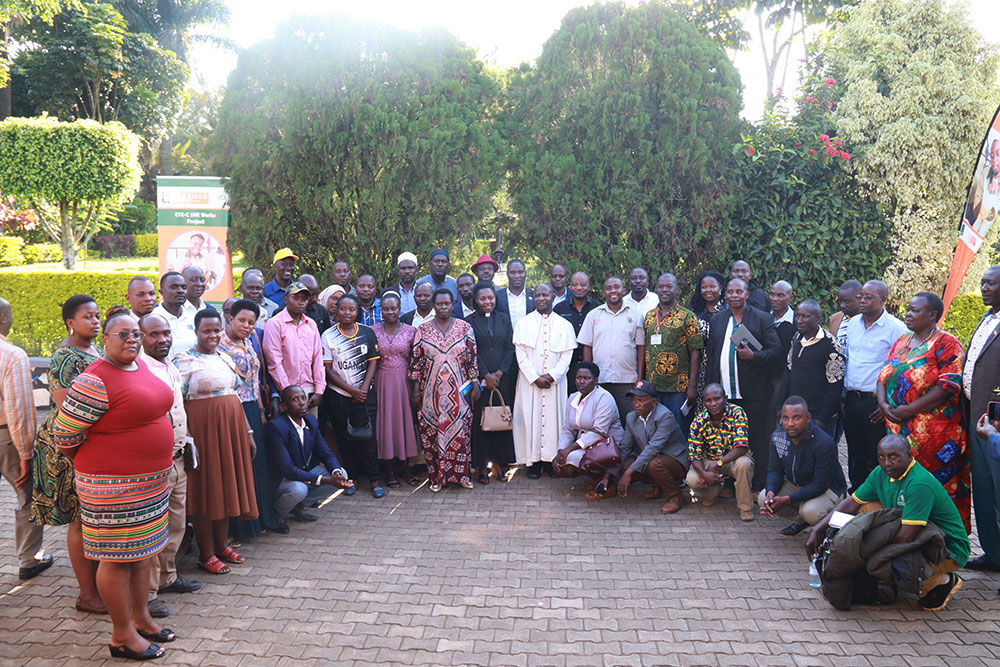
Stakeholders pose for a group photo during the set-up launch of the Toro Coffee Cooperative Union at Kalya Courts Hotel in Fort Portal, on June 17, 2026. (Courtesy photo)
____________________
AGRICULTURE
Toro region, long celebrated as one of Uganda’s leading producer of both Arabica and Robusta coffee, has made history with the formation of its first-ever coffee cooperative union.
Known for its highland Arabica of exceptional quality and robust Robusta varieties, Toro has for decades contributed significantly to Uganda’s coffee sector but remained without a unifying cooperative body — until now.
On Wednesday (June 17), coffee cooperatives across the districts of Kyegegwa, Kyenjojo, Kamwenge, Kabarole, and Bunyangabu officially came together at Kalya Courts Hotel in Fort Portal to establish the Toro Coffee Cooperative Union (TCCU).
The union’s headquarters will be based in Kabarole district, with an interim steering committee already in place to guide its operations.
For years, individual cooperatives in Toro struggled with challenges such as exploitation by middlemen, high interest rates from commercial lenders, lack of storage facilities, limited market access, coffee quality control and absence of value-addition infrastructure.
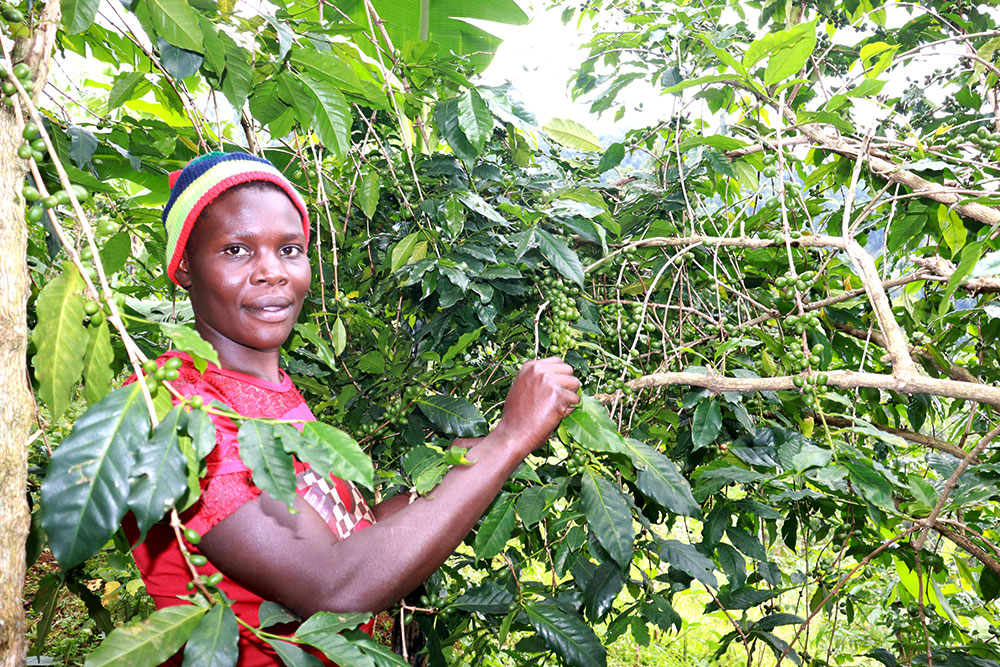
The new union aims to change this by helping them pool resources, negotiate better coffee prices, access affordable credit, markets, certifications and invest in value addition.
The initiative was spearheaded by the EYE-C SHE Works Project, implemented by Integrated Seed and Sector Development Uganda (ISSD Uganda) with support from aBi Development Ltd, in partnership with the International Women’s Coffee Alliance (IWCA) and Café Africa Uganda.
Speaking at the set-up launch, Davis Ikiriza (pictured below), the business development specialist at aBi, emphasized the importance of recognizing especially women’s contribution to the coffee value chain.
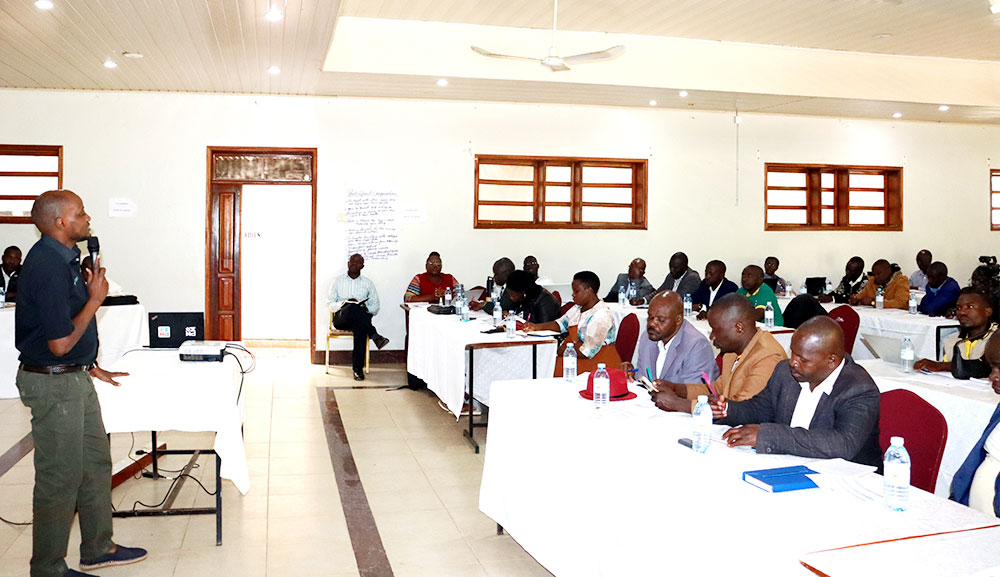
“Women contribute about 60–70% of labour within the coffee value chain, yet most of this labour is unpaid and unrecognized," said Ikiriza.
"Organizing cooperatives into a union as a one stop centre for bundled services will not only strengthen their operations, but also create opportunities for young women to access decent jobs, markets, and finance."
Winnie Kobusingye, who leads the EYE-C SHE Works project, highlighted the programme’s focus on skilling young women to participate meaningfully in the coffee economy.
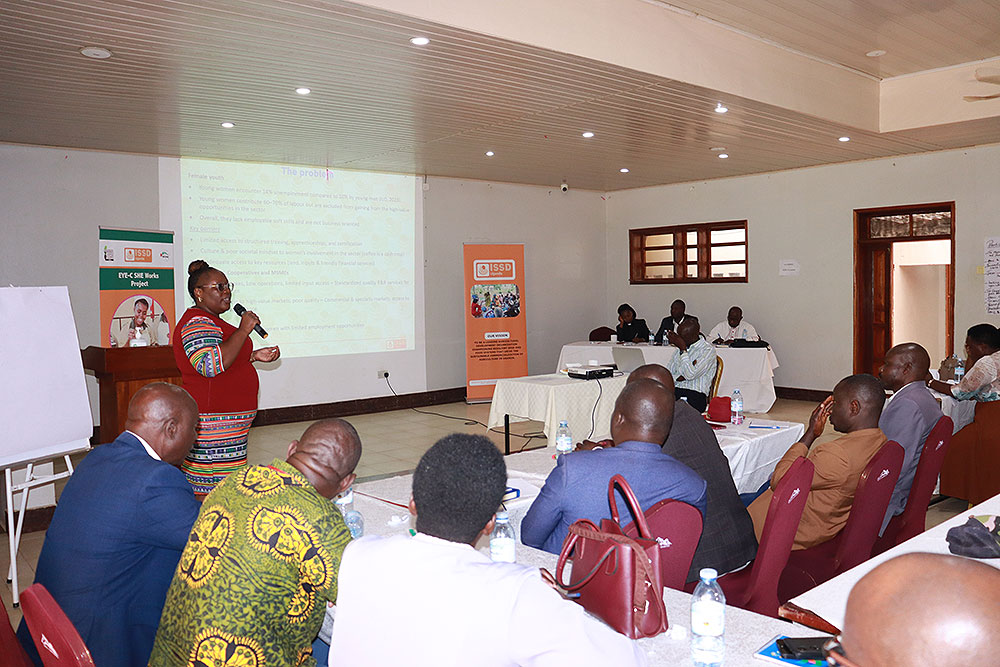
“We expect these women to be in fulfilling and dignified work, participating in gainful value chain activities, obtaining leadership roles and improving voice and agency within the coffee sector," said Kobusingye.
"Beyond coffee, the programme will also support complementary value chains such as apiary, horticulture, vanilla and poultry, where many young women are already engaged."
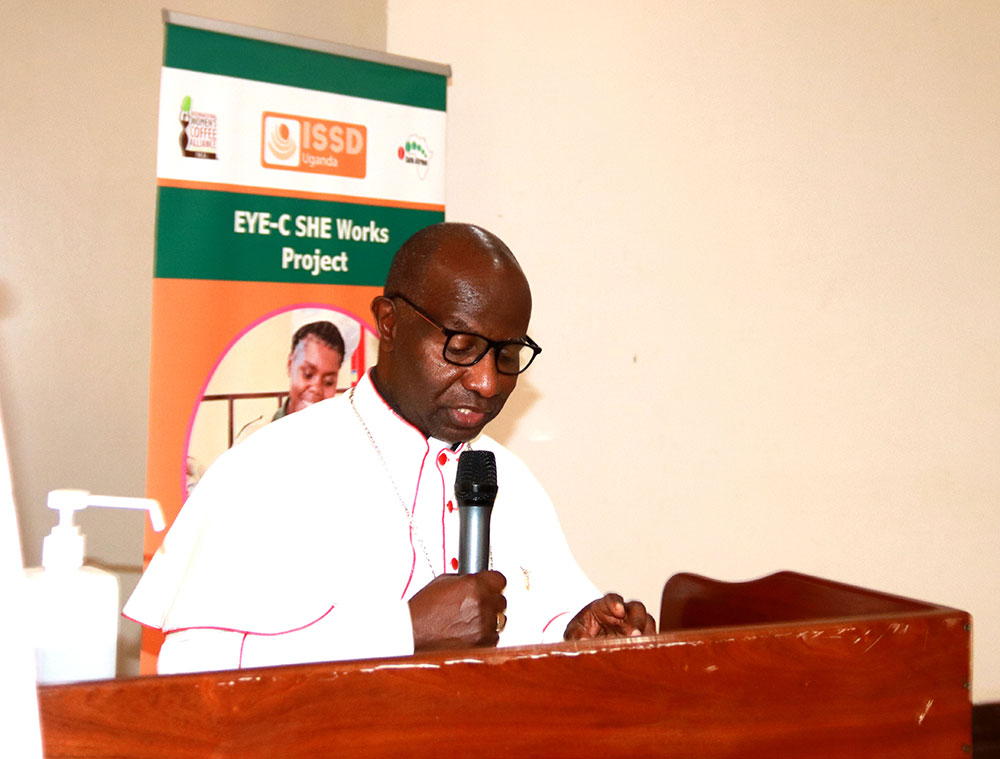
The church, represented by Diocese of Rwenzori and Fort Portal together with the SDA Bishop, Moslem fraternity, Toro kingdom and district local government welcomed the development, saying it is a milestone in the region.
Arthur Hakiza Nzeimaana, the deputy chief admistrative officer (CAO) for Kabarole, stressed that Toro’s collective effort would boost Uganda’s national coffee production target of 20 million bags by 2030.
“Toro is well known for its highland Arabica and Robusta coffee. With the union in place, we can better capitalize on government support, including capital investments, seedlings, fertilizers and programmes like the parish development model (PDM) to increase production and strengthen our role in the global coffee market,” he said.
The launch of the Toro Coffee Cooperative Union marks a turning point for the region’s coffee farmers, promising greater economic inclusion, stronger bargaining power, and a pathway for women and youth to thrive in Uganda’s most important export sector.