
Sector committees launched to strengthen govt's apprenticeship program
Representing the ministry’s permanent, Hilary Businge, the assistant commissioner for labour productivity, said the sector apprenticeship committees are a critical pillar in the implementation and success of the National Apprenticeship Programme.
Participants pose for a group photo during the orientation of the sector apprenticeship committee orientation meeting. (Photo by Agnes Kyotalengerire)
_________________
The Ministry of Gender, Labour and Social Development has inaugurated four sector apprenticeship committees to support skills development in the construction, manufacturing, agriculture, and oil and gas sectors.
The committees comprise leading industry players, employers and training providers.
Representing the ministry’s permanent, Hilary Businge, the assistant commissioner for labour productivity, said the sector apprenticeship committees are a critical pillar in the implementation and success of the National Apprenticeship Programme.
“Your role will be instrumental in ensuring that apprenticeship training remains relevant, industry-driven, and aligned with occupational standards and labour market needs,” Businge noted.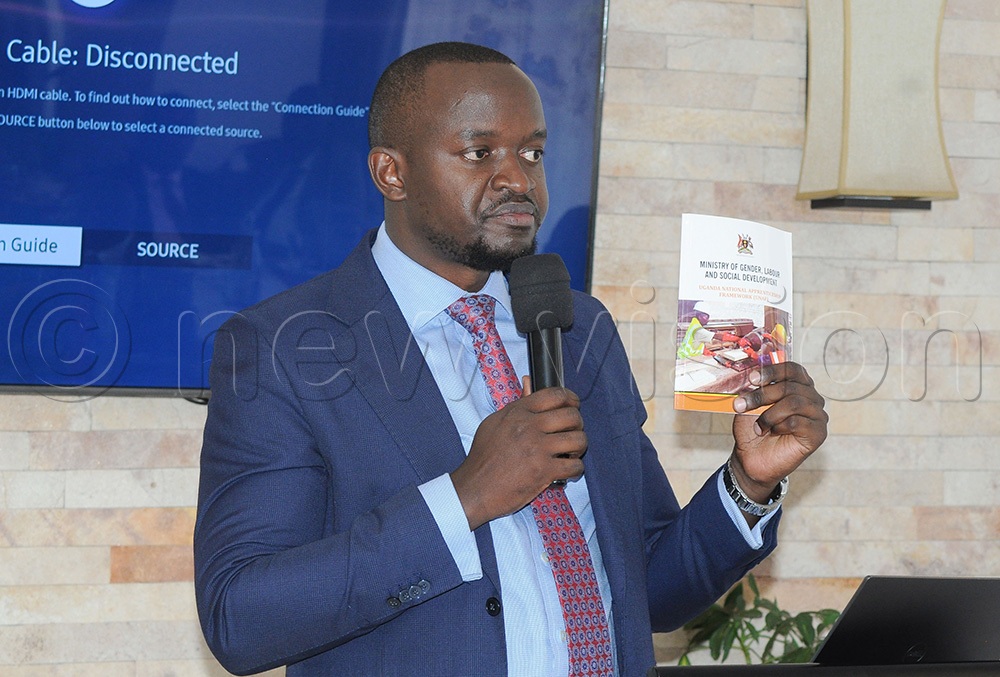
Hilary Businge, the assistant commissioner for labour productivity addressing participants during the orientation meeting. (Photo by Agnes Kyotalengerire)
He said committee members will be expected to provide strategic guidance on sector priorities, support the identification of apprenticeship opportunities, advise on occupational standards and curricula, promote employer participation, and contribute to quality assurance mechanisms within the apprenticeship system.
The chairperson of the Sector Apprenticeship Committee for Agriculture, William Tibyasa Mwesigye, said the appointment presents stakeholders with an opportunity to help tackle youth unemployment.
“We shall call upon all the stakeholders in the agriculture space, the industries, the small-scale farmers, those involved in value addition and support services to open the doors for the young people who are unemployed to participate in the apprenticeship programme,” Tibyasa noted.
He said the committee would also work to bridge the skills gap, improve productivity and increase apprenticeship opportunities.
“In agriculture, we have the numbers, but what is important is quality and how best we can make them contribute to economic growth and livelihood changing for the youth and women,” said Tibyasa and is quick to add that this will tremendously contribute to employment, food security, and most importantly, participating effectively in the international money market through exports.
The remarks were made during the orientation and inauguration ceremony for members of the sector apprenticeship committees under the National Apprenticeship Programme.
The meeting took place at Golden Tulip Hotel on Wednesday, June 17, 2026.
The Government of Uganda, through the Ministry of Gender, Labour and Social Development, is mandated to regulate, coordinate and promote apprenticeships nationwide. Apprenticeship training is a structured and regulated form of work-based learning that combines on-the-job and off-the-job training, enabling participants to acquire practical skills, knowledge and competencies relevant to specific occupations.
The senior skills development and technology innovation officer at the Ministry of Gender, Labour and Social Development, Zacary Kansiime, said the programme positions the country to create more employment opportunities for young people.
“We believe that many young people can utilise this opportunity to apply as graduate volunteers and also apprentices,” Kansiime said.
Criteria
The programme targets young graduates and school leavers.
"For the graduate volunteers, we require young people aged between 18 and 35 years who have finished school in the last five years," said Kansiime.
Applicants should have completed university degrees, diplomas or certificate courses and possess valid academic documents.
“We believe these are still very productive and they can do much more,” he noted.
Those intending to enrol in the apprenticeship programme should be aged between 16 and 35 years and should also have completed their studies within the previous five years.
How to apply
According to Kansiime, all applications are submitted through a digital platform known as the Apprenticeship Management Information System.
He said the system enables applicants to register their credentials and apply for opportunities within their preferred sectors from any location.
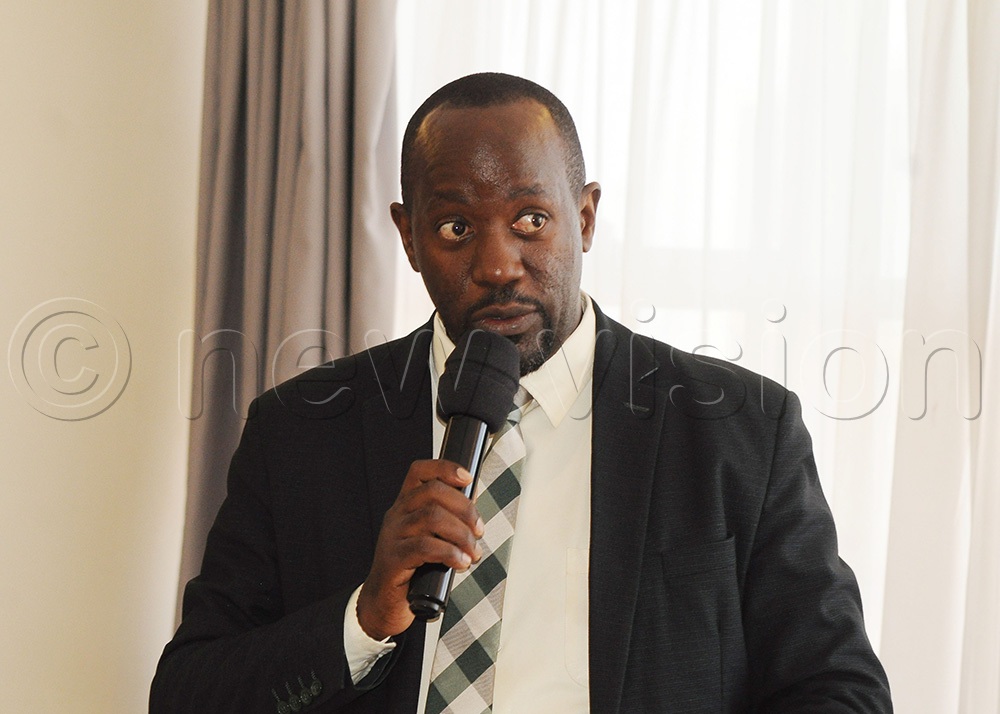
Zacary Katusiime, the senior skills development and technology innovation officer at the Ministry of Gender, Labour and Social Development addressing participants. (Photo by Agnes Kyotalengerire)
“Application is done online, and all they require is to go to the ministry website, get a link, and fill in all their details,” he explained.
He said the programme helps bridge the gap between education and employment by providing practical workplace training and easing the transition into the labour market.
According to Kansiime, addressing youth unemployment requires collective action. He said government interventions are aimed at helping young people secure employment opportunities by providing practical exposure and access to workplace networks.
Unemployment rate
The youth unemployment rate in Uganda stands at 17.9 per cent among individuals aged 15 to 24 years, according to recent data from the Uganda Bureau of Statistics (UBOS).
For the broader youth population aged 18 to 30 years, the unemployment rate stands at 16.1 per cent.
Beneficiaries
Data from the Ministry of Gender, Labour and Social Development shows that more than 6,800 people have expressed interest in the National Apprenticeship Programme.
However, about 1,500 people have successfully gone through the programme over the past three to four years.
The programme manager of ILO PROSPECTS, Ivan Lwanga, said inclusion should remain a key consideration in skills development initiatives.
Lwanga noted that vulnerable groups, including persons with disabilities, are often left out of such programmes.
“We need to have a deliberate focus through the partners to ensure that a certain percentage of people selected as beneficiaries include those with disabilities,” he noted.
The legal mandate for regulating apprenticeships is provided under Regulation 36 of the Employment Regulations, 2011, which empowers the ministry to establish and oversee apprenticeship schemes in line with national employment policies.
To operationalise this framework, the government approved the Uganda National Apprenticeship Framework (UNAF) in 2018, providing a structured approach to implementing and managing apprenticeships across sectors.
The framework outlines the roles and responsibilities of all stakeholders, including government, training institutions, employers, industry bodies and Sectoral Apprenticeship Committees.