
Uganda govt on spot over marriage, sexual offences bills
Opendi said legal gaps continue to fuel social vices, citing resistance faced by the Marriage Bill, 2024, and the Sexual Offences Bill, 2024, during the 11th Parliament.
Participants posing for a group photo at the end of the workshop. (courtesy)
_________________
Former legislator Sarah Opendi has lashed at Government over what she termed as frustrating legislation in the eleventh Parliament aimed at combating teenage pregnancies and child marriages.
On Wednesday, Opendi argued that while the aforementioned vices continue to wreak havoc partly due to gaps in the legal framework, during the eleventh parliament that was chaired by Speaker Anita Annet Among, she was sterned by the resistance to the Marriage Bill, 2024, and the Sexual Offences Bill, 2024, which was sponsored by Soroti District Woman MP Anne Adeke faced.
While the Marriage Bill stalled after its first reading and the Sexual Offences Bill was withdrawn due to time constraints, Opendi, in her address to the national stakeholders' meeting on June 17, pointed out that the same time-barred House ironically allowed the tabling and passage of other new bills that came after Adeke's.
The meeting at Fairway Hotel in Kampala was organised by Joy for Children Uganda and the Centre for Domestic Violence Prevention (CEDOVIP).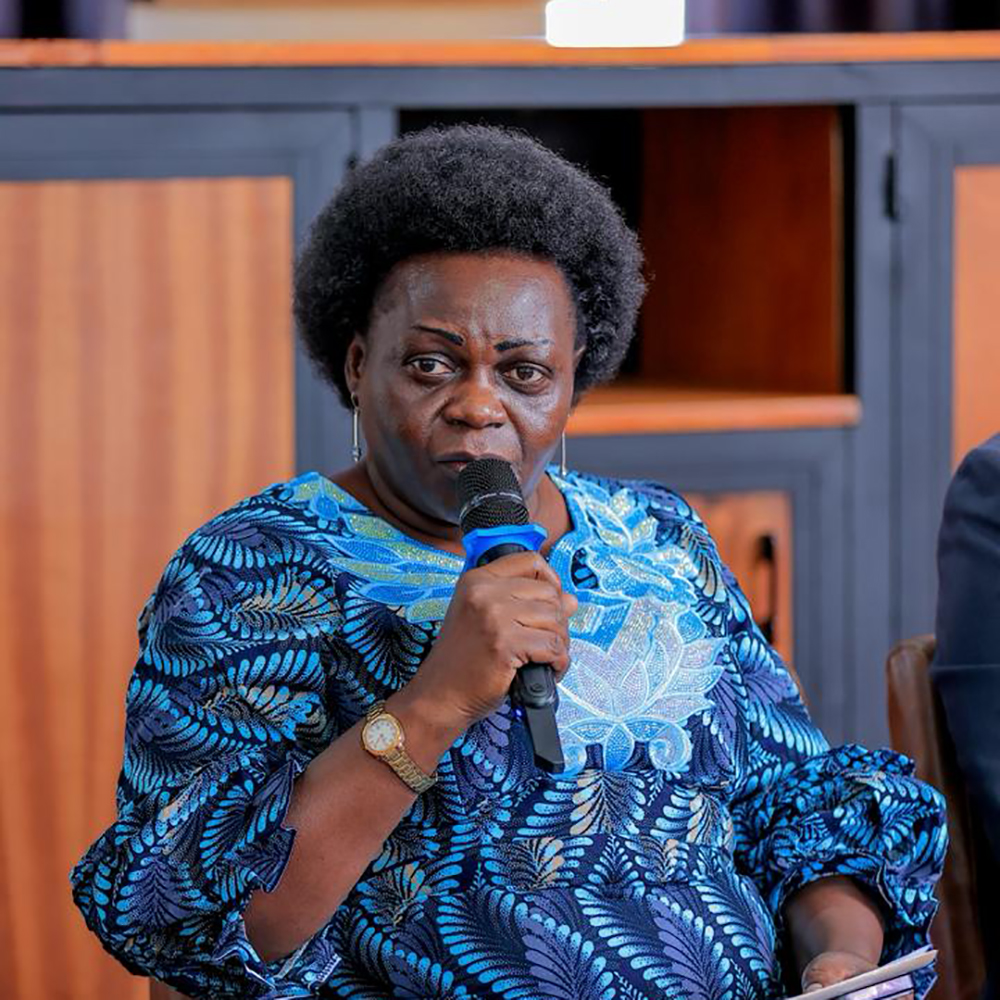
UWOPA Chairperson Sarah Opendi addresses participants during the event. (Courtesy photo)
Speaking today, “The Marriage Act actually came into force in 1904. You have the Marriage and Divorce of Mohammedans Act 1906 before even this country attained independence. And now you come up with the Sovereignty Bill, which is now the Protection of Sovereignty Act,” she pointed out.
“How can we talk about being a Sovereign state if we cannot even have our own laws that will actually protect the family unit, which is the most important unit where you get communities and people that we call Ugandans?” said Opendi, the outgoing chairperson of the Uganda Women’s Parliamentary Association (UWOPA).
Adding that in the Sexual Offences Bill, she had proposed a six-month timeframe for concluding trials involving defilement cases. Which, besides clamping down on errant adults, would have spared minors and their families from the trauma of prolonged court proceedings.
She suggested that there after perpetrators would face serious sanctions akin to those she had proposed in Clause 101 of the Marriage Bill, where she suggested a ten-year jail sentence for anyone who conducts, attends or arranges a marriage involving a minor.
“My Marriage Bill was bringing in the parents to this child; religious leaders, for as long as you witness, are involved in giving away this child. It would even bring the LCs on board. What are you doing as a local leader who has seen this and kept quiet? For as long as we don’t bring those parties into this equation, this matter will always remain and continue,” she cautioned.
Child marriages rife in cattle corridor
Relatedly, Rodgers Golooba, a senior probation and welfare officer at the ministry of gender, labour and social development (MGLSD), said ending child marriages would be a “miracle”, owing to its continued high prevalence within Ugandan society.
“I want to say that over the past one or two years, although we talk about harmful social norms among communities in West Nile, Busoga sub-region and Karamoja. We have also seen reported cases in mid-western Uganda,” he stated.
“If you look at the cattle corridor, Kiruhuura, Kazo, Ssembabule, Gomba, we are looking at higher cases of children who are getting into marriages with adults, and it's commonly acceptable. And in those districts, we have also analysed the trend of HIV prevalence amongst the young people, particularly the girls. It’s much higher than the other parts of Uganda,” Golooba revealed.
He added that the issue, alongside the vulnerability of young girls, is something they are following up with District Local Governments.
“As we start this financial year (2025/26), we still have over 8,000 parishes without a primary school and a big number of subcounties without a secondary school. That is one of the biggest challenges,” Golooba noted.
“Our transition rates for our young girls from primary to secondary are the lowest in East Africa because the schools are not there. I know the Government under UGIFT (Uganda Intergovernmental Fiscal Transfers Programme) established 117 new (seed) secondary schools. But these ones are not enough,” he further explained.
Decline in sexual offences
However, on the other hand, he disclosed that over the past seven years, the country has managed to achieve a one percent reduction in teenage pregnancy.
“This gives us hope because before that we had not gone below 11,000 cases reported annually. But the numbers are coming down, and I think last year, we reported 10,492 (defilement) cases. But the previous year, it was over 12,000,” Golooba cited.
Fast forward, he expressed optimism that with continued interactions with communities and parents, they will be able to achieve more progress to this end.
Digital activism
Amid this, Penny Suzan Igaga, an expert with the Centre for Domestic Violence Prevention (CEDOVIP), contends that other than traditional messaging, the key to combating child marriages and Gender Based Violence (GBV) lies in leveraging youth-friendly digital platforms.

Penny Suzan Igaga called on stakeholders to leverage youth-friendly digital platforms in the fight against rising child marriages. (Courtesy photo)
“We find children as young as 8 years old in this day and age, owning a smartphone. Tech digital use is really being embraced, and this is something we can’t run away from,” Igaga said.
She added, “Many of our organisations here have a wide presence online on X (formerly Twitter), Instagram, Facebook, WhatsApp. Many of you may feel like TikTok is for Gen Z, but many people actually get their news and information from TikTok. These platforms have gone beyond just a social face; they have become an informative space where concerning topics are being spoken about,” she advised.
What others say
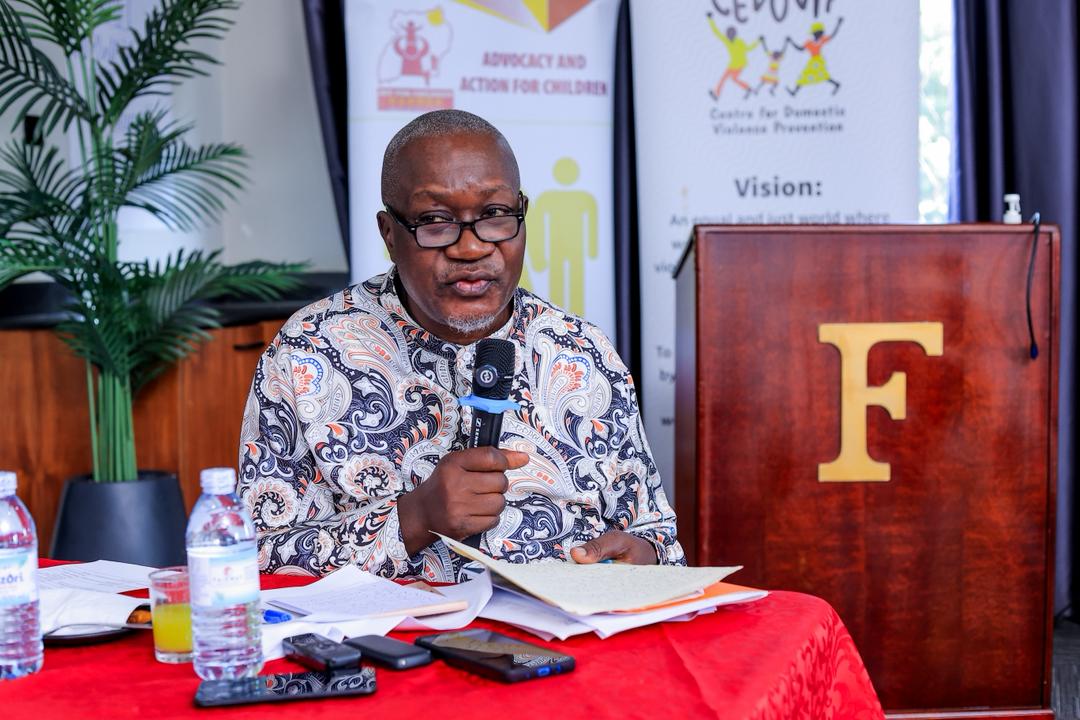
Commissioner Mondo Kyateka. (Courtesy photo)
Mondo Kyateka (Commissioner, Youth and Children’s Affairs): Statistics I was trying to review are also showing that young boys are getting married when they are not of age. When I was very young, I used to hear about concepts like sugar daddies. Now I even hear of concepts like sugar mummies. The world is turning around very quickly and disadvantaging us in view of nurturing the human capital development that we want to have.
Rev. Nathan Mugalu (Religious leader): We want corruption-free services. I think the humanity in our service providers has reduced, and this is an individual and society issues. When you see cases being diverted, not entered, the conviction rate of defilement cases is as low as 20% per annum. For all the 10,000 cases that I have mentioned, only about 200 will get convicted. The other people will lose interest. What we have seen with the court system is that if the plaintiff doesn’t appear thrice, the state loses interest. We have also seen that some medical workers are not freely willing to attend and testify in the courts of law. This makes the defendant's side easy to influence the decision of magistrates.