
Uganda warns employers on child exploitation
Speaking on Thursday at the Uganda Media Centre ahead of the June 12 commemoration in Mayuge District, State Minister for Labour, Employment and Industrial Relations, Simon Mulongo, said child labour is far more than children helping around the home.
Simon Mulongo, the Minister of State for Labour, Employment and Industrial Relations addressing the Media on interventions to end Child Labour in Uganda at the Uganda Media Centre on June 11, 2026. (Photo by Nicholas Oneal)
__________________
As Uganda marks the World Day Against Child Labour, the government has issued one of its strongest warnings yet to employers, traffickers and anyone profiting from the exploitation of children, while acknowledging that child labour remains deeply rooted across the country despite years of intervention.
Speaking on Thursday at the Uganda Media Centre ahead of the June 12 commemoration in Mayuge District, State Minister for Labour, Employment and Industrial Relations, Simon Mulongo, said child labour is far more than children helping around the home. It is work that robs them of their education, health, dignity and future by exposing them to harmful or exploitative conditions.
The distinction matters because many Ugandans still confuse ordinary household chores with child labour.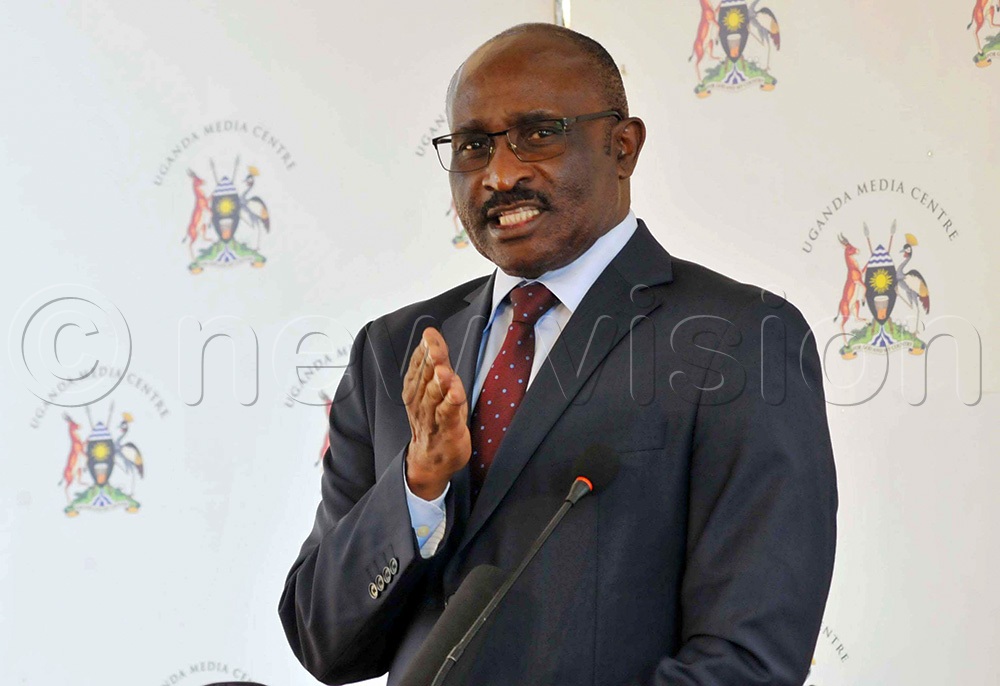
Simon Mulongo, the Minister of State for Labour, Employment and Industrial Relations addressing the Media on interventions to end Child Labour in Uganda at the Uganda Media Centre on June 11, 2026. (Photo by Nicholas Oneal)
The ministry says children can participate in age-appropriate family responsibilities if the work does not interfere with school or threaten their physical and mental development.
Globally, the challenge remains enormous.
According to reports by the ministry from the International Labour Organisation and UNICEF, around 160 million children were engaged in child labour at the beginning of 2020, with nearly half performing hazardous work that endangered their health and safety.
In Uganda, children continue to work in agriculture, fishing, mining, domestic service, transport, markets and informal businesses, often because their families struggle with poverty or lack access to stable incomes and quality education.
Officials argue that tackling child labour, therefore, requires more than police action. It also means addressing the economic conditions that push families to rely on children's earnings.
"Government recognises that child labour is not merely a labour issue. It is a development issue, a justice issue, a protection issue, and a national transformation issue," Mulongo said. "A child who is kept out of school today becomes an adult whose future opportunities are limited tomorrow."
To address the problem, has strengthened labour inspections and child protection systems while expanding programmes such as the Parish Development Model, Emyooga, the GROW Project and the National Apprenticeship Programme. The goal is to improve household incomes so parents can keep children in school instead of sending them to work.
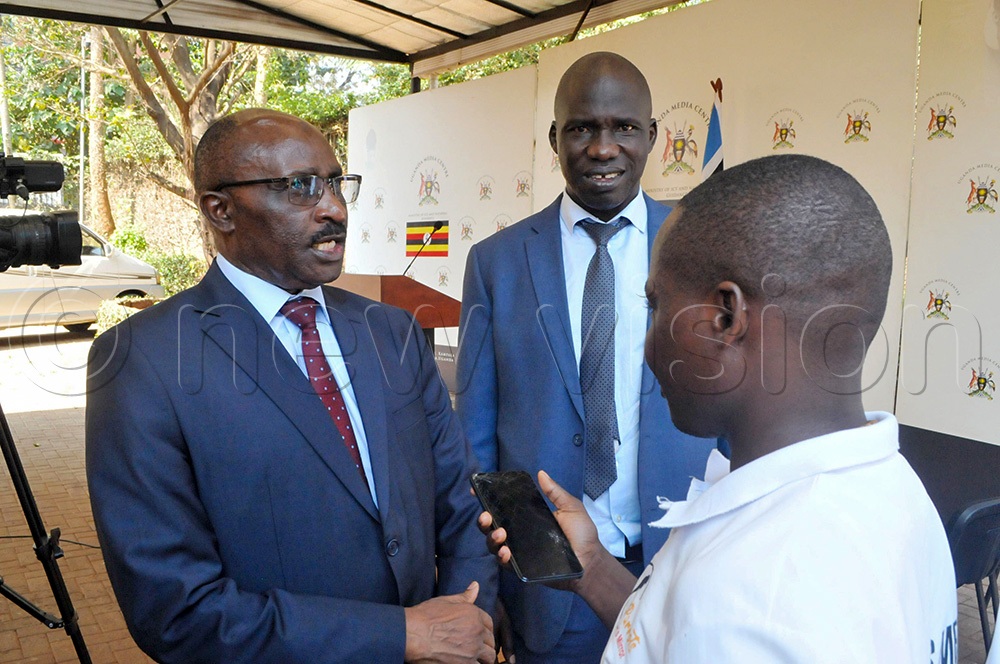
Simon Mulongo (left), the Minister of State for Labour, Employment and Industrial Relations addressing the Media on interventions to end Child Labour in Uganda as Apollo Onzoma, the Assistant Labour Commissioner, Ministry of Gender looks on at the Uganda Media Centre on June 11, 2026. (Photo by Nicholas Oneal)
Latest surveys indicate that, regardless of the efforts, the problem persists.
Children are still found working in plantations, garages, workshops, homes and markets, often under exploitative conditions with little or no pay. Many endure long hours and hazardous environments while missing out on education.
The government has now warned employers, intermediaries and guardians that recruiting or benefiting from child exploitation will attract legal consequences.
The message is clear: ending child labour is not only about protecting children but also about protecting the country's future workforce. Every child who remains in school is more likely to become a skilled and productive adult, while every child forced into exploitative labour risks remaining trapped in poverty.
As Uganda renews its commitment to eliminate child labour, the ministry says success will increasingly be measured by outcomes rather than promises—children protected, jobs sustained, incomes improved, and communities strengthened.