
Judiciary to publish performance reports of individual judicial officers
“Non-performance will no longer be tolerated," said Zeija.
Chief Justice Dr Flavian Zeija speaking during the Judicial Service Commission (JSC) annual stakeholders’ forum held at the Supreme Court Conference Hall in Kampala on Friday, July 10. (Photos by Mpalanyi Ssentongo)
________________
The judiciary will begin publishing individual performance reports of all judicial officers on its website in a move aimed at enhancing accountability, transparency and public confidence in the administration of justice.
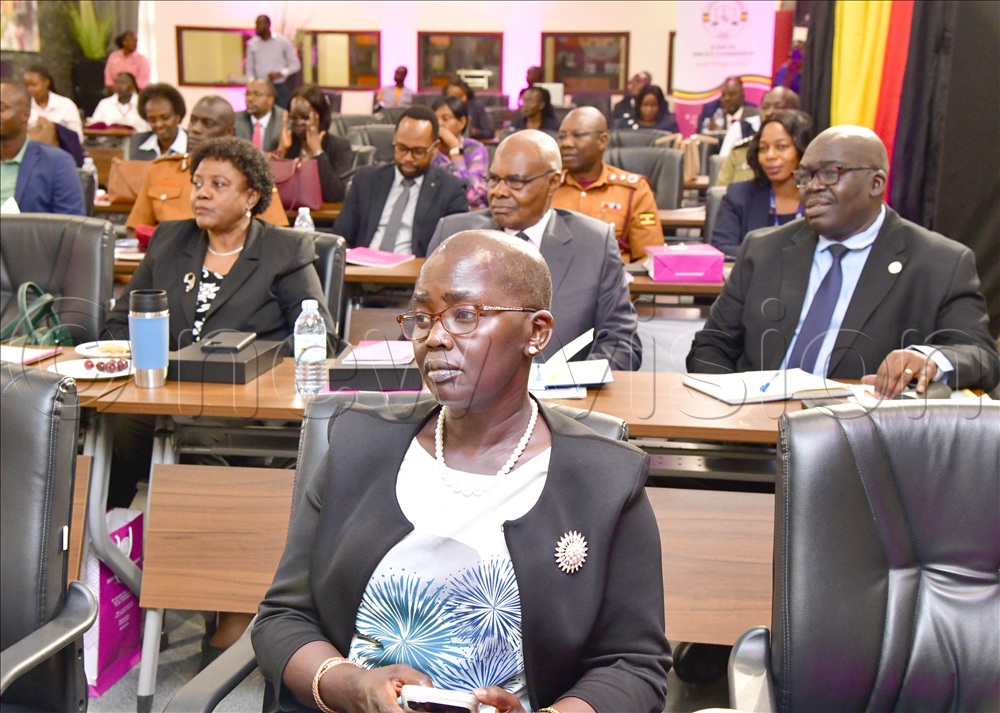
Chief Justice Dr Flavian Zeija announced the new move while presiding as the chief guest at the Judicial Service Commission (JSC) annual stakeholders’ forum held at the Supreme Court Conference Hall in Kampala on Friday, July 10.
“Non-performance will no longer be tolerated. We are going to start publishing the individual performance reports of all judicial officers so that the public gets to know who is taking their money for free. There is no room for corrupt elements in the justice system, nor do we have room for laziness and mediocrity,” he said.
Zeija argued that the publication of the individual judicial officers’ performance reports will provide greater transparency on the output of judicial officers while supporting the judiciary’s broader agenda of improving efficiency, reducing case backlogs and enhancing access to justice.
The Chief Justice also announced plans to integrate the judiciary’s Performance Enhancement Tool (PET) with the JSC systems to ensure that the recruitment, promotion and management of judicial officers becomes increasingly informed by objective performance data.
He said the integration would enable the JSC to access judicial officers’ performance records during promotion processes while also allowing the PET recruitment portal to interface with the commission’s systems, thereby improving efficiency and eliminating duplication.
“The Judicial Service Commission has a duty to ensure that only those with proven merit ascend the bench. This is the first non-negotiable step towards transforming justice delivery in the country,” he said.
He said continuous performance evaluation would become a key feature of judicial administration, with officers expected to meet established standards while those who consistently underperform will face appropriate disciplinary action.
Zeija emphasised that transforming justice delivery requires merit, accountability and innovation, commending JSC for maintaining merit-based recruitment. He urged the commission to continue appointing judicial officers with integrity, legal competence, emotional intelligence and sound moral character.
He also advocated for joint public engagement initiatives through court open days, radio programmes and other outreach activities to improve public awareness and confidence in the justice system.
On innovation, the Chief Justice noted that the Electronic Court Case Management Information System (ECCMIS) has significantly reduced case processing time, minimised physical interaction, eliminated manual file losses, and enhanced transparency in court operations.
He encouraged the JSC to leverage technology in its recruitment, appointment and disciplinary processes, and called for greater utilisation of Alternative Dispute Resolution (ADR) to reduce case backlog, lower litigation costs and promote harmonious resolution of disputes.
“To effectively transform justice delivery, we cannot rely solely on traditional archaic methods of operation. Innovation is a catalyst that will propel our justice system into the 21st century,” he said.
The Attorney General, Dr Sam Mayanja, pledged to engage the Chief Justice over the impasse between the judiciary and the ULS leadership in a bid to amicably resolve it.
JSC permanent secretary Dr Rose Nassali Lukwago noted that the delayed appointment of the two ULS representatives to the commission is hampering its operations.
The commission comprises nine members. However, they are currently seven because ULS is yet to appoint its representatives following a court order barring it from convening either an annual or extraordinary general meeting to transact its business.
The ongoing impasse between the judiciary and ULS originated from a series of institutional, ideological and personal clashes between the judiciary leadership and ULS leadership headed by the now self-exiled ULS president, Isaac Ssemakadde.
Institutional tension worsened significantly after an incident during the February 2025 opening of the New Law Year when former Chief Justice Alfonse Owiny-Dollo denied Ssemakadde an opportunity to speak at the ceremony.
Owiny-Dollo demanded that Ssemakadde apologises to Justice Musa Ssekaana whom he had allegedly insulted following a contempt of court case involving lawyer Hassan Male Mabirizi. However, Ssemakadde declined, worsening the tension between the two institutions.
The stand-off has also escalated into formal legal battles, with the ULS filing constitutional petitions against the operations of the JSC and protesting the judiciary’s removal of ULS-related appeals from the Court of Appeal cause list.
Dr Douglas Singiza, the JSC chairperson, said that as members of the 7th commission, they are going to ensure that all appointments are subject to rigorous processes.
Being the only permanent member of the commission, Dr Singiza underscored the need for urgent restructuring at the commission so that all members of the commission serve on a permanent basis to ably deal with the workloads.
During the event, the Chief Justice launched the new JSC client charter, service delivery standards and the third strategic development plan for the financial years 2025/2026 and 2029/2030.
The client charter spells out the commission's key result areas that focus on high-quality customer service, while the service delivery standards outline the services which the commission intends to implement under the National Development Plan (NDP) IV.