
Govt warns accounting officers against budget indiscipline
Releasing the funds at the finance ministry headquarters on Friday (July 10), the Permanent Secretary and Secretary to the Treasury, Ramathan Ggoobi, said the release represents 27 percent of the approved national budget of sh84.39 trillion for the 2026/2027 financial year.
Govt warns accounting officers against budget indiscipline
_________________
The Government has released sh23.03 trillion to finance public expenditure during the first quarter of the Financial Year 2026/27, with infrastructure receiving the lion’s share of sh1.53 trillion for the Ministry of Works and Transport.
Releasing the funds at the finance ministry headquarters on Friday (July 10), the Permanent Secretary and Secretary to the Treasury, Ramathan Ggoobi, said the release represents 27 percent of the approved national budget of sh84.39 trillion for the 2026/2027 financial year.
Addressing journalists, Ggoobi said the releases have been carefully programmed in line with expected revenue collections and available financing to maintain macroeconomic stability.
"The quarter one expenditure has been programmed in line with the expected cash inflows, and the timing and capacity to access external financing," Ggoobi said.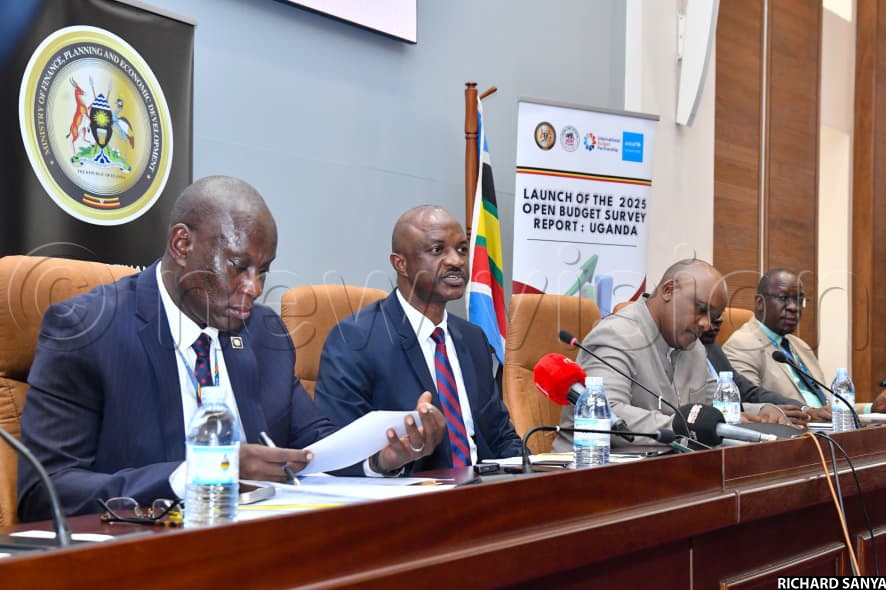
According to the allocations, a large portion of the released funds will finance statutory obligations, with sh10.83 trillion allocated for debt servicing and treasury operations, sh2.46 trillion for salaries and wages across government; sh566.44 billion for pension and gratuity; sh355.27 billion for Parliament, sh51.12 billion for the Judiciary; and sh15.2 billion for the Office of the Auditor General.
To support the government's economic transformation agenda, Ggoobi said the ministry has allocated sh289.6 billion for agro-industrialisation programmes; sh65.6 billion to tourism development; sh50 billion for oil, gas and mineral development; and sh377.9 billion for science, technology, innovation, ICT and digitisation.
Ggoobi warned accounting officers against over-misuse of public funds and poor budget execution.
Ggoobi said government has introduced strict fiscal and macroeconomic reforms aimed at eliminating wasteful expenditure, corruption, delayed implementation and accumulation of domestic arrears.
"This financial year, Government is implementing fiscal and macroeconomic reforms to strengthen execution discipline, accountability, efficiency and integrity of the budget. The reforms target waste, corrupt budget practices, delays and inefficiency," he said.
"I call upon all accounting officers to pay strict attention to the details in the expenditure limits and the budget execution circular to ensure complete compliance with our guidelines," he said.
The Director emphasised that funds released by the Treasury should not remain idle in government accounts.
"When we release money, we don't expect you to stay with it. By the 15th, you should have submitted your warrants, and within three days, that is the limit I have given my officers; they should have cleared those warrants so that we have timeliness in the release of these funds," he said.
During the briefing, the Ministry also launched the 2025 Open Budget Survey results, conducted by the International Budget Partnership in collaboration with the Uganda Debt Network and UNICEF.
Ashaba said the assessment was meant to measure Uganda's progress in providing public access to budget information and participation in the budget process.
He expressed optimism that Uganda would continue improving its performance in budget openness as a result of reforms undertaken by the Ministry of Finance.