
Over 300 inmates apply for plea bargain at Masindi prison
The camp, which began on Wednesday, July 8, 2026, and concludes on Friday, July 10, 2026, is addressing a significant number of capital cases.
Justice Jane Okwo Kajuga, the plea bargain focal judge, during the session which began on Wednesday, July 8, 2026, and concludes on Friday, July 10, 2026. (Photos by Yosam Gucwaki)
________________
Over 300 inmates at Masindi government prison have applied for plea bargain during a special camp held at the prison premises.
The camp, which began on Wednesday, July 8, 2026, and concludes on Friday, July 10, 2026, is addressing a significant number of capital cases.
Topping the list are 100 murder cases, followed by 54 aggravated robbery cases, 45 murder cases, 36 rape cases, and nine aggravated trafficking cases.
These cases are being handled by Justice Jane Okuo Kajuga, the plea bargain focal judge, together with Justice Professor Andrew Khaukha, the Alternative Dispute Resolution (ADR) focal judge and Executive Director of the Judiciary Training Institute.
Other participating judges include Justice Mary Babirye (Resident Judge Masindi High Court), Justice Vincent Opyeno (Resident Judge Hoima High Court), and Justice Johnson Karemani (Resident Judge Kiboga High Court).
Masindi's Chief Magistrate, Gumtwero Olal, is also present to make committals for capital cases that had not yet been forwarded to the High Court.
According to Daniel Bwambale, the Senior Principal Magistrate ADR, the Masindi prison camp is one of the largest focusing on capital cases, adding that by the close of business on Wednesday, 83 cases had already been handled by the judges at the camp.
Justice Mary Babirye, the Resident Judge of Masindi High Court, during the Plea bargain session.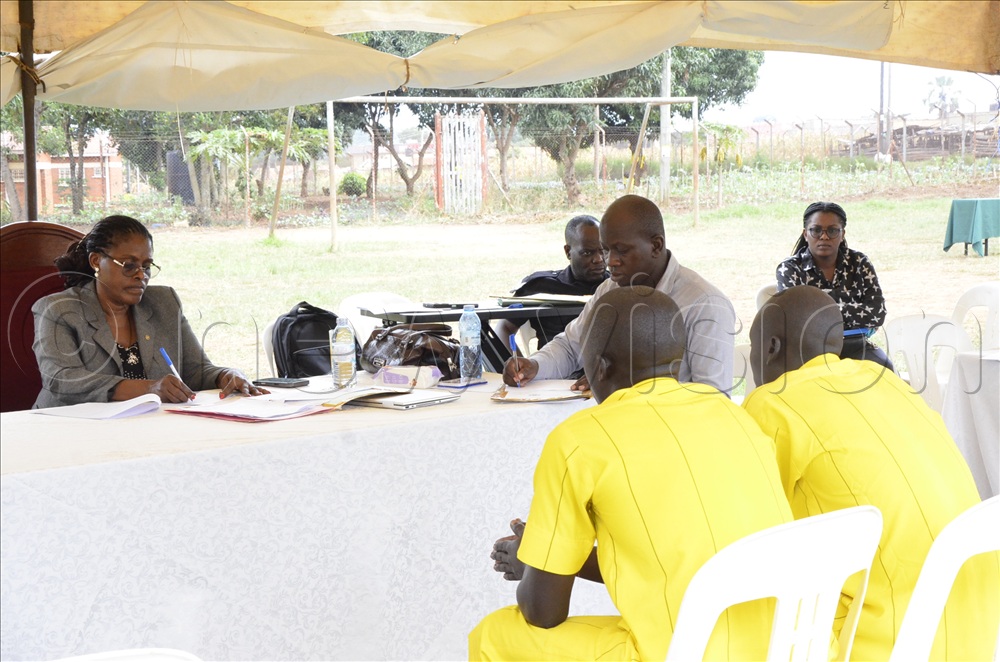
According to Justine Atukwasa, the registrar of the ADR registry, plea bargaining has become a crucial mechanism, with over 10,000 cases completed nationwide through this process in the previous financial year.
Mediators warned against extortion
Late in the evening, Her Worship Atukwasa met with a group of Masindi and Hoima court annex mediators at the Masindi High Court.
The meeting aimed at assessing the number of active, trained, and accredited mediators and also to lay strategies on how they can work together.
Atukwasa emphasised the benefits of mediation; "As mediators, you are supposed to be simple and easy. We need to appreciate that mediation is an advantageous method because it's fast, less costly, and it restores relationships. It can contribute to the peacefulness of the community. It creates a win-win situation because it resolves disputes immediately, and the parties accept the results."
"Mediators should do everything to follow the law. Desist from charging the parties money. The parties can only appreciate you when the matter is resolved, if they wish," she noted, adding that charging parties is a disciplinary issue.
She explained that all court registries should have a register for cases resolved through mediation.
Rt. Rev. George William Kasangaki, the former Bishop of Masindi-Kitara, urged the judiciary to provide adequate training and resources, including the ADR policy and mediation rules, to mediators.
Rev. John Kitalibara, the head of the mediators in the region, highlighted the growing acceptance of mediation as the quickest dispute resolution method.
He called for thorough sensitisation to popularise mediation, especially given the prevalence of land disputes exacerbating community and family tensions.
Kitalibara expressed concern about some judicial officers, who frustrate the mediation process.
"Mediation with a good judicial officer is work done, but mediation with a frustrating judicial officer is no work done," he stated, advocating for training for lawyers and judicial officers to embrace mediation fully.