
Govt warns against malaria self-medication as Kampala, Wakiso receive nets
Dr Diana Atwine, the Ministry of Health permanent secretary, said people who develop a fever should seek medical attention and only take malaria medication after the disease has been confirmed through testing.
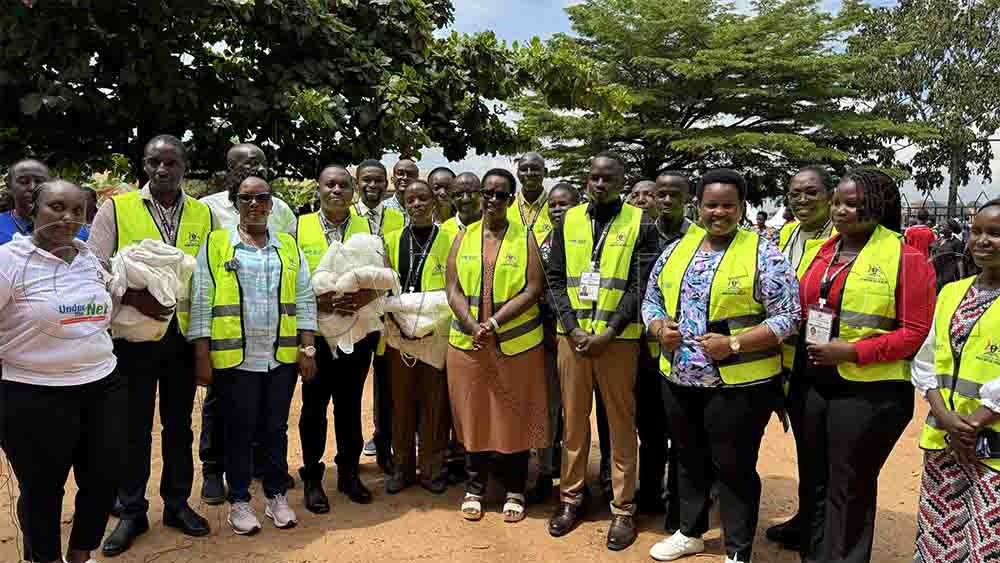
Kampala has been allocated 1,168,700 mosquito nets to cover an estimated two million people, while Wakiso will receive 2,216,300 nets targeting approximately 3.9 million residents. (Credit: John Musenze)
The Ministry of Health has cautioned Ugandans against treating suspected malaria without first undergoing a test, warning that inappropriate medication can worsen the disease and lead to life-threatening complications.
Dr Diana Atwine, the Ministry of Health permanent secretary, said people who develop a fever should seek medical attention and only take malaria medication after the disease has been confirmed through testing.
“Whenever you get malaria, do not just take any medicine. Rush to a health facility and, after tests, you will receive the right dosage,” Atwine said.
She was speaking on November 22, 2026, during the launch of the mosquito-net distribution campaign in Mulimira zone, Bukoto, Kampala, as the Government extended its malaria prevention efforts to urban communities in Kampala and Wakiso.
The three-day exercise, which ran from November 20 to 22, is expected to distribute more than 3.3 million mosquito nets to households in the two districts, targeting nearly six million people, particularly residents of low-income communities who may not afford to buy the nets.
The distribution marks the fifth and final phase of the 2026 national mosquito-net campaign, which has been organised to reach households across the country.
Speaking during a media briefing at the Uganda Media Centre on November 17, 2026, Dr Richard Kabanda, the commissioner for health promotion, education and communication, said Kampala and Wakiso had been scheduled for the final phase because of the logistical difficulties involved in distributing nets in densely populated urban areas.
He said the exercise was particularly important for residents of informal settlements and other vulnerable communities who may struggle to buy treated mosquito nets.
“Kampala and Wakiso have many urban poor people who are not able to buy mosquito nets on their own. So the government, with support from partners, once again we are here to provide that support,” Kabanda said.
The Ministry has organised the distribution through 32 operational units, comprising five administrative divisions in Kampala and 27 distribution units in Wakiso.
Kabanda said Village Health Teams (VHTs) would mobilise residents and inform households about the specific dates and collection points in their respective villages.
The distribution comes as malaria continues to place a significant burden on Uganda's health system.
According to the health ministry, Uganda recorded more than 11.7 million malaria cases and 2,342 deaths in 2025. Children below five years accounted for more than 55% of the fatalities.
Dr Sarah Zalwango, the director of public health and environment at Kampala Capital City Authority (KCCA), said that although Kampala has one of the lowest malaria prevalence rates in the country, residents should not become complacent.
She urged households to sleep under insecticide-treated mosquito nets every night, eliminate stagnant water where mosquitoes breed and maintain clean surroundings.
Zalwango also called on residents to seek prompt testing and treatment whenever they develop a fever.
The Ministry said the distribution is part of broader efforts to protect vulnerable populations, particularly children and pregnant women, from malaria.