
Govt prepares economic support for Ugandans repatriated from South Africa
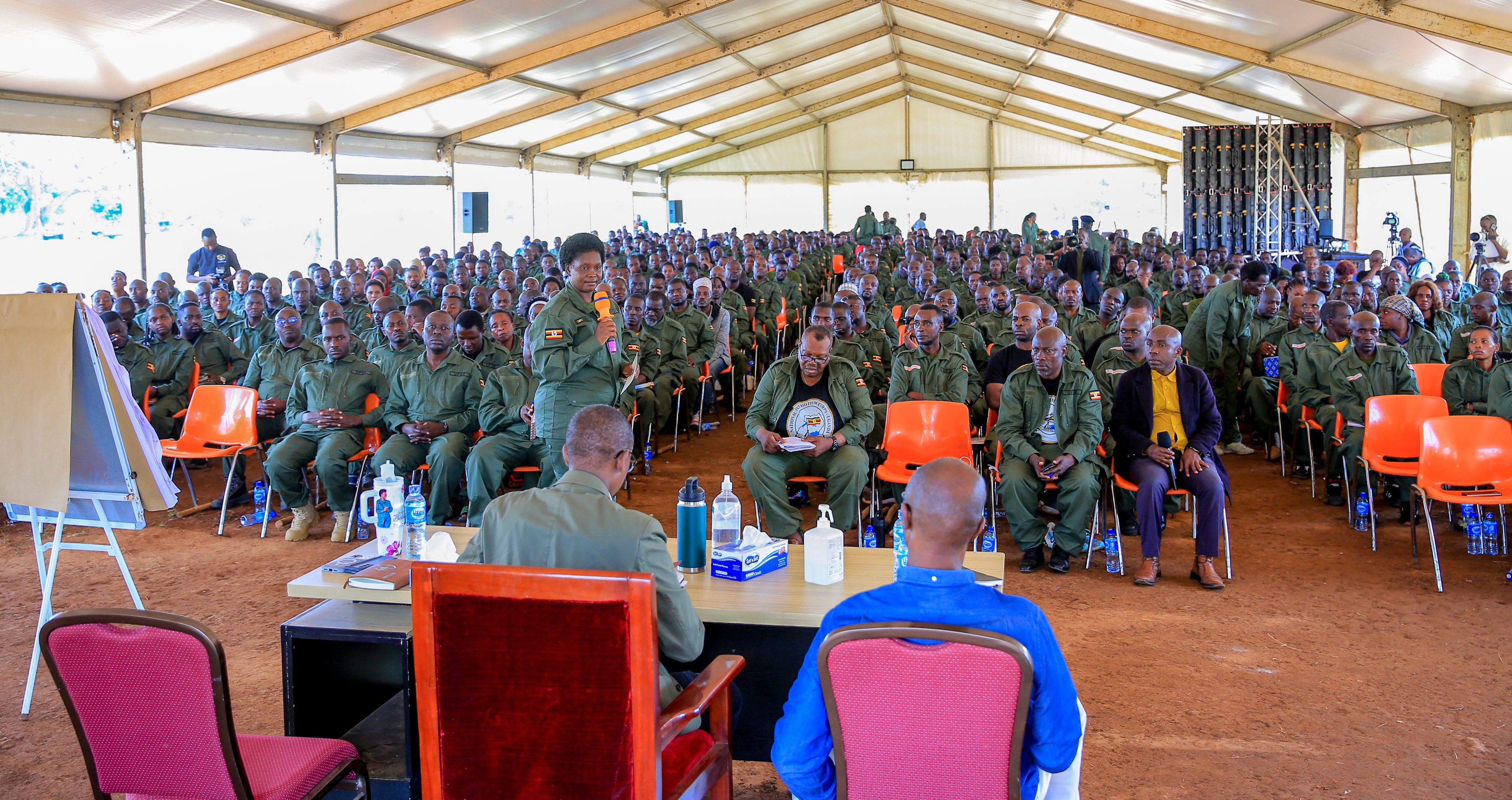
The rehabilitation and ideological orientation programme programme has brought together 1,030 Ugandans, including 438 men, 261 women and 331 children
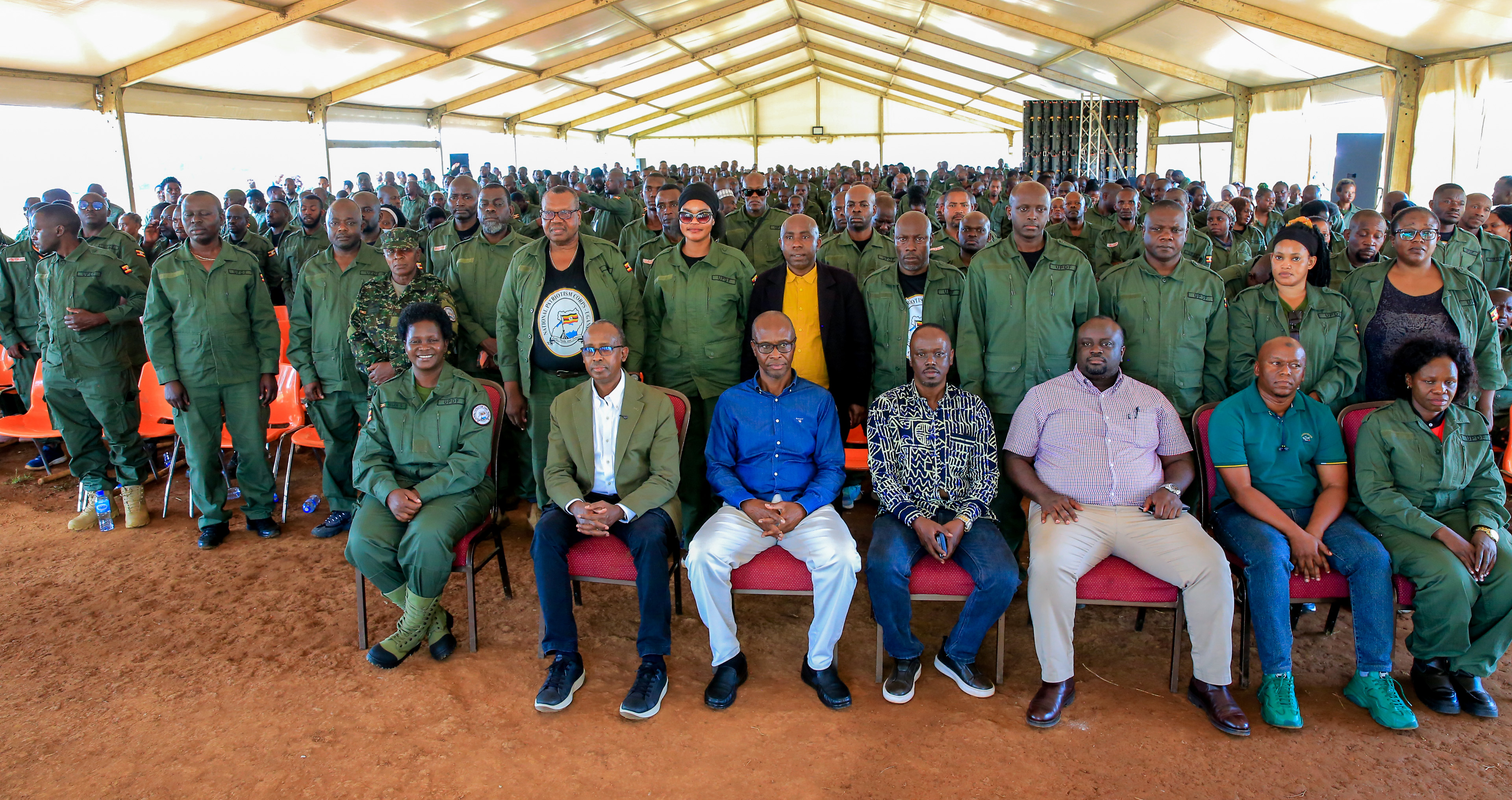
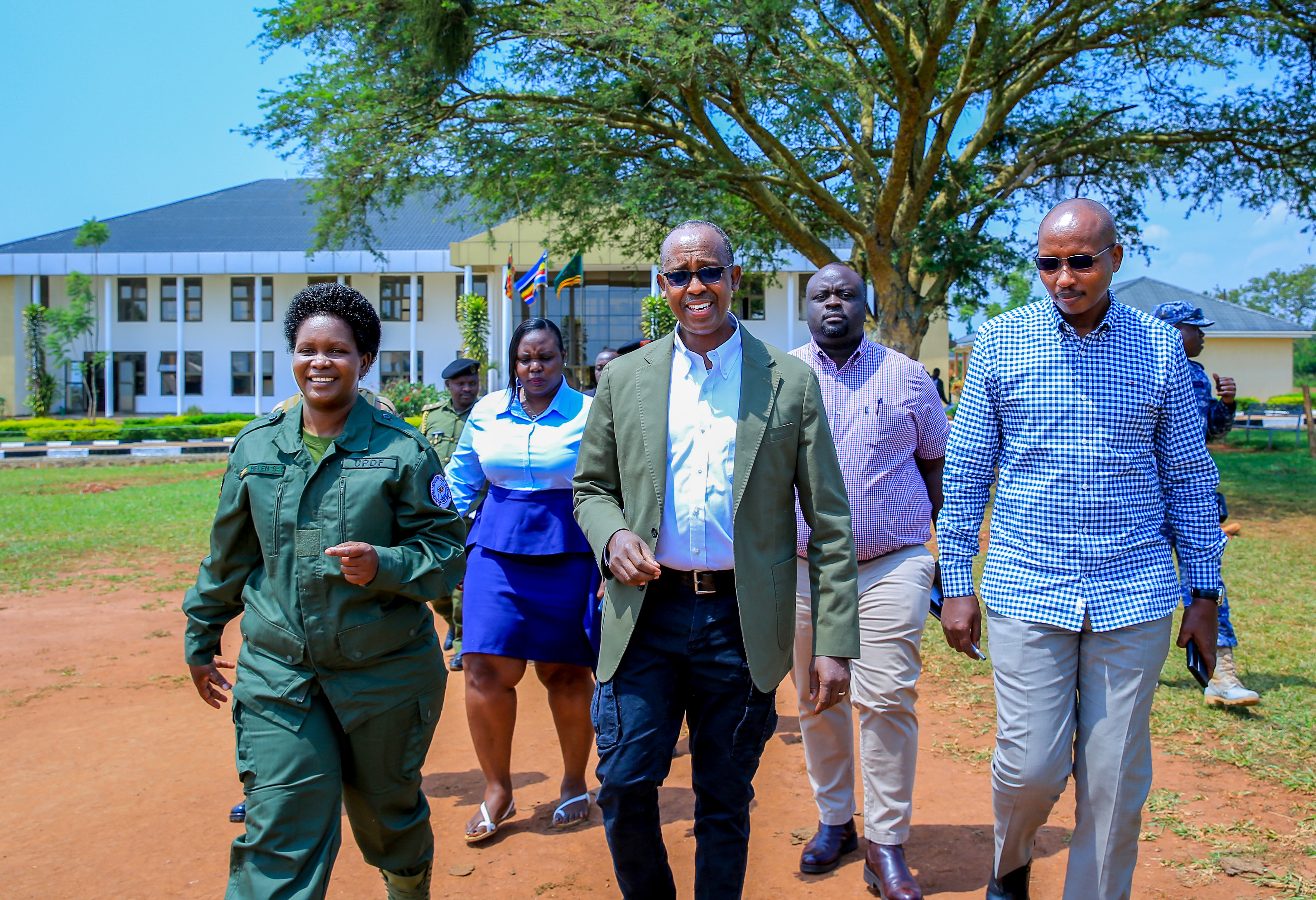
Senior presidential advisor on special duties Odrek Rwabwogo with some of the Ugandans who have returned from South Africa during a teamwork exercise at the National Leadership Institute in Kyankwanzi. PPU Photo
The Government is preparing a package of economic support for more than 1,000 Ugandans repatriated from South Africa following recent xenophobic attacks, with officials planning to organise the returnees into enterprise groups before extending financial assistance.
The 1,030 Ugandans are undergoing a rehabilitation and ideological orientation programme at the National Leadership Institute (NALI) in Kyankwanzi, where they are receiving training in patriotism, leadership, national identity and economic empowerment.
Senior presidential advisor on political mobilisation Moses Byaruhanga said government intends to help the returnees restart their livelihoods through existing financing programmes after organising them according to their skills and viable economic activities.
"The government has money. Our biggest challenge has never been a lack of funds but poor organisation. Once these returnees organise themselves into productive groups, we shall support them," Byaruhanga said.
He said many of the returnees may not qualify for support under the Parish Development Model because of the programme's eligibility requirements, but alternative government financing mechanisms are available.
According to State House Commissioner for the National Secretariat for Patriotism Corps Hellen Seku, the programme has brought together 1,030 Ugandans, including 438 men, 261 women and 331 children aged between birth and 16 years.
The group returned after abandoning businesses, jobs and homes during a wave of xenophobic violence in South Africa.
Seku said many participants arrived traumatised after losing livelihoods they had built over several years but have since regained confidence about rebuilding their lives in Uganda.
"The way they came is not the way they are today. They now appreciate their country. Many have realised they were ignorant about Uganda's opportunities, wealth, and economic potential. They now believe Uganda is the best country to live in."
She said the programme has also attracted interest from other Ugandans who independently returned from South Africa and now wish to undergo similar training.
"I have received countless calls from Ugandans who returned on their own and now want to join this program because they are seeing the positive transformation of their colleagues on social media."
Seku said organisers established a temporary nursery to care for children accompanying their parents, allowing participants to fully attend training sessions.
She also acknowledged support from Mulago National Referral Hospital, Kiboga Hospital and other government health facilities after some returnees arrived with serious medical and psychological conditions.
During the training, Byaruhanga urged African governments to deepen regional economic integration, arguing that unemployment remains one of the factors fuelling hostility towards foreign nationals.
"We need to expand markets across Africa so that industries create more jobs. If Africa becomes one common market, everyone stands to benefit."
Senior presidential advisor on special duties and Presidential Advisory Committee on Exports and Industrial Development chairperson Odrek Rwabwogo said Uganda's long-term economic strategy centres on expanding manufacturing, value addition and exports.
He highlighted agriculture and fish farming among sectors capable of creating large numbers of jobs if properly developed.
"We can create over 200,000 jobs very quickly through fish farming, feed production, maize growing, soybean cultivation, and processing industries."
The training programme is expected to conclude on Friday, July 17.