
E-buses to offer alternative to DMC taxis
Works and Transport Minister Fred Byamukama recently directed police to begin a 100-day operation targeting commuter taxis in dangerous mechanical condition, warning that passenger safety could no longer be compromised.
E-Bus Xpress Kiira Ltd (EBX) is preparing to introduce a new electric bus service in Kira Municipality. (Credit: E-Bus Xpress Kiira Ltd)
__________________
The government’s decision to remove commuter taxis in dangerous mechanical condition (DMC) from the roads in the Greater Kampala Metropolitan Area has put renewed focus on the need for safer and more reliable alternatives for commuters.
Works and Transport Minister Fred Byamukama recently directed police to begin a 100-day operation targeting commuter taxis in dangerous mechanical condition, warning that passenger safety could no longer be compromised.
The operation started on Monday, August 24, 2026, with several taxis impounded for failing to meet required safety standards. 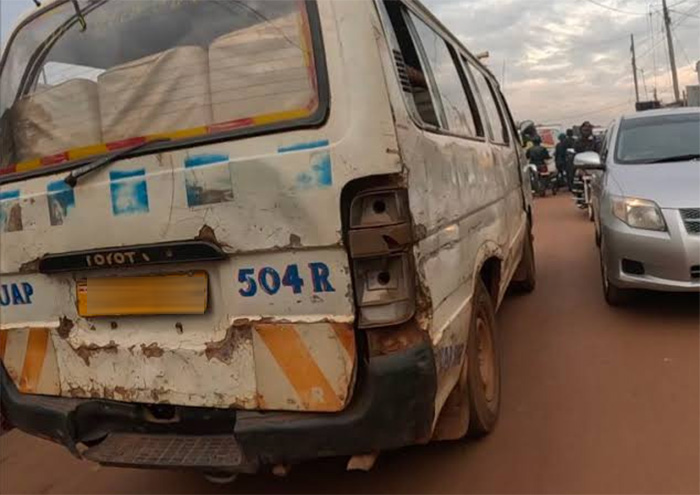
A commuter taxi in a dangerous mechanical condition on the roads of Kampala city. (Courtesy photo)
The crackdown has exposed another challenge in Kampala's already strained public transport system: what happens to commuters when unsafe vehicles are removed from the roads?
A number of passengers were reportedly left stranded on Monday after hundreds of taxis were taken off the streets, while some bodaboda riders increased fares amid the increased demand.
The situation has once again highlighted Kampala's dependence on a largely informal transport system dominated by 14-seater taxis and motorcycles.
It is against this backdrop that E-Bus Xpress Kiira Ltd (EBX) is preparing to introduce a new electric bus service in Kira Municipality.
Starting August 28, 2026, EBX plans to deploy 15 locally developed Kayoola electric buses on three feeder routes linking fast-growing residential communities in Kira and neighbouring areas to Ntinda and Kampala.
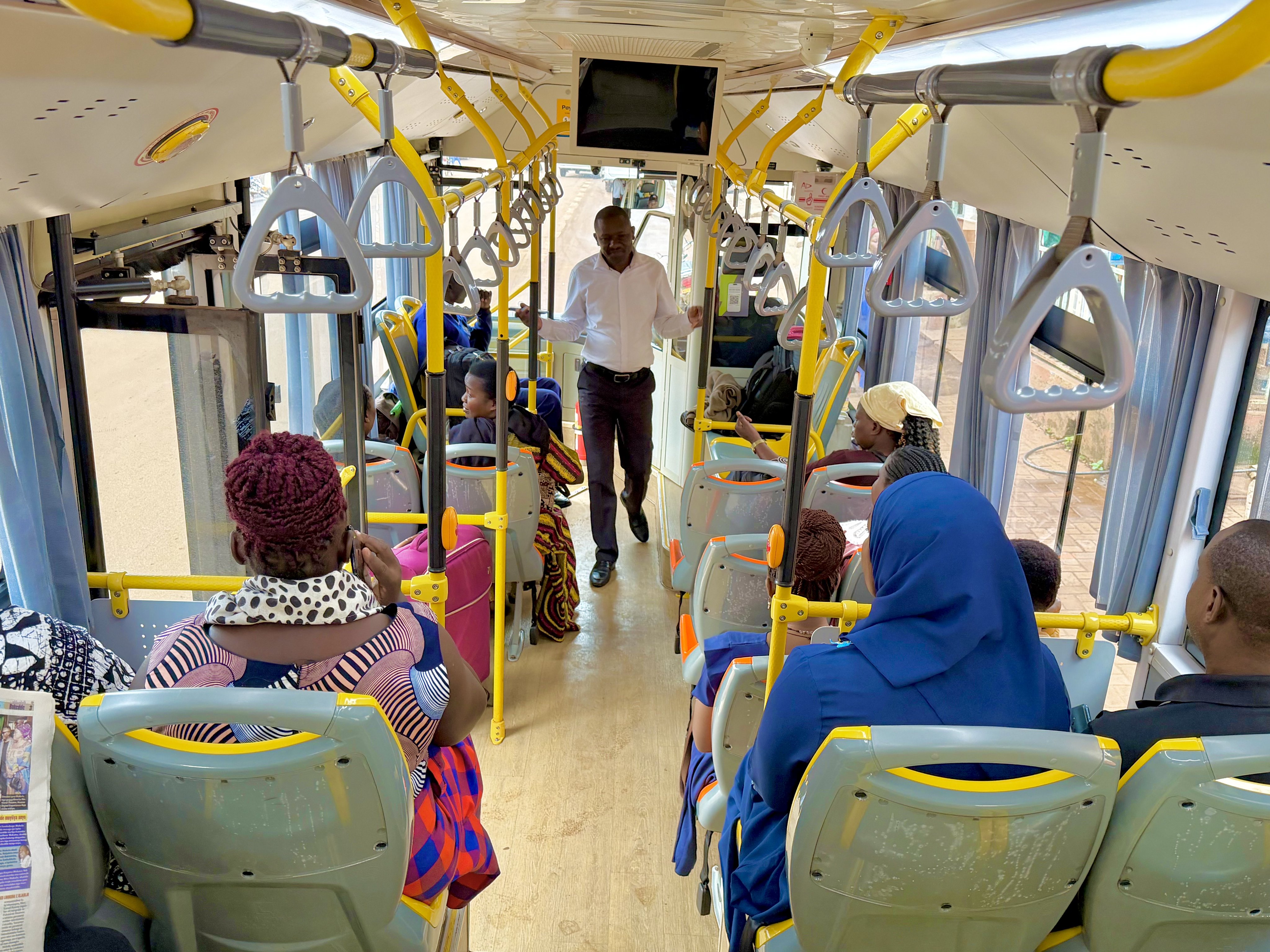
Passengers in Jinja seated in one of the E-Bus Xpress Kiira Ltd (EBX) E-buses plying the Jinja - Iganga route. (Credit: E-Bus Xpress Kiira Ltd)
The service will operate five buses on each route. The first route will run from Ntinda through Najjera, Kira, Kitukutwe, Kiwologoma, and Nakwero.
The second will connect Ntinda, Naalya, Kyaliwajjala, Namugongo, and Sonde, while the third will run between Ntinda, Kisasi, Kyanja, and Kungu.
According to the statement released, the planned routes are designed to address a common problem for residents living on the outskirts of the capital: getting from residential areas to major commercial and employment centres often requires several connections, long waiting times and unpredictable fares.
The buses will also operate on a cashless payment system. Adult fares will start at sh800, while students will pay from sh400, depending on the distance travelled.
For students, EBX plans to introduce a School Cashless Days Campaign, using smart digital wristbands to allow quick fare payments.
Passengers will not be allowed to pay cash onboard.
The introduction of the buses comes as Kampala's transport sector is undergoing wider changes. Authorities have been trying to reorganise taxis and bodabodas, designate formal stages and improve traffic flow, while also looking for ways to move more people using higher-capacity public transport.
KCCA has previously identified the heavy reliance on old taxis and bodabodas as one of the factors contributing to congestion and poor air quality in the city. Its strategic plan notes that the absence of a proper mass public transport system has left Kampala dependent on fragmented paratransit services.
Electric buses could offer an alternative to that model while addressing another growing concern - pollution.
Unlike conventional diesel-powered buses, the Kayoola electric buses produce no tailpipe emissions while operating, potentially reducing the contribution of public transport to urban air pollution.
The move also builds on the government's broader push towards electric mobility. Earlier this year, authorities announced plans for electric buses to operate on Kampala routes as part of efforts to improve mobility, reduce congestion, and improve air quality.