
African defence leaders urged to prioritize intelligence in military strategy
Okiding said African armed forces must adapt to a security environment where threats increasingly cross borders and emerge outside traditional battlefields.
African defence chiefs pose for a group photo on the third day of the Conference of African Defence Chiefs on Military Operations Other Than War at Speke Resort Munyonyo. (Credit: Mpalanyi Ssentongo)
___________________ African defence chiefs at the conference. (Credit: Mpalanyi Ssentongo) African defence chiefs. (Credit: Mpalanyi Ssentongo)
Africa's military leaders have been urged to prepare for a new era of warfare in which intelligence, cyber networks, technology and information may be as decisive as conventional weapons.
Uganda's Deputy Chief of Defence Forces, Lt Gen. Sam Okiding, said African armed forces must adapt to a security environment where threats increasingly cross borders and emerge outside traditional battlefields.
“Today, our battles are fought less with conventional firearms and more with words, cyber networks, and computers,” he told a defence intelligence leaders session at Speke Resort Munyonyo in Kampala on Wednesday (October 7).
This was on the third day of the African Defence Chiefs' Conference on Military Operations Other Than War (MOOTW), a four-day gathering bringing together military delegations from more than 18 African countries.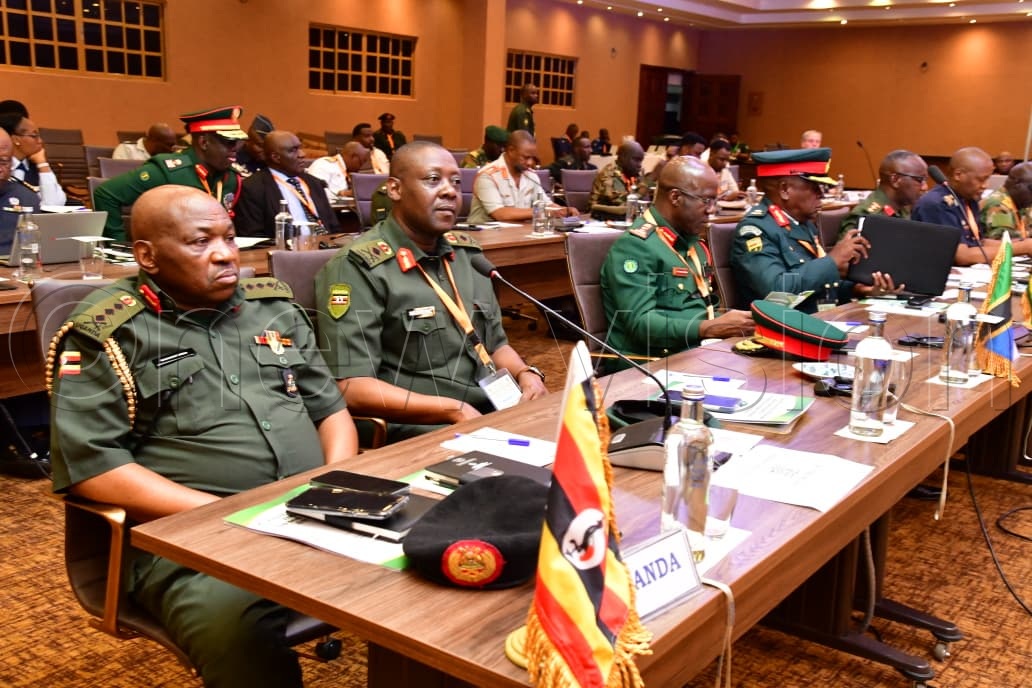
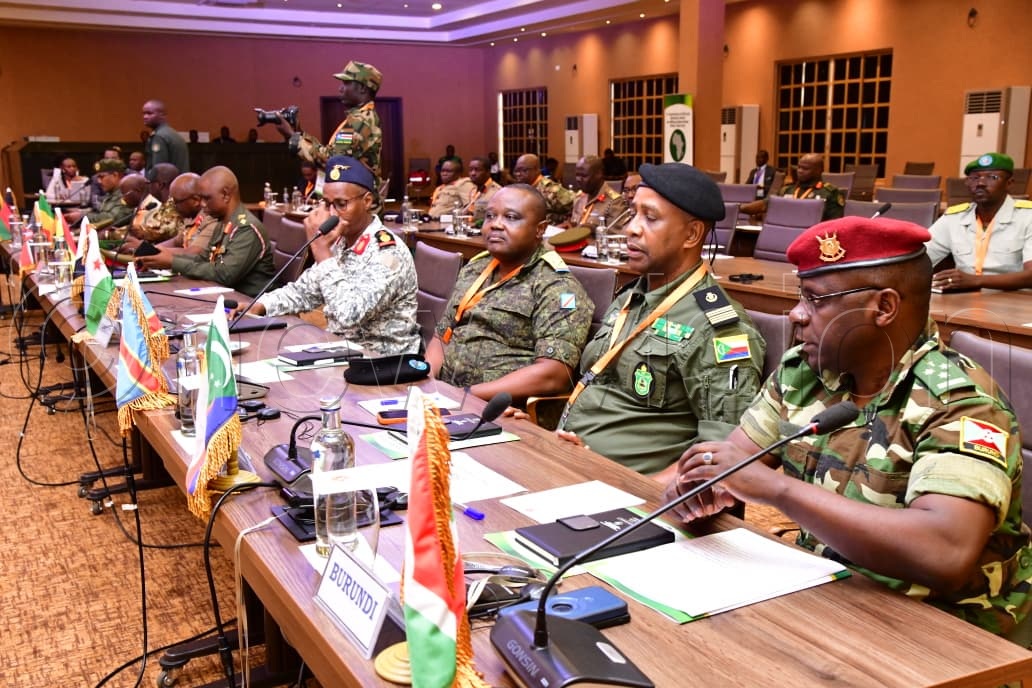
The conference, hosted by Uganda's Chief of Defence Forces, Gen Muhoozi Kainerugaba, is being convened by the Ministry of Defence and Veteran Affairs and the Uganda People's Defence Forces (UPDF).
It concludes Thursday with a keynote address by President Yoweri Museveni, who is also the Commander-in-Chief of Uganda's Armed Forces.
The conference is examining how African militaries can respond to security challenges that do not necessarily involve conventional armed conflict, including terrorism, organised crime, border insecurity, climate-related emergencies, disease outbreaks and humanitarian crises.
Okiding said such operations should no longer be regarded as peripheral to the work of armed forces.
“Military operations other than war are no longer secondary. They are not secondary tasks."
He argued that success in these missions increasingly depends on the ability of military and security agencies to obtain reliable intelligence, assess threats quickly and coordinate responses across borders and institutions.
The changing nature of conflict, Okiding said, requires African countries to rethink how they train personnel, acquire equipment and organise their security institutions.
The emphasis on intelligence came as defence intelligence chiefs reviewed recommendations emerging from two days of technical discussions held before the high-level sessions.
Col Chris Magezi, the acting director of the Directorate of Defence Public Information, said the technical teams had examined about 15 issues affecting security and development across the continent.
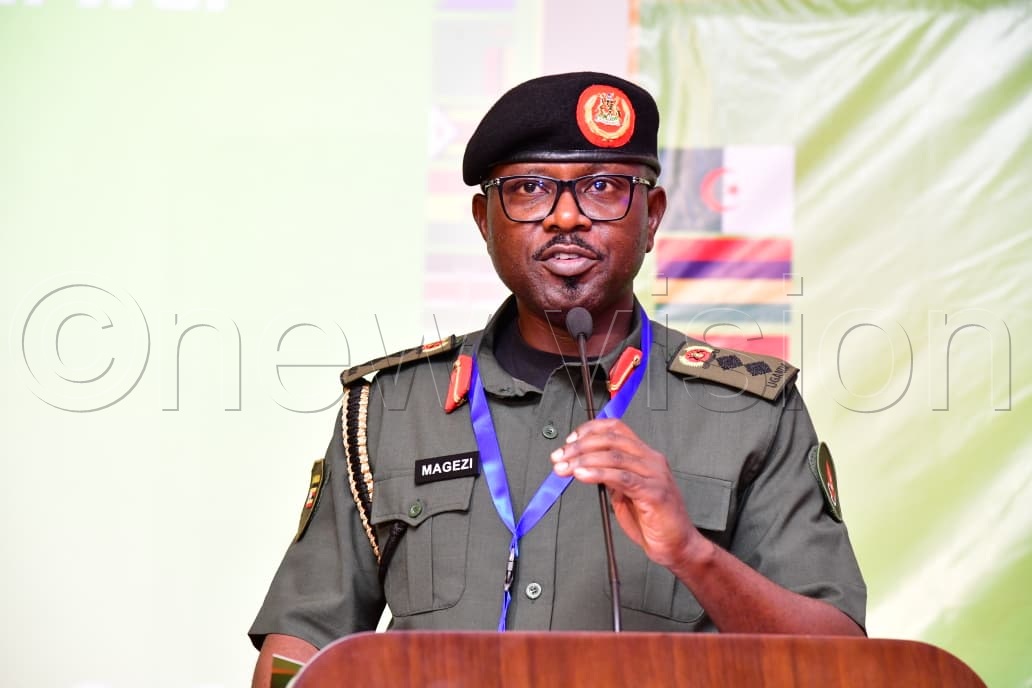
Col Chris Magezi, the acting director of the Directorate of Defence Public Information. (Credit: Mpalanyi Ssentongo)
They included military support to civilian authorities, disaster management, maritime and border security, transnational organised crime, unmanned aerial systems and their proliferation, space security, environmental security, climate change and disease pandemics.
“The conference is underpinned on very important things, which affect our people on a day-to-day basis,” said Magezi.
He added that the intelligence chiefs were expected to review, refine, adopt and sign the report prepared by the technical working groups before it is presented to the wider conference.
Magezi said the breadth of participation reflected the need for African countries to confront security challenges collectively.
The discussions were expected to result in practical recommendations and a joint communiqué.
The conference is also examining how military institutions can contribute to national development in circumstances that fall outside traditional defence roles.
On Thursday, the military chiefs will hear from Gen Caleb Akandwanaho, widely known as Salim Saleh, the Chief Coordinator of Operation Wealth Creation (OWC).
Magezi said OWC provided an example of how military structures could be deployed in a non-combat role to support national development.
“Operation Wealth Creation in Uganda is the quintessential example of a military operation other than war,” he said.
The programme seeks to improve agricultural production and household incomes, forming part of wider government efforts to help Ugandans participate in the cash economy.
The visiting delegations will be able to examine Uganda's experience and consider lessons that could be applied in other countries.
The defence chiefs will also hear from commanders with experience of African peacekeeping and security operations, including missions in Somalia, Juba in South Sudan and the United Nations mission in Abyei.
Magezi said a consolidated framework would subsequently be developed to monitor implementation of the recommendations, including in African countries that did not attend the Kampala meeting.
“A consolidated framework will be developed on how to follow up these proposals and ensure that they are implemented by the African countries participating and those who have not participated."