
Millions struggle to breathe as WHO envoy warns African States on respiratory diseases
Castro said the limited public understanding of conditions such as chronic obstructive pulmonary disease (COPD) presents a major challenge to efforts to improve prevention, early diagnosis and treatment.
José Luis Castro, the WHO Director-General’s Special Envoy for Chronic Respiratory Diseases said the conditions cause nearly four million deaths annually. (Photos by John Musenze)
________________
Millions of people, mainly in Africa, are struggling to breathe because of respiratory diseases that remain poorly understood by the public, with limited awareness, delayed diagnosis, and inadequate access to treatment undermining efforts to reduce deaths, a World Health Organisation (WHO) envoy has warned.
In an exclusive interview with New Vision online, José Luis Castro, the WHO Director-General’s Special Envoy for Chronic Respiratory Diseases, said the conditions cause nearly four million deaths annually, yet attract less public attention than other major non-communicable diseases (NCDs), including cardiovascular diseases and stroke.
The interview happened at the World’s First Lung conference in Nairobi, Kenya, on October 10–11, 2026. Castro said respiratory diseases affect hundreds of millions of people worldwide but remain insufficiently recognised by the public and policymakers.
The two-day conference aimed at mobilising a network of advocates for lung health across Africa and attracted health leaders from across Africa.
He said the limited public understanding of conditions such as chronic obstructive pulmonary disease (COPD) presents a major challenge to efforts to improve prevention, early diagnosis and treatment.
COPD is a chronic lung condition that restricts airflow and causes breathing difficulties. Its symptoms can include persistent coughing, wheezing and shortness of breath. Castro said people often recognise these symptoms but may not know they could indicate a serious respiratory condition, making public education essential.
“There was a lady this morning who spoke about COPD and she said the public doesn't know what that is, but if you explain the symptoms, the cough or the shortness of breath, people recognise that immediately. They just don't know the label or the technical term,” he said.
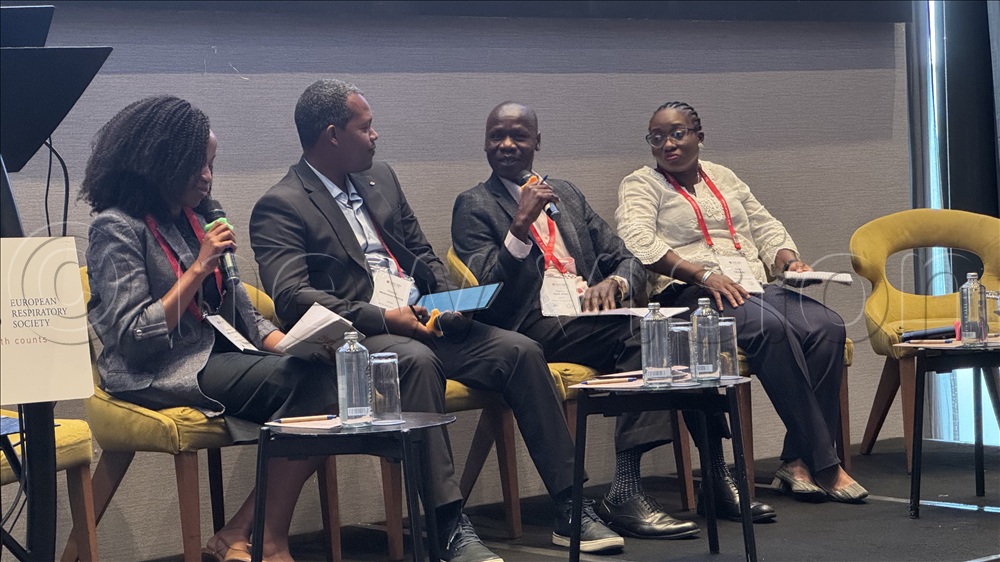
Dr Charles Oyoo Akiya, the commissioner of NCDs (in the middle) during his presentation
He called for stronger communication to help communities recognise respiratory symptoms and seek medical attention early.
Access to diagnosis and treatment
Delegates at the Nairobi meeting identified inadequate funding, limited awareness, insufficient training of health workers, poor implementation of clinical guidelines and shortages of diagnostic equipment as obstacles to early detection.
Participants also highlighted difficulties accessing healthcare facilities, the affordability of services and weaknesses in medicine supply chains. Castro said governments needed to ensure that people with respiratory diseases could receive an early diagnosis and access quality medicines throughout the duration of their treatment.
“For those that are affected by the disease, we are able to diagnose their condition early and we are able to put them on treatment early,” he said.
He added that respiratory diseases require sustained attention because patients with chronic conditions may need treatment over long periods.
“Breathing, the act of breathing, is universal. It is the first thing that we do when we are born and it is the last thing that we do on this earth before we leave,” Castro said.
He urged governments to protect public health by introducing policies that improve air quality in cities, promote smoke-free environments and ensure that people with respiratory diseases receive appropriate care.
He said the burden of respiratory illness is disproportionately higher in poorer countries, where primary healthcare systems may lack the resources to meet patients' needs.
Uganda raises concern over vaping
At the meeting, Uganda's delegation highlighted the growing challenge of controlling electronic cigarettes and other nicotine products, particularly those marketed to young people through online platforms.
Dr Charles Oyoo Akiya, the Ministry of Health's Commissioner for Non-Communicable Diseases, said Uganda had identified more than 20 different products circulating on the market.
He said the findings had prompted efforts to work with regulatory agencies to control the products, although enforcement remained difficult because sellers increasingly use online platforms and deliver products directly to customers.
“They have gone ahead to market their products using other platforms, and you can't easily access that, and they even deliver the product right at your doorstep, wherever you are,” Oyoo said.
The Ministry of Health is also using school clubs and social media to educate young people about the dangers of the products.
Oyoo's remarks reflect concerns raised at the Nairobi meeting about tobacco and nicotine companies targeting young people with new products while efforts to enforce existing tobacco-control policies struggle to keep pace.
Castro said the tobacco industry continued to introduce new products and target young people, calling on governments to implement and enforce the tobacco-control measures outlined in the WHO Framework Convention on Tobacco Control.
He said governments needed to prevent interference by the tobacco industry and enforce restrictions on advertising and marketing to young people.
Without stronger implementation, he warned, the industry would continue introducing new products and reaching growing numbers of young people.
Turning commitments into action
The Nairobi event brought together respiratory health experts, professional societies and advocacy organisations to discuss ways to strengthen lung health across Africa.
Organisers included the European Respiratory Society, the Pan-African Thoracic Society and the Société de Pneumologie de Langue Française, alongside regional partners.
Discussions covered climate change, air pollution, tobacco control, sustainable financing, research, disease registries, prevention and access to respiratory healthcare. Participants called for stronger collaboration between governments, healthcare professionals, civil society organisations and patients to improve awareness and strengthen national responses.
Castro said global commitments would only make a difference if governments translated them into practical action at national level.
He said political declarations and technical guidelines needed to be connected to national budgets and adopted by healthcare professionals in ways that benefit patients.
“The key to success is how they are creating a route for implementation at the national level. And that route of implementation has to have, first, a link to the national budget,” he said.
He urged African leaders to prioritise clean air, smoke-free environments, early diagnosis and continued access to treatment, saying protecting people's ability to breathe was essential to their wellbeing and countries' development.