
CSOs call for stricter controls on alcohol marketing
Campaigners cite estimates linking alcohol to 48% of oesophageal cancer cases and put the cost of treating alcohol-attributable cancers at about sh11 trillion
Men sipping alcohol (local brew Malwa) in Soroti City. (Credit: Wilfred Sanya)
Civil society organisations (CSOs) have called for comprehensive laws to restrict alcohol advertising and promotion in Uganda, warning that aggressive marketing is exposing children and young people to drinking and undermining public health.
The campaigners want restrictions covering television, radio, print media, billboards, social media, influencer campaigns, sports sponsorships and sales promotions.
Their argument is that partial controls leave loopholes for alcohol companies to reach vulnerable audiences.
Juliet Namukasa, a representative of Movendi International, said Uganda needs stronger legislation to protect the public from aggressive alcohol marketing, urging legislators to put public health ahead of commercial interests.
She called for measures to shield children and other vulnerable groups from alcohol promotion, warning that the expansion of alcohol marketing in African markets makes stronger safeguards increasingly urgent.
The calls were made during a briefing organised by the Uganda Alcohol Policy Alliance (UAPA) at Kampala Kolping Hotel on Thursday, ahead of the fifth Uganda Alcohol Policy Conference scheduled for November 25–26 at Makerere University School of Public Health Auditorium in Mulago.
The WHO estimates that harmful alcohol use causes about three million deaths annually worldwide, accounting for 5.3% of all deaths. Its estimates also show that alcohol is responsible for 13.5% of deaths among people aged 20–39.
The renewed push follows Parliament’s rejection of the Alcoholic Drinks Control Bill, 2023, in August 2024. The proposed law sought to introduce restrictions on the sale and distribution of alcoholic drinks.
Among other measures, the Bill sought to limit the hours during which alcohol could be sold, prohibit sales to persons below 18 years, restrict online sales and home deliveries, and ban alcohol sales in public service vehicles.
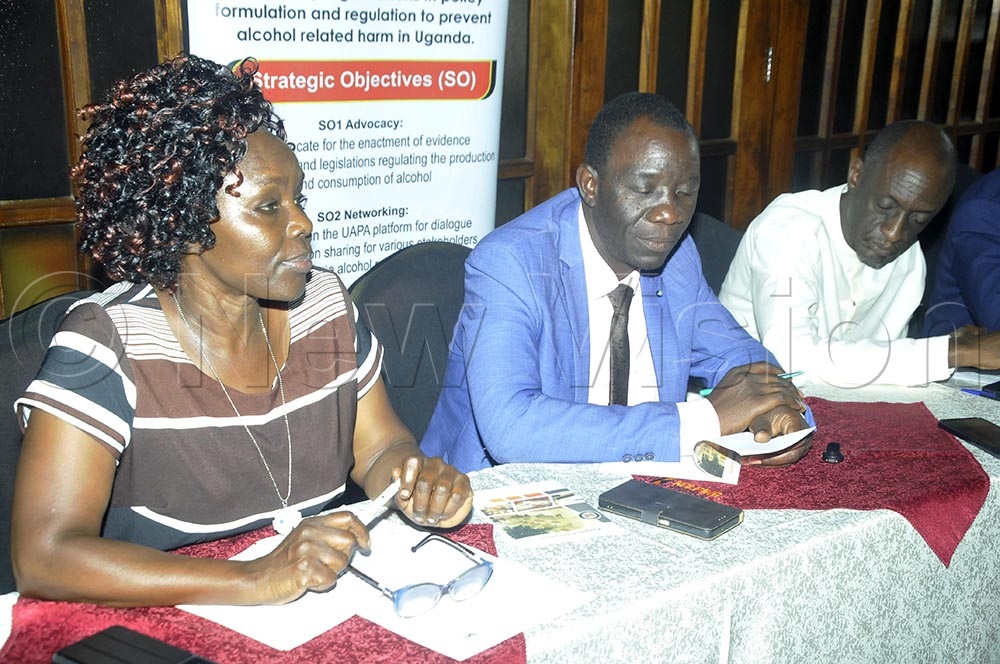
Juliet Namukasa, a representative of Movendi International, said Uganda needs stronger legislation to protect the public from aggressive alcohol marketing, urging legislators to put public health ahead of commercial interests. (Credit: Wilfred Sanya)
It also proposed restrictions on small and plastic alcohol packaging and tougher penalties for selling alcohol to minors.
Prof Nazarius Mbona Tumwesigye, an alcohol-policy expert, called for stronger regulation of alcohol advertising, consumption and sales as part of efforts to reduce alcohol-related harm.
Dr Alfred Jatho, an oncologist and head of the Non-Communicable Cancer Services Department at the Uganda Cancer Institute, highlighted the potential economic benefits of effective alcohol-control policies.
He argued that stronger regulation could increase government revenue while reducing the costs associated with alcohol-related illnesses, including cancer
Campaigners cite estimates linking alcohol to 48% of oesophageal cancer cases and put the cost of treating alcohol-attributable cancers at about sh11 trillion
They also point to estimates that illicit alcohol accounts for about 65% of total alcohol consumption, arguing that the scale of the problem underscores the need for a comprehensive regulatory framework.
CSOs want restrictions on alcohol marketing to be backed by effective enforcement and public education to protect young people and reduce the wider social and economic costs of harmful drinking.
The upcoming conference next month is expected to bring together policymakers, health experts and civil society groups to discuss alcohol-control measures and press for stronger government action.