
Govt tightens border surveillance as health teams call for more Ebola response supplies
"Many people bypass the official border and use porous routes. We need more screening points and equipment to effectively monitor these movements," Andama said.
A track driver crossing from Congo to Uganda at the Vurra border post in Arua district being screened with a temperature gun by Sr. Lillian Eyotaru a medical officer at the Vurra Point of Entry. The government has intensified surveillance and screening at Uganda's border points with the Democratic Republic of Congo (DRC) as part of efforts to prevent the spread of the Ebola Bundibugyo virus. This was on June 6, 2026. (Credit: Lawrence Mulondo)
ARUA - The government, with support from development partners, has intensified surveillance and screening at Uganda's border points with the Democratic Republic of Congo (DRC) as part of efforts to prevent the spread of the Ebola Bundibugyo virus.
However, frontline health workers say the response is being hampered by inadequate medical supplies and limited infrastructure.
At Vurra border post in Arua District, one of the busiest entry points in West Nile, health workers dressed in protective gear screen all travellers entering and exiting Uganda.
The usually busy crossing now has fewer travellers, with only cargo trucks carrying essential goods allowed through following a Ministry of Health directive issued in May.
Arua is among Uganda's high-risk districts because it borders the DRC, the epicentre of the current Ebola Bundibugyo outbreak, and has numerous porous entry routes.
According to Ministry of Health data released on Friday, Uganda had recorded 19 confirmed Ebola cases, including 14 imported cases and five local infections. Thirteen patients were admitted for treatment, four had recovered and been discharged, while two deaths had been registered.
Emmanuel Andama, the Point of Entry in-Charge at Vurra border post, told The New Vision that four health workers and two personnel deployed by the International Organisation for Migration (IOM) are conducting screening and monitoring activities.
He said the facility recently received medical supplies from the National Medical Stores, including sanitisers, gloves and gowns, but noted that the quantities were insufficient for the growing needs.
"We received supplies this week, but they are not enough. Some critical items such as face masks, were not included, and we have already communicated our concerns," Andama said.
He explained that all truck drivers entering Uganda undergo mandatory screening. The process begins with handwashing, followed by temperature checks using temperature guns and infrared thermometers. Those with elevated temperatures undergo further assessment, including interviews about recent travel history and possible exposure to Ebola.
"If someone presents symptoms or has a high temperature, we isolate them immediately and coordinate with district authorities for further management," he said.
Suspected cases are tested, with samples sent to the Uganda Virus Research Institute laboratory in Arua. Results are usually available within three hours. So far, three samples tested at the facility have all returned negative results.
Despite the efforts, Andama said the border post lacks adequate handwashing facilities and additional screening stations needed to monitor travellers using unofficial crossing routes.
"Many people bypass the official border and use porous routes. We need more screening points and equipment to effectively monitor these movements," he said.
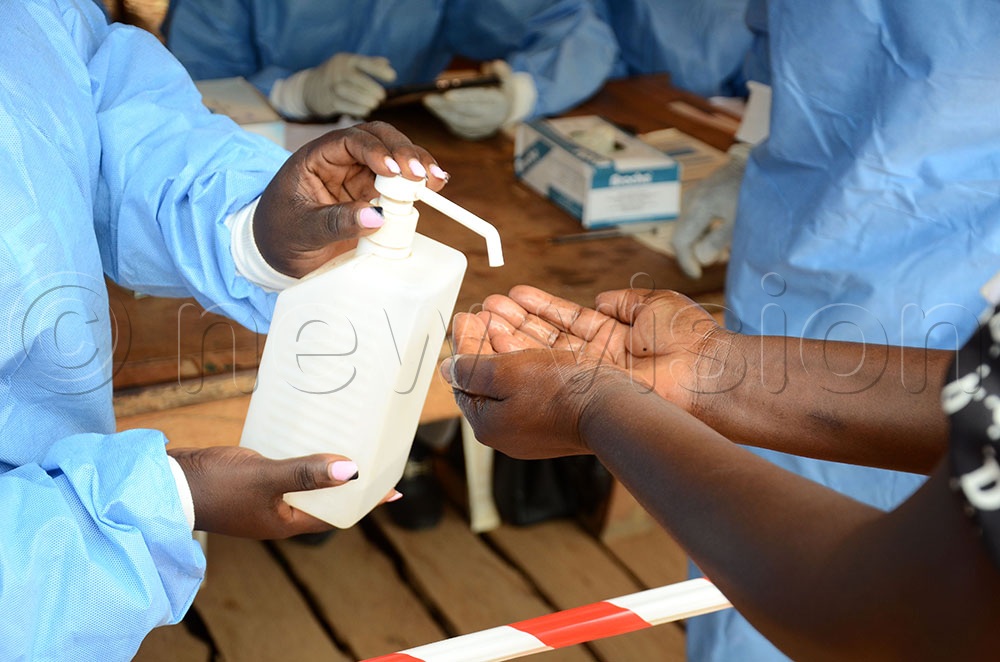
Emmanuel Ebitu, Amref's Project Manager in Arua, said the organisation is supporting coordination, surveillance, risk communication and community engagement. (Credit: Lawrence Mulondo)
Porous borders remain a major challenge
At Odramacaku border point, the situation is even more challenging. The border market attracts traders from both Uganda and the DRC, and there are few physical barriers separating the two countries.
Many pedestrians and boda boda riders were observed crossing freely, while health workers operating from an ageing tent focused mainly on screening truck drivers.
Charles Caicocabo, the Point of Entry In-Charge at Odramacaku, said communities on both sides of the border are aware of the Ebola threat and have become more vigilant.
"People now understand that Ebola is real and deadly. Communities are reporting suspected cases more quickly than before," he said.
However, he noted that the facility lacks a temporary isolation unit and faces shortages of gloves, face masks and sanitisers.
The screening tent currently in use was procured during the COVID-19 pandemic and offers limited protection during heavy rains.
Controlling movement across the border remains difficult because many travellers avoid designated entry points.
"Truck drivers are easier to screen because they pass through the main checkpoint. Pedestrians and boda boda riders often move through without any checks," Caicocabo said.
He called for more community sensitisation targeting boda boda riders, hotel operators and traders who frequently interact with travellers from both countries.
District seeks more resources for response
He noted that several confirmed Ebola cases had passed through Arua due to the porous nature of the border.
"We have received more than 40 alerts from communities, and all suspected cases have been handled according to Ministry of Health guidelines," Drani said.
The district has deployed surveillance teams, rapid response teams and community engagement initiatives to strengthen prevention efforts. However, funding constraints continue to limit operations.
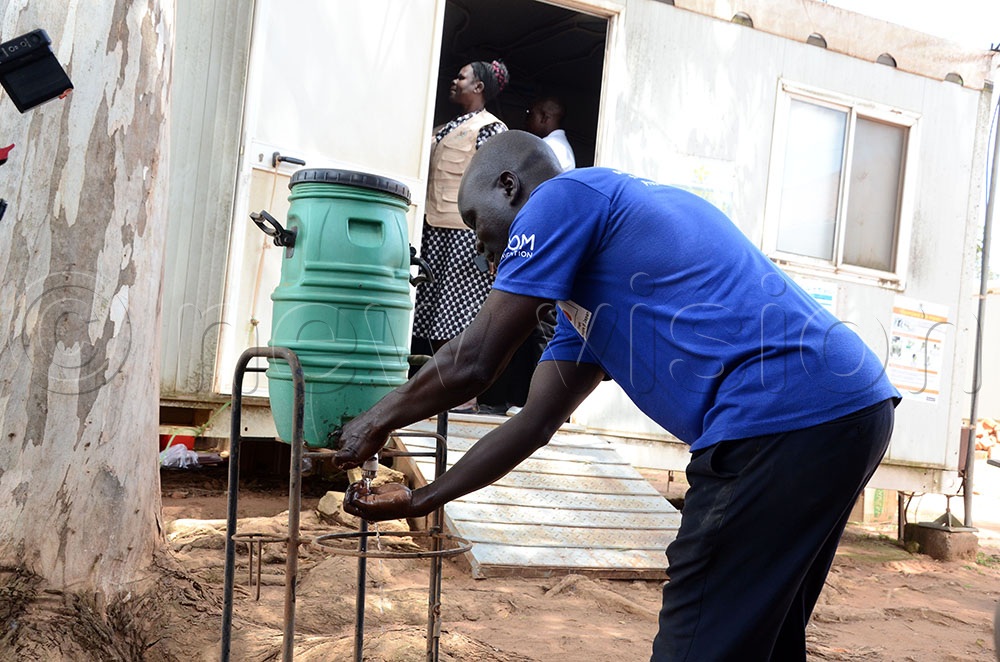
Emmanuel Andama the Point Of Entry In Charge at the Vurra border post in Arua district washing his hands before accessing his work station. The government has intensified surveillance and screening at Uganda's border points with the Democratic Republic of Congo (DRC) as part of efforts to prevent the spread of the Ebola Bundibugyo virus. This was on June 6, 2026. (Credit: Lawrence Mulondo)
Drani said Information, Education and Communication (IEC) materials such as posters, flyers and fact sheets are insufficient, making it difficult to reach all communities with lifesaving messages.
"Many people do not have access to radios, so printed information remains very important. We need more materials in local languages and more support for community outreach," he said.
He added that schools, markets, churches and other public spaces require additional educational materials to reinforce Ebola prevention measures.
Partners step in to support government efforts
To strengthen the response, Amref Health Africa Uganda has mobilised sh100m in partnership with its offices in Nairobi and the Netherlands to support Ebola preparedness and response activities in Arua District, Koboko District and Arua City.
Emmanuel Ebitu, Amref's Project Manager in Arua, said the organisation is supporting coordination, surveillance, risk communication and community engagement.
The organisation has provided medical supplies, including protective equipment to health workers at border points and distributed Ministry of Health-approved information materials in multiple languages.
"We are working closely with district health teams and community structures to strengthen surveillance and improve public awareness on Ebola prevention," Ebitu said.
Amref is also using its network of village health teams to spread awareness and identify suspected cases within communities.