
Medical Schools asked to integrate AI into training
As Artificial Intelligence increasingly finds its way into diagnosis, medical research and patient care, Uganda’s medical schools are being urged to prepare the next generation of health workers to use the technology responsibly — while ensuring that human expertise remains at the centre of medical decisions.
Ambrose Ruyooka, Assistant Commissioner at the Ministry of ICT and National Guidance, poses for a photo with participants after the opening of the Health AI Governance Workshop at Sheraton Kampala Hotel. (Photo by Violet Nabatanzi)
_________________
Medical and dental training schools in Uganda have been asked to integrate Artificial Intelligence (AI) into their curricula, a move expected to equip future medics with the skills to use AI as a clinical support tool in diagnosis, research, and patient care.
Dr Ayub Twaha, Vice Chairperson of the Uganda Medical and Dental Practitioners Council (UMDPC), said more than three quarters of medical personnel remain reluctant to embrace or are unfamiliar with AI, creating an urgent need to equip them with the knowledge and skills to use the technology responsibly.
The Council is now encouraging medical and dental training institutions to integrate AI into their curricula and is expected to assess its implementation during inspection of medical schools.
Speaking during the Health AI Governance Workshop at the Sheraton Kampala Hotel on August 7, Twaha said; “We encourage a lot of innovation in healthcare and AI is one thing that has opened our eyes to research, innovation, and ways of making ourselves better.’’
UMDPC inspects medical schools every two years to establish whether the curricula submitted by institutions are being implemented. Twaha said the next inspection will also pay attention to the integration of AI in medical training.
“Sometimes people give you a fancy curriculum, and then it is not implemented. We follow that up and want to make sure that it is done well. We will not leave behind AI because that is the order of the day,” he said.
Uganda currently has about 14 medical schools, with four others in the pipeline for accreditation. There are also four dental schools, with two more expected to be accredited.
AI transforming medical diagnosis
According to Twaha, dentistry is among the areas where AI is already demonstrating potential, particularly in the diagnosis and interpretation of dental X-rays.
He said AI-assisted dental equipment can analyse images and highlight areas that may require attention, including cavities and gum-related problems, allowing dentists to make faster assessments.
“In dentistry, AI is used very well in diagnostics and it aids a lot of diagnostics. That is one of the things which make it very applicable,” he said.
The use of AI, Twaha noted, has also reduced the amount of time dentists spend processing and interpreting images.
Previously, dentists had to manually process images before interpreting them, a process that could take more than 20 minutes. AI can now assist with the analysis in less than a minute.
Beyond diagnosis, Twaha said AI can also help health workers access information and seek second opinions, particularly in areas where specialist doctors are limited.
The Assistant Commissioner at the Ministry of ICT and National Guidance, Ambrose Ruyooka, noted that; "AI is coming as a tool to facilitate what is already being done by humans, and the important thing is that it is not replacing human beings. Whatever AI does must be validated by people. Even when AI is used in medical diagnosis, blood smear analysis, laboratories, and other technologies, we still insist that the results must be verified by a human being.’’
He said they are developing an AI strategy and identifying how it can be developed and used in key sectors. "We do not want to develop a law that will stifle innovation. We want AI to help people develop and advance innovation. Let people innovate, but let them do so while following the guidelines that have been established,’’ he said.
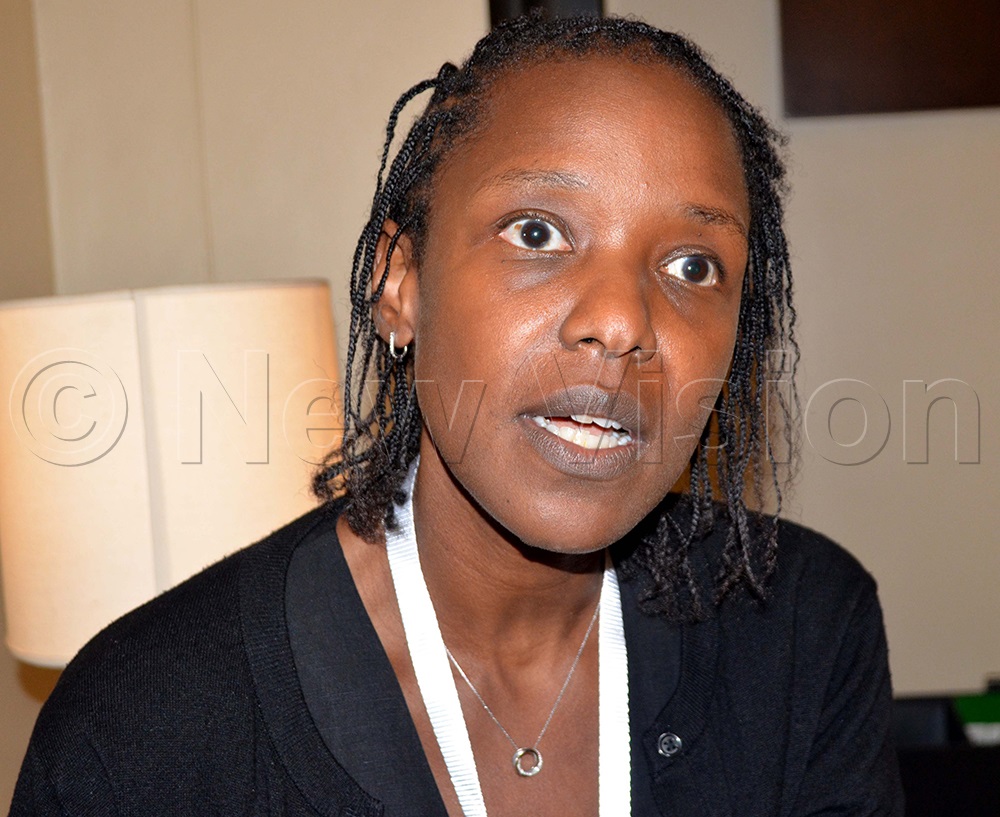
Sharifah Sekalala, a Professor of Global Health Law at the University of Warwick, speaks during the event. (Photo by Violet Nabatanzi)
Sharifah Sekalala, a professor of Global Health Law at the University of Warwick, said in their five-year project, they came up with innovations on how they can incorporate AI in health care.
“The question is not only what AI can do, but who controls it? Who benefits from it? Whose data is used, and who bears the risks? That is the reason we are coming up with an AI tool kit,” Sekalala said.
She said the future of AI in global health cannot be determined by technology alone. "It must be formed by equity, human rights, data, meaningful community participation and strong governance.”
Sekalala said they have been working with Uganda's Ministry of Health and Ministry of Information Communication and Technology and that they already have guidelines.