
'94% public health centres operate with limited WASH services'
In Uganda, Tindimugaya said, persistent disparity in the WASH service coverage between the rich and poor population quintiles. Many rural and peri-urban schools face deficits, lacking gender-segregated latrines and menstrual hygiene management (MHM) facilities, which directly impacts student attendance and retention.
A cross-section of panelists during a high-level dialogue on climate-resilient water and sanitation services in Uganda held at Sheraton Hotel Kampala on Wednesday, June 24, 2026. (Photo by Juliet Kasirye)
________________
Water experts have expressed concern about the limited Water, Sanitation, and Hygiene (WASH) services, especially in rural communities, stating that this is crippling public health and service delivery.
Dr Callist Tindimugaya, the Commissioner of Water Resources Planning and Regulation from the Ministry of Water and Environment, said WASH in public institutions is one of their biggest challenges, with many health care facilities still lacking the basic services they need.
“Up to 94% of public health centres operate with limited WASH services," he said.
"Many clinics lack reliable running water, proper hand hygiene stations, and safe medical waste disposal, increasing the risk of healthcare-associated infections."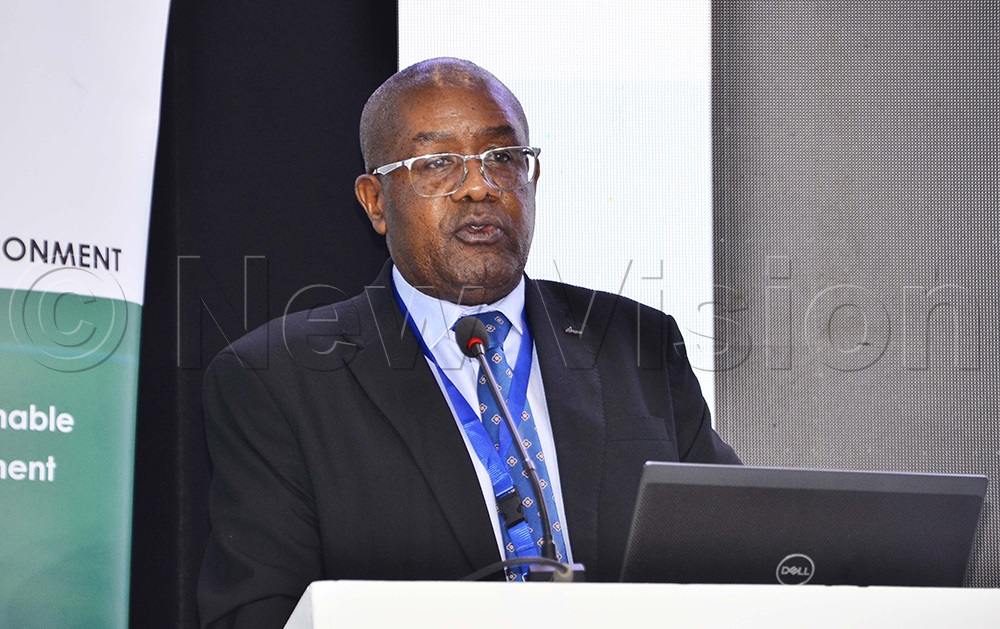
Dr Callist Tindimugaya addresses participants during a high-level dialogue on climate-resilient water and sanitation services in Uganda held at Sheraton Hotel Kampala on Wednesday, June 24, 2026. (Photo: Juliet Kasirye)
This was on Wednesday (June 24) during a high-level dialogue on climate-resilient water and sanitation services in Uganda, organised by the Ministry of Water and Environment at the Sheraton Hotel, Kampala.
In Uganda, Tindimugaya said, persistent disparity in the WASH service coverage between the rich and poor population quintiles. Many rural and peri-urban schools face deficits, lacking gender-segregated latrines and menstrual hygiene management (MHM) facilities, which directly impacts student attendance and retention.
“For sanitation, 24% of the population has access to basic services, with a gap between 33% in urban areas and 21% in rural areas. Regarding schools and health facilities, 12% of rural schools have basic hygiene services, compared to 45% urban schools. 59% Health Care Facilities (HCFs) have access to basic water services, while just 9% HCFs have access to basic sanitation services," said Tindimugaya.
Wednesday's dialogue was held under the theme: Advancing Climate Resilient Water and Sanitation services for Sustainable and Inclusive Development in Uganda.
Drawing development partners, civil society organisations, MPs, UNICEF, Uganda Bankers Association, the private sector, and other government agencies, the discussion focused on building a shared understanding and commitment among key sector stakeholders on the reforms, investments, partnerships, collaboration and service delivery arrangements required to accelerate sustainable, inclusive, climate-resilient and equitable WASH services in Uganda.
Besides inadequate WASH in public institutions, other challenges affecting the WASH sector include urbanisation, population growth, water security, disaster risk management, weak water commitments, climate vulnerability and resilience.
Fragile infrastructure was also raised.
“More than 80% of Ugandans use basic pit latrines, which frequently collapse or overflow during heavy rains and seasonal flooding, contaminating shallow groundwater sources," said Tindimugaya.
"Besides that, protected springs and deep boreholes in vulnerable areas often run dry during intense drought, creating severe water scarcity.”
To improve the delivery of climate-resilient water and sanitation services in Uganda, Tindimugaya urged all stakeholders to accelerate inclusive, equitable, and sustainable access to safely managed water and sanitation services across both rural and urban areas, including public institutions such as schools, health facilities, and underserved and vulnerable populations.
"We should also improve operational efficiency of the WASH sector through enhanced regulation, designing and establishing systems for improving the performance of service providers, reducing unaccounted for water, improve revenue collection efficiency, among others."
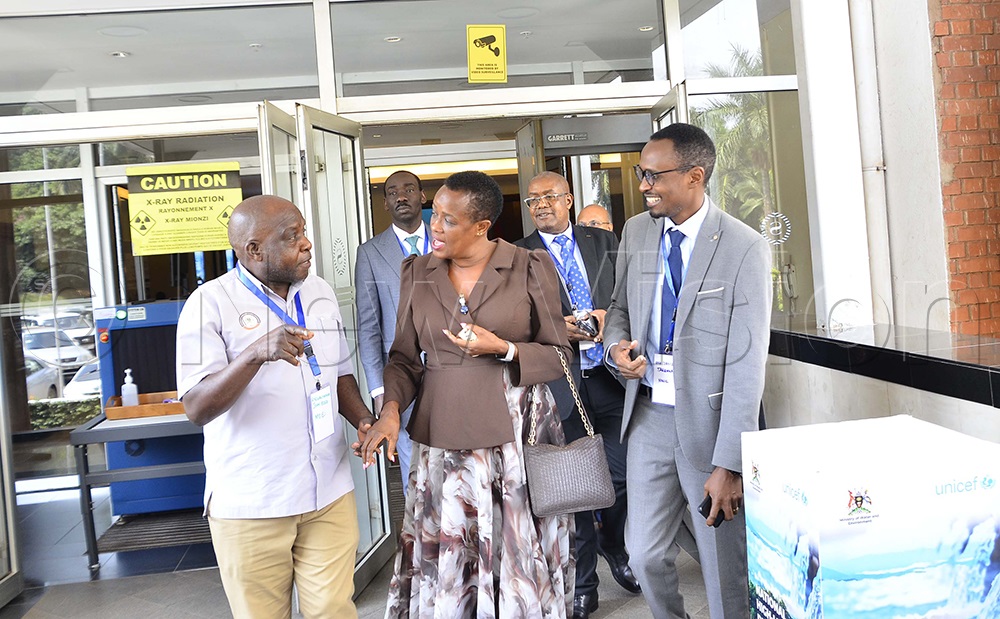
Aisha Sekindi, State Minister for Water, interacts with WASH sector experts as Dr Callist Tindimugaya looks on during a high-level dialogue on climate-resilient water and sanitation services in Uganda held at Sheraton Hotel Kampala on Wednesday, June 24, 2026. (Photo by Juliet Kasirye)
Funding
Representing the Water and Environment Minister (Maj. Gen. Kahinda Otafiire), water state minister Aisha Sekindi said acknowledged that access to safe water and sanitation remains a significant challenge for Uganda.
She said it is exacerbated by water scarcity, increasing demand, driven by population growth, and the impacts of climate change in both urban and rural areas, with vulnerabilities seen in urban slums and increased demand pressures in refugee-hosting areas.
“Floods routinely submerge our latrines and contaminate drinking water sources. Concurrently, prolonged droughts dry up critical water sources, cutting off rural communities and straining health facilities,” said the minister.
“While we are giving priority to expanding water and sanitation services in both rural and urban areas, the public budget is not enough to fund this transformation alone. We need innovative financing models, public-private partnerships, and dedicated climate funds to bridge the service delivery gap.”
The Global Director of WASH at UNICEF, Evariste Kouassi Komlan, said the United Nations Children’s Fund, as a lead organisation in water and sanitation in the UN system, is ready to support and continue to support the government of Uganda.