
Education crisis in Kumi as report says P3 pupils failing P2 work
The assessment further exposed widespread teacher absenteeism, one of the key factors limiting children’s learning. At the time of the survey, 20 per cent of teachers were absent, even though the district has 75 schools and 1,157 teachers on its payroll.
According to the report, learning outcomes have deteriorated sharply, with many children failing to progress academically despite Uganda’s automatic promotion policy. (Credit: Godfrey Ojore)
KUMI - Kumi district is facing a deepening education crisis after a new report revealed that the majority of Primary Three pupils cannot complete work meant for Primary Two learners.
The findings are contained in an education assessment conducted by UWEZO in August 2024 across 15 government-aided schools, focusing on basic literacy and numeracy.
According to the report, learning outcomes have deteriorated sharply, with many children failing to progress academically despite Uganda’s automatic promotion policy.
Alarmingly, 14 per cent of learners in Kumi do not continue to the next grade, raising concerns about high dropout rates before completion of the primary school cycle.
The assessment further exposed widespread teacher absenteeism, one of the key factors limiting children’s learning. At the time of the survey, 20 per cent of teachers were absent, even though the district has 75 schools and 1,157 teachers on its payroll.
Simon Peter Olinga, the national trainer at UWEZO, attributed the poor performance to acute infrastructure shortages and overwhelming teacher workloads.
“We found that a lack of enough classrooms and an extremely high teacher–pupil ratio are major contributors to the learning crisis. Government needs to intervene urgently,” Olinga said.
The report revealed a teacher–pupil ratio of 1:93, nearly double the national policy requirement of one teacher for every 53 learners. In several schools, classroom congestion has reached alarming levels.
Representing Kumi district education officer Kesiron Okia confirmed the findings and acknowledged that overcrowding is crippling effective classroom management.
“Some classes have over 200 learners. Under such conditions, a teacher can't give every child the attention they need,” Okia said.
Okia also cited chronic absenteeism among pupils, particularly those living near weekly markets or in farming communities.
“In Akadot Primary School, many children skip classes to go to the market. During planting and harvesting seasons, absenteeism becomes the norm despite our engagements with parents,” he added.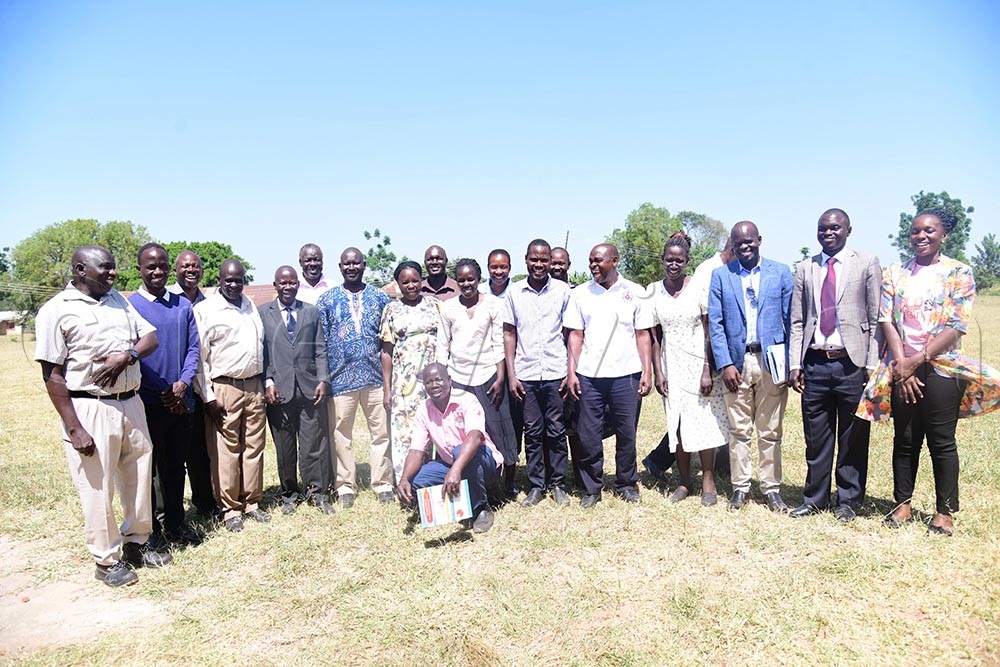
The stakeholders, after the release of the report at Kumi Primary School on Tuesday. (Credit: Godfrey Ojore)
Parental neglect
Headteachers echoed the concern, saying while teachers are trying their best, parental neglect continues to undermine learning. Charles Ebwokor, head teacher of Kumi Primary School, highlighted the absence of school meals as a major contributor to poor performance.
“Unless children are fed at school, results will remain poor. Private schools perform better because learners receive breakfast and lunch, unlike those in government schools,” Ebwokor said.
Debora Atai, the chairperson of the school management committee (SMC) at Kanyumu Primary School, criticised parents for sending children to school late and without basic scholastic materials.
“At the start of every term, parents keep children at home for two weeks. When they finally send them, they come with no books or pens. How can such a child compete with others who report on time and are well prepared?” she asked.
Assistant Kumi Resident District Commissioner (RDC) James Akodai acknowledged the seriousness of the crisis and emphasised the government's responsibility in addressing infrastructural shortages and staffing gaps.
Enforce accountability
In response to the report, district leaders resolved that headteachers must enforce strict accountability among staff, especially those absenting themselves for burials or personal errands.
Teachers who miss lessons will be required to compensate for lost teaching time within the same week.
The leadership also appealed to the government to construct additional classrooms to reduce congestion and create a conducive learning environment.
As Kumi grapples with these challenges, education stakeholders warn that without urgent and coordinated intervention, the district risks raising a generation of learners unable to meet even the most basic education standards.