
Bwindi communities reap benefits from gorilla tourism
As Uganda joins the rest of the world to mark World Gorilla Day on September 24, conservationists, Government agencies and community organisations are highlighting the link between protecting mountain gorillas, preserving their forest habitat and improving the livelihoods of communities around the protected areas.
Uganda Tourism Board chief executive officer Juliana Kagwa says gorillas remain an important part of Uganda's tourism identity. (Credit: Nelson Ahimbisibwe)
Uganda's mountain gorilla conservation efforts are increasingly shaping tourism, livelihoods and community development in southwestern Uganda, with communities around Bwindi Impenetrable and Mgahinga Gorilla National Parks benefiting from the growing value attached to the endangered species.
As Uganda joins the rest of the world to mark World Gorilla Day on September 24, conservationists, Government agencies and community organisations are highlighting the link between protecting mountain gorillas, preserving their forest habitat and improving the livelihoods of communities around the protected areas.
The conservation story is particularly significant for Uganda, which is home to more than half of the world's remaining mountain gorillas, according to the 2019 census.
A new census has since been conducted, although the final population figure is still awaited as authorities complete DNA analysis.
John Makombo, the Uganda Wildlife Authority (UWA) commissioner for biodiversity management, says the gorilla population has continued to grow, largely driven by registered births.
The increase in the gorilla population has coincided with growing interest in Uganda's protected areas, particularly Bwindi and Mgahinga, where gorilla tracking has become a major tourism attraction.
UWA spokesperson Bashir Hangi says Mgahinga National Park recorded 3,601 international and domestic visitors in the 2021/22 financial year. The number increased to 5,325 in 2022/23, 5,507 in 2023/24 and 6,222 in 2024/25.
Bwindi recorded significantly higher visitor numbers, increasing from 20,367 in 2021/22 to 37,360 in 2022/23 and 43,984 in 2023/24, before slightly declining to 43,716 in 2024/25.
Hangi, however, cautioned that the figures represent visitors engaged in all tourism activities in the two parks and should not be interpreted as gorilla trekking numbers alone.
Despite this distinction, gorilla tourism remains a major source of revenue.
Makombo says Bwindi and Mgahinga generated more than sh109.8b from gorilla tourism alone in the 2022/23 financial year. When revenue from other tourism activities was included, the two protected areas generated sh147.9b.
Revenue declined to sh131.9b in 2023/24, with gorilla tourism contributing sh86b. Makombo attributed part of the decline to negative travel advisories issued by some foreign missions.
Following campaigns by tourism stakeholders, revenue recovered to sh142b in 2024/25, with gorilla tourism accounting for sh93b.
The recovery continued in 2025/26, when the two protected areas generated sh162.5b, including sh110b from gorilla tourism.
For communities around Bwindi and Mgahinga, however, the importance of gorillas extends beyond tourism revenue.
In the financial year ending June 2025, UWA disbursed sh2.97b under its revenue-sharing programme to communities surrounding the Bwindi-Mgahinga Conservation Area.
The money is channelled into community projects, social enterprises and businesses intended to give residents a direct stake in the conservation economy.
In Buhoma, for instance, the Porters' Association, established in 1992, has 100 members, while more than 50 other community members are stationed at the Nyamishamba outpost.
Other sectors of Bwindi, including Rushaga, Ruhija and Nkuringo, also have community associations whose combined membership is estimated at about 500 people providing services to tourists.
Christine Katushabe, founder of Change a Life Bwindi, a non-profit organisation based in Ruhija, Mpungu sub-county in Kanungu district, says the impact of gorilla tourism can be seen beyond the trekking trails.
“Gorillas are not just an attraction for tourists. They are the reasons our communities have hope for a better future. When we protect the forest, we protect our children’s livelihoods, our culture and our identity,” Katushabe says.
Tourism development has also been accompanied by improvements in telecommunications, electricity, roads and air connectivity in areas surrounding the parks.
For communities that once viewed the forest mainly through restrictions on access to natural resources, tourism has created an alternative economic value for keeping forests intact.
Richard Muhabwe, chief warden of the Bwindi-Mgahinga Conservation Area, says the World Gorilla Day activities are intended to reinforce the relationship between wildlife, forests and livelihoods.
Katushabe says the organisation works with youth, women, Batwa communities and other groups in villages neighbouring the park through empowerment, education and conservation programmes. (Credit: Nelson Ahimbisibwe)
A series of activities are being held from September 19 to 21 in the Ruhija sector of Bwindi in Mpungu subcounty, Kanungu district.
The programme, spearheaded by Change a Life Bwindi in partnership with UWA and other stakeholders, includes community cleaning, tree planting, free medical camps, community dialogue and gorilla tracking.
The national celebration will be held on October 1 instead of September 24, when World Gorilla Day is observed. Muhabwe says the main celebration was moved because of other engagements involving UWA's top management.
The activities also include engagements with communities, lodges, accommodation facilities and other enterprises whose livelihoods depend on gorilla tourism and conservation.
Uganda Tourism Board chief executive officer Juliana Kagwa says gorillas remain an important part of Uganda's tourism identity.
“A lot of our tourism arrivals can be directly attributed to the magnificent gentle giants—the gorillas,” Kagwa says.
Mountain gorillas are found only in Uganda, Rwanda and the Democratic Republic of Congo, making their survival a shared conservation responsibility across the region.
Kagwa has called for sustainable tourism practices in Bwindi and Mgahinga while also highlighting Uganda's distinctive gorilla-tracking experience.
At the same time, Uganda is diversifying its tourism portfolio by developing other attractions that can complement gorilla tourism. Such diversification could spread tourism benefits to other destinations while reducing overdependence on a single wildlife experience.
Tree planting
As part of efforts to protect gorilla habitat, conservation organisations are also turning to tree planting, particularly in communities neighbouring Bwindi.
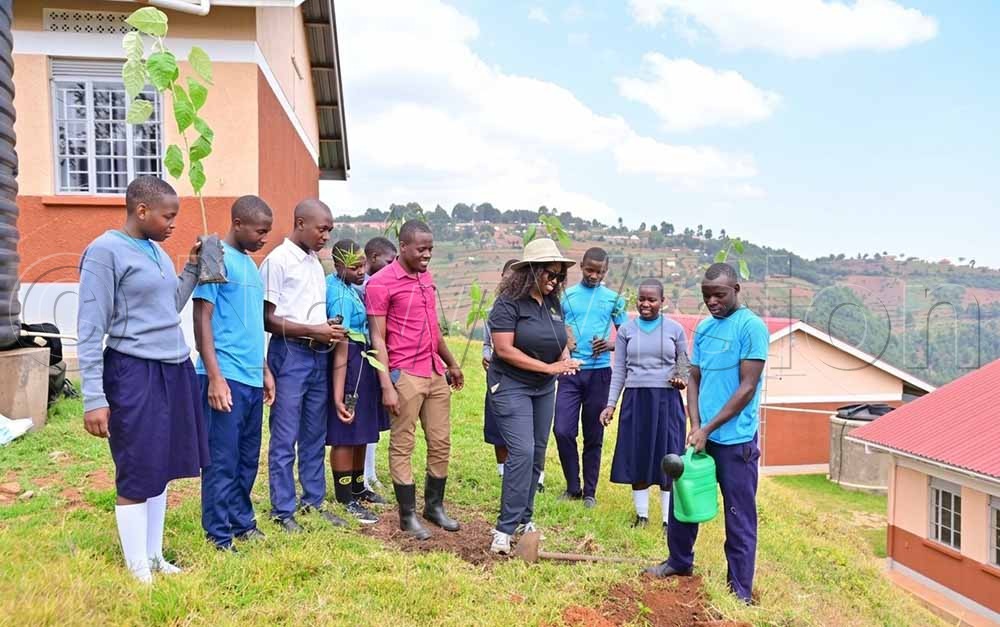
At Ruhija Seed Secondary School in Ruhija, Rubanda district, students recently joined conservationists in planting indigenous trees, including Croton, as part of activities to mark World Gorilla Day.
The exercise was organised by Change a Life Bwindi in partnership with UWA and other stakeholders.
He says some of the indigenous species being planted in communities are also found inside the park and form part of the natural vegetation that supports mountain gorillas.
Muhindo says extending the forest belt into degraded community areas could help reduce pressure on the protected area, particularly among communities that depend on trees for medicine, construction and other needs.
“Whereas we are conserving for generations, we are also looking at working on behalf of the communities as our key stakeholders,” he says.
He says community forests can provide alternative sources of tree products, allowing residents to meet some of their needs without placing additional pressure on the national park.
The initiative is also intended to strengthen relations between communities and conservation authorities.
Muhindo says tree planting can improve climate resilience by restoring vegetation and supporting rainfall catchment areas around the park.
For Change a Life Bwindi, involving young people is a key component of making conservation sustainable.
Katushabe says the organisation works with youth, women, Batwa communities and other groups in villages neighbouring the park through empowerment, education and conservation programmes.
“We want to find the youth in school and engage them in conservation, especially in protecting and planting the indigenous trees of Uganda,” she says.
Change a Life Bwindi has established an 85-acre forest in the area and says it has planted 56 indigenous tree species with support from partners, including universities and indigenous communities.
Katushabe, however, says limited land is a major challenge to expanding the tree-planting programme. Changing weather patterns have also made tree planting more difficult because the activity depends heavily on rainfall.
She says changing rainfall patterns are affecting both conservation projects and agricultural activities in neighbouring communities.
At Ruhija Seed Secondary School, school administrators welcomed the initiative, saying trees can provide shade, improve the learning environment and help address environmental degradation.
Salestine Mbabazi, representing the school administration, says involving students in tree planting gives them practical knowledge about environmental conservation that they can pass on to future generations.
Mbabazi also called on community members to replace trees whenever they cut them down, saying tree planting should become a responsibility for households and institutions.
Katushabe says community forests can also provide opportunities for ecotourism and other enterprises while protecting ecosystems that support wildlife.
She says some residents enter the park in search of resources, putting additional pressure on the protected area. Establishing community forests, she says, could provide alternative sources of resources.
She also called for increased Government attention to indigenous tree species, warning that their disappearance threatens biodiversity and habitats for birds and other wildlife.
Muhindo says conservation activities around Bwindi also include waste management, particularly the removal of plastic waste from the environment.
He says communities living around the park remain critical partners because of their proximity to the protected area and their interaction with its resources.
As Uganda marks World Gorilla Day, conservationists say the long-term survival of mountain gorillas will depend not only on protecting the animals but also on safeguarding the forests and biodiversity on which they depend.
For communities living alongside Bwindi and Mgahinga, conservation and tourism are increasingly intertwined, with gorilla tourism supporting jobs, businesses and community projects while environmental initiatives seek to protect the habitat that sustains the industry.