
Vandalism, poor maintenance leave Soroti schools vulnerable to lightning
While schools and education authorities grapple with infrastructure challenges, meteorological officials warn that lightning is an unpredictable natural hazard requiring precautionary measures rather than reliance solely on the presence of protection equipment.
Akism Primary School newly renovated classroom block with lightning arrester installed.
SOROTI - Schools in Soroti city are raising concerns over the vandalism of lightning arresters and the deteriorating condition of existing lightning protection systems, putting the safety of thousands of learners and teachers at risk during thunderstorms.
Soroti city has 32,897 learners enrolled in government primary and secondary schools. However, only 19 of the city's 29 government primary schools have lightning protection systems, leaving 10 without functioning protection after previously installed systems were vandalised or removed.
The situation is also concerning in government secondary schools, where only four of the five schools have lightning arresters.
According to Simon Opolot, the Soroti city inspector of schools, inadequate funding for maintenance and vandalism of installed systems are among the challenges exposing learners and teachers to potential danger during thunderstorms.
At Pamba Primary School, the warning signs are already visible.
The school has only one lightning arrester, installed around 2003, but its effectiveness is now uncertain after its rod was vandalised.
Aston Emma Emeru, a Social Studies and Religious Education teacher at the school, says the institution can no longer guarantee whether the system is functional.
"We have only one lightning arrester, which was installed around 2003. I can no longer guarantee whether it is still functioning because its rod has since been vandalised," Emeru says.
Although the school has not recorded a lightning incident, Emeru warns that the absence of previous accidents should not be mistaken for adequate protection.
He says schools are expected to maintain lightning protection systems after installation, but many lack the financial resources to do so.
"With fees abolished in government-aided schools, we have no funds to repair or maintain such critical safety facilities," he says
His concerns reflect a wider challenge facing public schools in Soroti, where ageing infrastructure, vandalism and inadequate maintenance funding are raising questions about the long-term effectiveness of investments intended to protect learners.
Vandalism leaves schools exposed
At Swaria Primary School, which has an enrolment of 522 pupils, headteacher Peter Akol says the school's previous earthing system was vandalised by unknown people, leaving the institution uncertain about its level of protection.
"Swaria has not received a new building since I arrived, and therefore no new earthing system has been installed. The old system was vandalised by unknown people, leaving the school exposed," Akol says.
Although lightning arresters are visibly installed on two school buildings, their technical functionality has not been independently established.
Akol says the school has adopted precautionary measures whenever dark clouds gather, including moving learners indoors and suspending outdoor activities.
He adds that some classrooms are located near buildings fitted with lightning arresters, although the extent to which these systems offer protection to other structures has not been technically established.
He appeals to parents to ensure that children do not play outdoors during thunderstorms.
"Parents must ensure that children stay indoors during thunderstorms because allowing them to play outside could expose them to fatal danger," he says.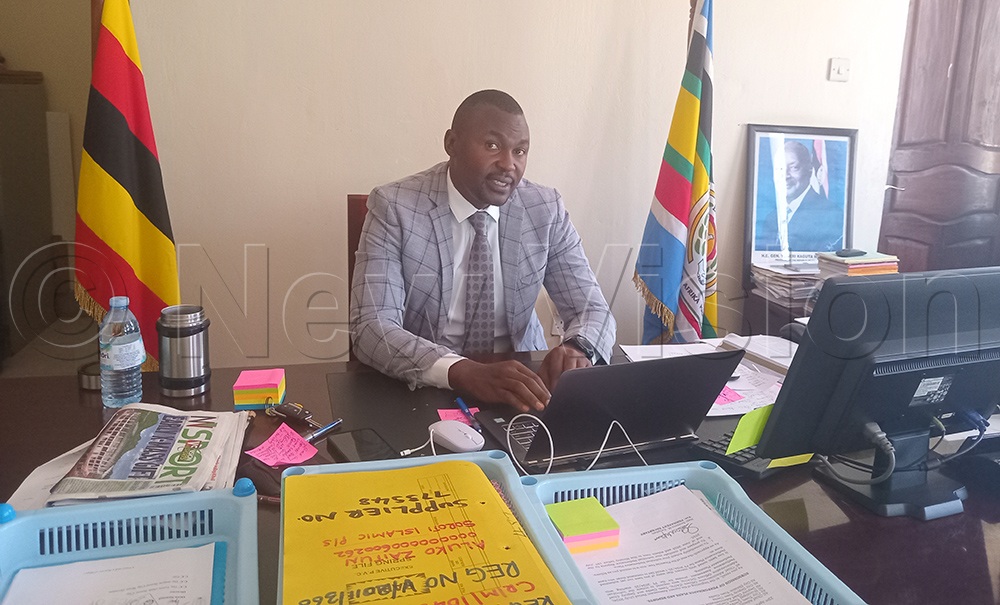
Paul Batanda, the Soroti City Town Clerk, remarks. (Credit: Juliet Akello)
At Awaliwal Primary School, which has an enrolment of 1,019 pupils, deputy headteacher Julius Ekolu says the institution has six lightning arresters installed across four classroom blocks.
Ekolu says the systems have not sustained any reported damage since installation, although no maintenance has been undertaken.
He calls on learners and neighbouring communities to help safeguard the installations against vandalism.
At Akism Primary School, headteacher Mary Arego Ekwamu says the institution has three lightning arresters installed on selected buildings.
These include the Primary One and Primary Two classroom block, the recently renovated Primary Three and Primary Four block, and the staff quarters occupied by the headteacher and deputy headteacher.
However, the presence of protection systems on selected buildings raises questions about the safety of other structures used by learners and staff.
Thousands of learners depend on school safety measures
He attributes the situation partly to vandalism, explaining that some schools previously had lightning arresters, but components were removed by unknown people.
"As renovation of classrooms goes on, we shall install lightning arresters in schools that do not have them," Opolot says.
He says Soroti city has 23,842 learners in government primary schools and 9,055 students in government secondary schools, bringing the total enrolment to 32,897.
The city has five government secondary schools, of which four have lightning arresters.
Opolot says there is a need to strengthen school security through fencing, employing security personnel and installing closed-circuit television cameras to protect school infrastructure
Soroti city town clerk Paul Batanda acknowledges that not all schools have lightning arresters, despite government guidance requiring institutions to install them.
"We have gone ahead to install lightning arresters in every new structure," Batanda says.
He adds that the city plans to install additional lightning protection systems in the next financial year.
Batanda says maintenance will be undertaken by individual schools using government grants allocated to them.
In Soroti, district education officer John Michael Okiror also raises concerns about vandalism, saying some lightning arresters installed in schools have been damaged or removed by community members.
He calls on school administrators and communities to protect the installations.
Okiror also suggests planting trees in schools without lightning protection systems. However, trees should not be considered substitutes for properly installed lightning protection systems, as seeking shelter under them during thunderstorms can expose people to danger.
Soroti district has 69 government-aided primary schools with a total enrolment of 57,902 pupils, while its six government-aided secondary schools have 5,266 students
The figures point to the scale of responsibility facing education authorities in ensuring that school infrastructure remains safe
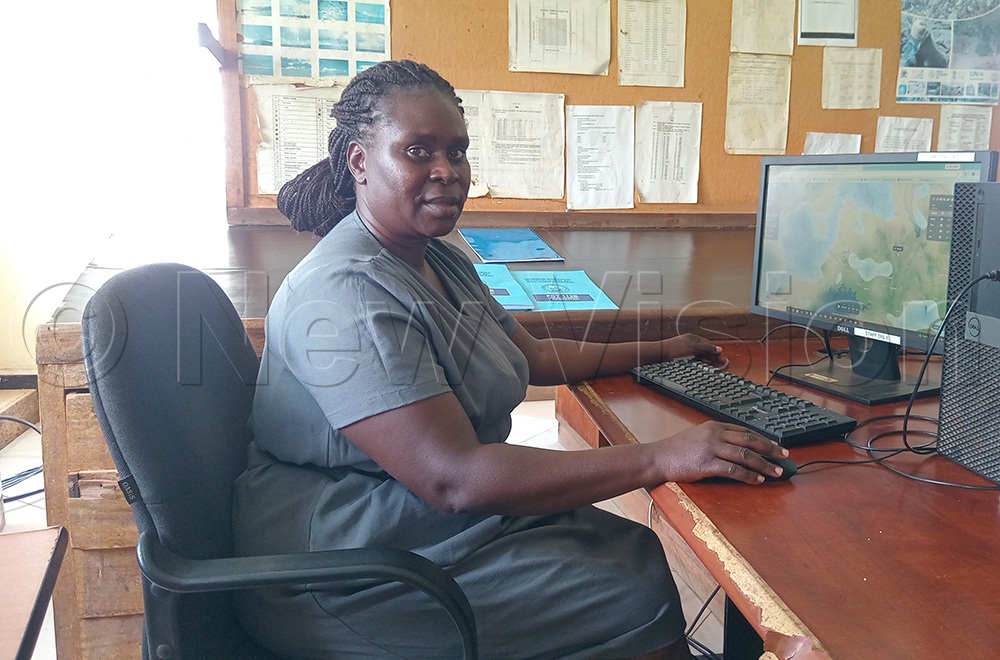
Martha Alota, a meteorologist with the Department of Meteorological Services in Soroti, says schools should prioritise installing appropriate lightning protection systems despite the financial implications. (Credit: Juliet Akello)
Meteorologists warn against complacency
While schools and education authorities grapple with infrastructure challenges, meteorological officials warn that lightning is an unpredictable natural hazard requiring precautionary measures rather than reliance solely on the presence of protection equipment.
Martha Alota, a meteorologist with the Department of Meteorological Services in Soroti, says schools should prioritise installing appropriate lightning protection systems despite the financial implications
She cautions learners against seeking shelter under trees or continuing outdoor activities when thunderstorms develop.
Alota also advises communities in Teso to seek safe shelter when thunderstorms approach rather than moving through open spaces during storms
Her warning is informed partly by a personal tragedy.
Alota recalls losing her biological brother in February 2026 in Apapai parish, Angar village, Bugondo subcounty, Serere district
"My brother was riding a motorcycle during rainfall when lightning struck near a tree, killing him," she says
She says some of her relatives still question the circumstances surrounding his death, with some attributing it to witchcraft rather than lightning.
For Alota, the incident demonstrates how misconceptions about lightning can undermine public awareness and delay the adoption of life-saving precautions.
She urges schools to move learners into safe shelter during thunderstorms and advises communities to avoid open spaces, tall trees and other exposed locations.
"Lightning strikes at random, and it would therefore be misleading to describe Soroti as uniquely vulnerable, since all parts of the country are exposed," Omony says.
He explains that lightning activity tends to increase during the onset and peak of rainfall seasons.
In Soroti, the first rainfall season runs from March to May, with March marking the onset and April the peak.
The second rainfall season experiences increased lightning activity around September and October, although rainfall also occurs in July and August.
"Those are the periods when lightning cases are always high, not only in Soroti but across most parts of the country," he says.
Omony clarifies that the Uganda National Meteorological Authority is no longer the institution responsible for providing meteorological services, explaining that the current institution is the Department of Meteorological Services.
He says the department is responsible for weather forecasting and issuing early warnings about rainfall and related hazards, including floods, droughts and lightning.
However, the collection and management of national disaster data falls under the Office of the Prime Minister.
Calls for stronger protection and accountability
Omony urges government, local authorities, schools and households to strengthen lightning protection measures by installing appropriate systems in public institutions and residential buildings.
He cautions schools against allowing learners to continue outdoor activities during thunderstorms, particularly on football pitches and in open spaces.
He also warns residents against fetching water from wells during thunderstorms or taking shelter under tall trees and other exposed objects.
"People should never shelter under a tall tree or any tall object during rain, since lightning can strike such objects and put anyone nearby at risk," he says.
He further advises people to keep away from electrical conductors during thunderstorms because electricity can travel through conductive materials and cause fatal injuries.
On enforcement, Omony says district local governments have a responsibility to ensure lightning protection systems are installed in public institutions.
He says the Department of Meteorological Services regularly advises local governments to enforce the installation of lightning protection systems in public institutions and recommends their inclusion in residential construction.
Beyond installation: Who maintains the systems?
The concerns raised by schools point to a broader accountability question: who ensures that lightning protection systems remain functional long after government-funded installation works are completed?
A review of the Ministry of Finance, Planning and Economic Development's FY2019/20 Education and Sports Sector Annual Budget Monitoring Report indicates that lightning-arrester works at Awaliwal Primary School were recorded as completed by August 2020.
However, completion of installation works does not establish whether the systems remain functional or whether maintenance has subsequently been conducted.
At Swaria Primary School, the presence of lightning arresters on two buildings has not yet been supported by independent technical assessments establishing their effectiveness
Similarly, at Pamba Primary School, the missing rod raises questions about the condition of the school's ageing system.
Lightning protection systems require appropriate design, correct installation, effective earthing, sound connections and regular inspection to ensure they continue functioning as intended.
The physical presence of an arrester alone cannot guarantee that a building and its occupants are adequately protected.
The concerns also raise questions about whether school administrators have adequate resources, technical guidance and clearly defined maintenance arrangements.
Although Soroti city authorities say additional installations are planned, and individual schools are expected to undertake maintenance using government grants, the experiences of the schools suggest that installation alone is not enough without a sustainable maintenance plan and regular technical inspections.
For the 32,897 learners in Soroti city's government primary and secondary schools, the challenge goes beyond receiving weather warnings. It involves ensuring that the buildings in which they spend much of their day are adequately protected against foreseeable weather-related hazards.
As the rainy seasons continue to pose risks, schools are calling for stronger government intervention to repair damaged systems, replace vandalised components and extend lightning protection to buildings that remain exposed.
Without regular technical inspections, dedicated maintenance funding and enforcement of safety standards, investments made to protect learners could gradually lose their effectiveness, leaving children exposed to preventable disasters.