
Uganda's Indian community nears indigenous recognition, speaker Oboth reveals
The Indian community in Uganda numbers about 25,000 to 27,000 people. According to the Ministry of Finance, this contributes about 65 percent of the country’s income tax.
Speaker of Parliament Jacob Marksons Oboth during the 12th BRICS Parliamentary Forum in New Delhi, India. (Courtesy)
______________
NEW DELHI — Speaker of Parliament Jacob Marksons Oboth has said Uganda is looking at recognising its Indian community as an indigenous group in the Constitution. The step would answer a request the community has pressed for nearly a decade.
Speaking to a cross-section of India's journalists on the sidelines of the 12th BRICS Parliamentary Forum in New Delhi, the Speaker described the Indian community as one of the largest communities in Uganda.
The Speaker's office states that Oboth is looking forward to recognising its members as indigenous groups in the Constitution.
People of Indian origin, he added, play a big role in the country, including in finance and Trade. On the political scene, he named some Members of Parliament and ministers in Uganda’s cabinet.
A long-standing request
The community’s push for recognition goes back years. In 2017, at a Diwali dinner hosted by President Museveni at State House Entebbe, members of the Indian Association Uganda asked the Government to recognise them as a Ugandan tribe. They explained that applications for national identity cards, passports and birth certificates ask for a person’s tribe, a question they could not answer. The community lobbied for Uganda to follow neighbouring Kenya, which recognised its Indian community as an official tribe.
The question is a constitutional one. Under the Constitution, indigenous communities are those who were living in Uganda on 1 February 1926, and only indigenous Ugandans may hold the two highest offices, President and Vice President. Uganda currently recognises 56 indigenous communities.
In 2019, then State Minister for Gender Peace Mutuuzo argued that Indians could not be made an indigenous tribe because their origin could not be traced within Uganda. In 2021, however, President Museveni promised to discuss a constitutional amendment with the NRM parliamentary caucus. He told the Indian community that, sociologically, it was already a tribe, and that all that remained was to put that reality in the Constitution.
Praise for India’s cooperation
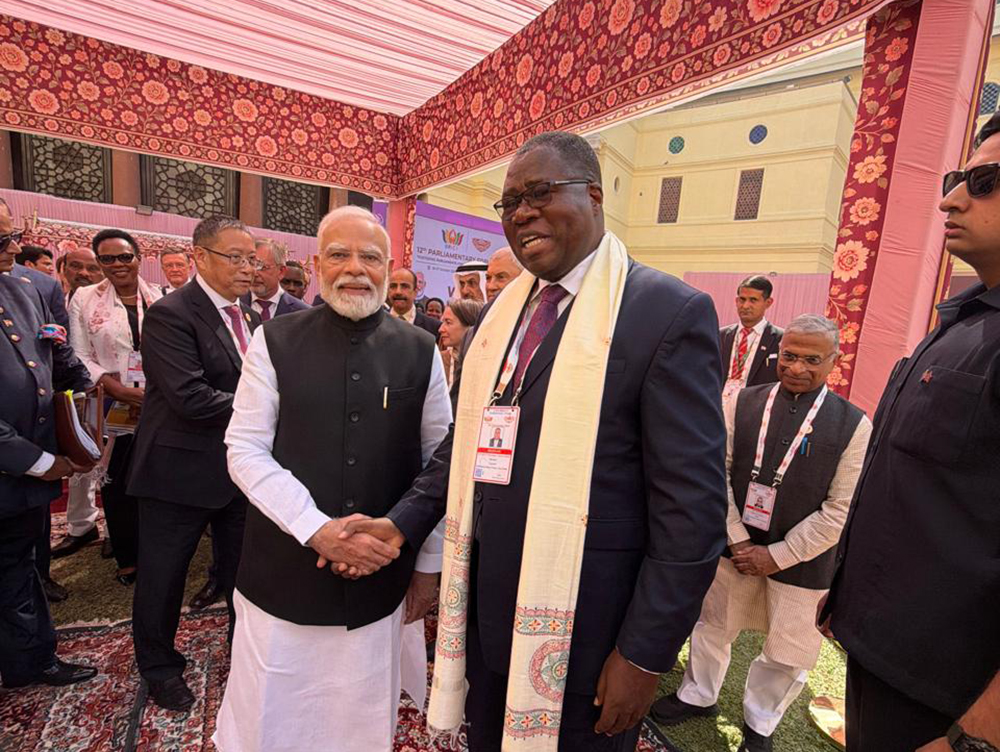
Speaker of Parliament Jacob Oboth with India Prime Minister Narendra Modi. (Courtesy)
He called for closer cooperation on climate change, environmental protection and trade, including stronger trade-related legislation. He said the two countries have a lot they can do together.
The Speaker’s remarks followed his meeting with Prime Minister Modi at the opening of the Forum, and earlier talks with Lok Sabha Speaker Om Birla. Trade between Uganda and India is worth about $1.35 billion a year.
“We are here to build partnerships that bring trade, investment and skills home to Ugandans,” the Speaker said in an earlier statement issued by his Principal Press Secretary, Dr Arinaitwe Rugyendo.
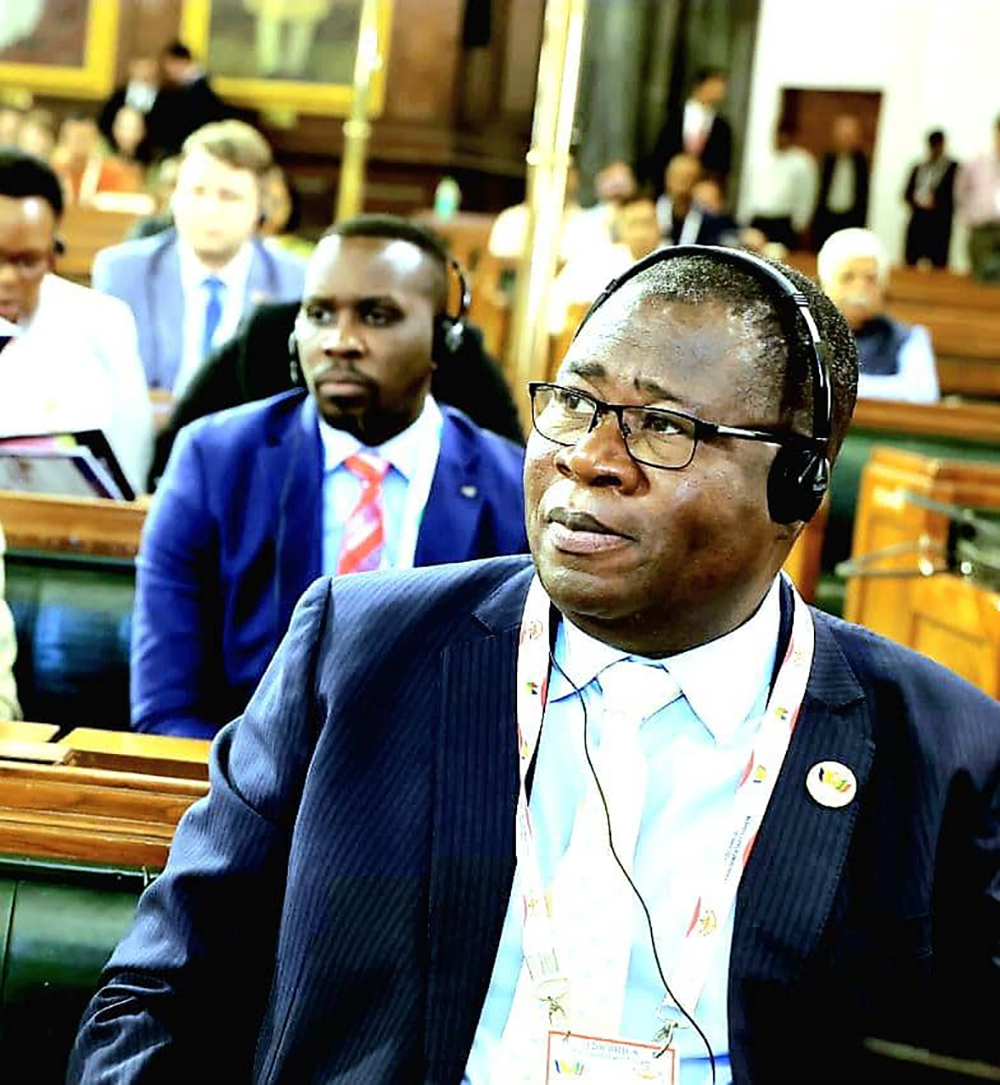
Speaker of Parliament Jacob Marksons Oboth with Leader of the Opposition Hon. Joel Ssenyonyi in the background. (Courtesy)
The 12th BRICS Parliamentary Forum was held on 26 and 27 October. The Speaker led a delegation that included Leader of the Opposition Hon. Joel Ssenyonyi, Hon. Betty Nakisita Mpongo, Hon. Sowedi Ismail Mulemya and Hon. Annet Katusiime Mugisha.