
Transport minister Katumba commits to ending number plate delays
To date, 245,384 motorcycles, 4,525 government vehicles and 100,791 private ones have so far been registered.
ITMS says that on average, total daily volumes range between 1,200 and 1,500 installations. (Courtesy photo)
____________________________
MOBILITY
The Government has reaffirmed its commitment to expediting the registration and clearance of newly imported vehicles, emphasizing the need for collaboration and transparency.
With this in mind, the Ministry of Works and Transport has formally invited key stakeholders in Uganda's transport sector to a joint working meeting aimed at addressing critical issues related to motor vehicle registration.
These include vehicle dealers, vehicle clearing agents, Uganda Revenue Authority (URA), as well as the Intelligent Transport Monitoring System (ITMS), the number plate manufacturer.
“We are here to make our system smooth and iron out any shortfalls," said transport minister Gen. Edward Katumba-Wamala (pictured below) on Tuesday (May 5).
"As stakeholders, feel free to raise areas that need improvement for the new regime of motor vehicle registration and number plate issuance."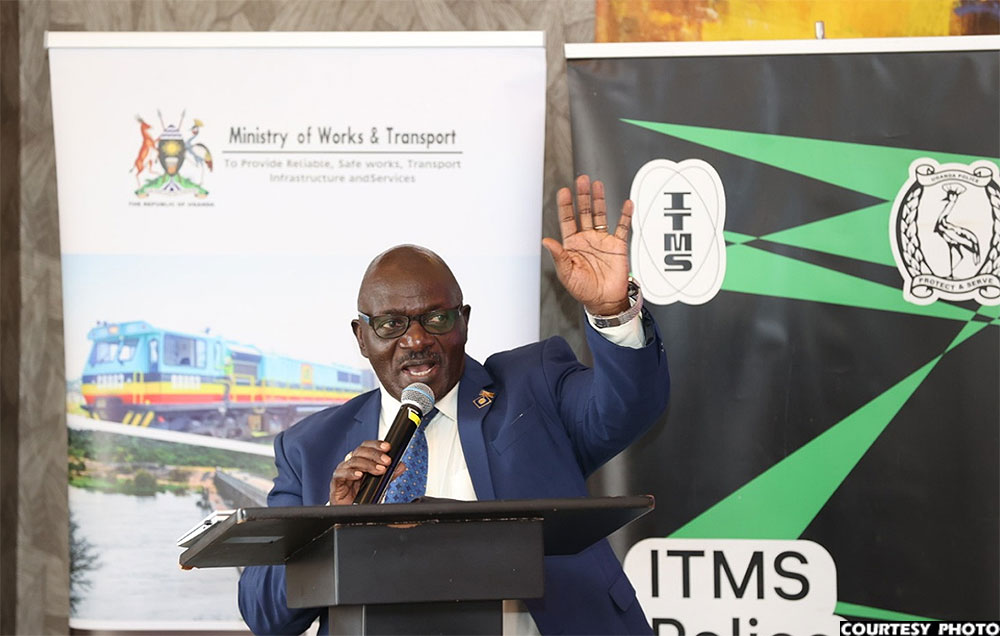
Last month, the ministry met and held discussions with the Delight Car Dealers Association.
In that April 13 engagement, the car dealers raised a number of concerns requiring attention to streamline vehicle registration processes in the country.
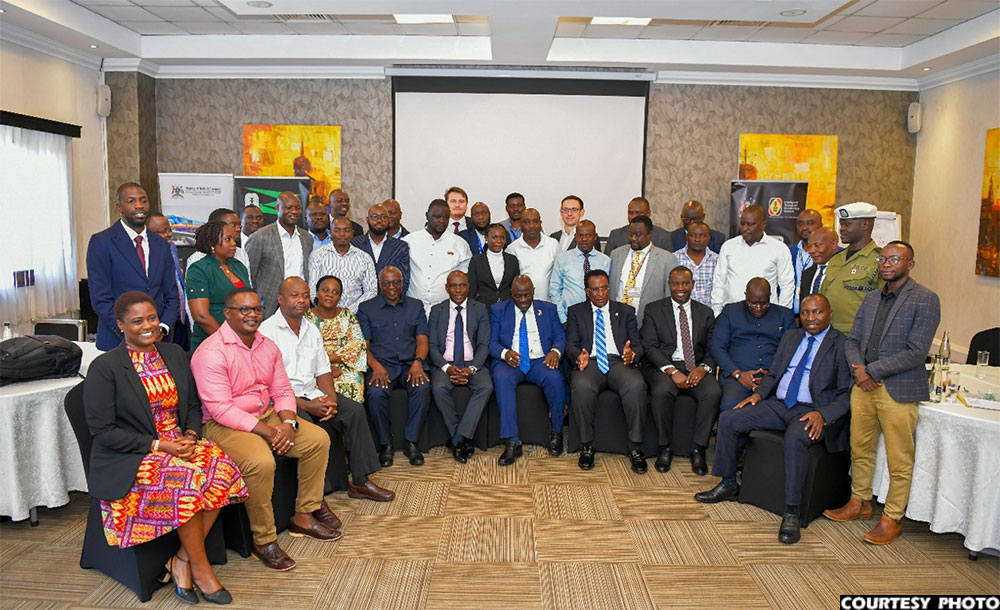
During Tuesday's meeting at Mestil Hotel in Kampala attended by different stakeholders, minister Katumba said he was happy the meeting had agreed to resolve key outstanding issues.
"At the end of this meeting, we have been able to find a solution. One of the big complaints was why it takes four to five days for importers to have number plates," he said.
"That has been resolved and we have agreed that once everything is done, one should be able to get their number plate the next day."
Katumba promised to assess the clearing agents' request to have key people clear cars on Saturday. He also supported the decision to get rid of fake clearing agents at border points.
"I highly support this because there have been several quacks who have been taking advantage of people who want to have their vehicles on the road quickly."
Winstone Katushabe, the commissioner for transport regulation and safety at the ministry, presented a report that showed that out of the 77,410 cars that were released, 95 percent of these cars are worked on within eight hours.
"However, the blame is on clearing agents who fail to complete required processes and deliberately delay their clients for financial gain,” he said.
He said agents reportedly disguise delays with claims of “absence of digital plates” or “vehicle is not scheduled” while having already collected money from clients and not captured their entries for extended periods of time.
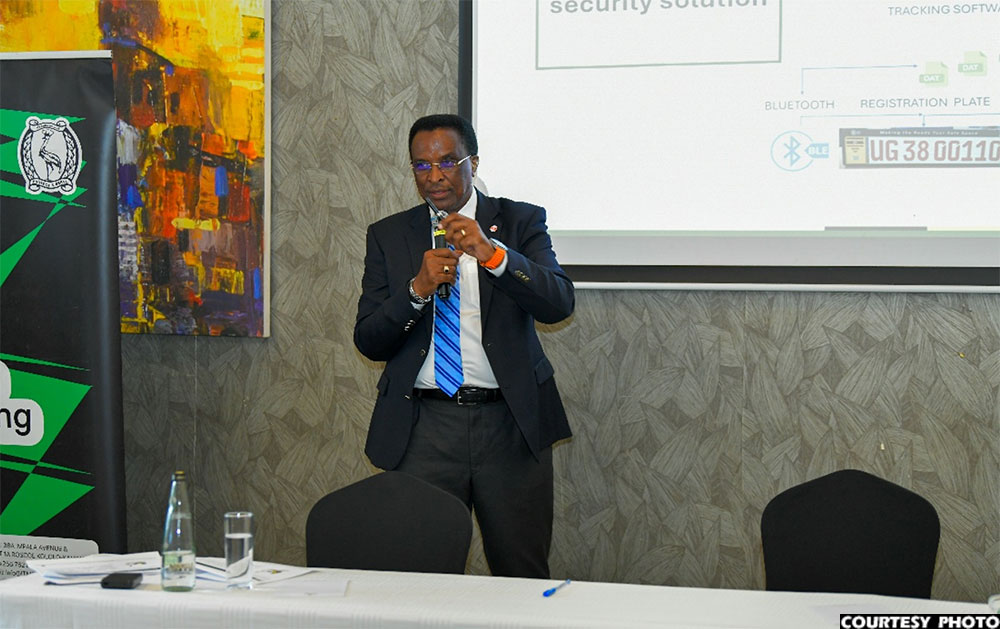
Katushabe (pictured above) said at least 1,338 cars are pending fitment beyond two months after their release due to errors made by car agents through processing incorrect documents.
Consequently, charging unjustified fees has led to motorists spending a significant amount of time waiting.
The commissioner further recommended using the Motor Vehicle Registration (MVR) portal to determine “which agency is currently handling the request”.
He also said some delays occur due to incorrectly completed customs declarations within clearance processes.
Katushabe said that to date, they have so far registered 245,384 motorcycles, 4,525 government vehicles and 100,791 private ones.
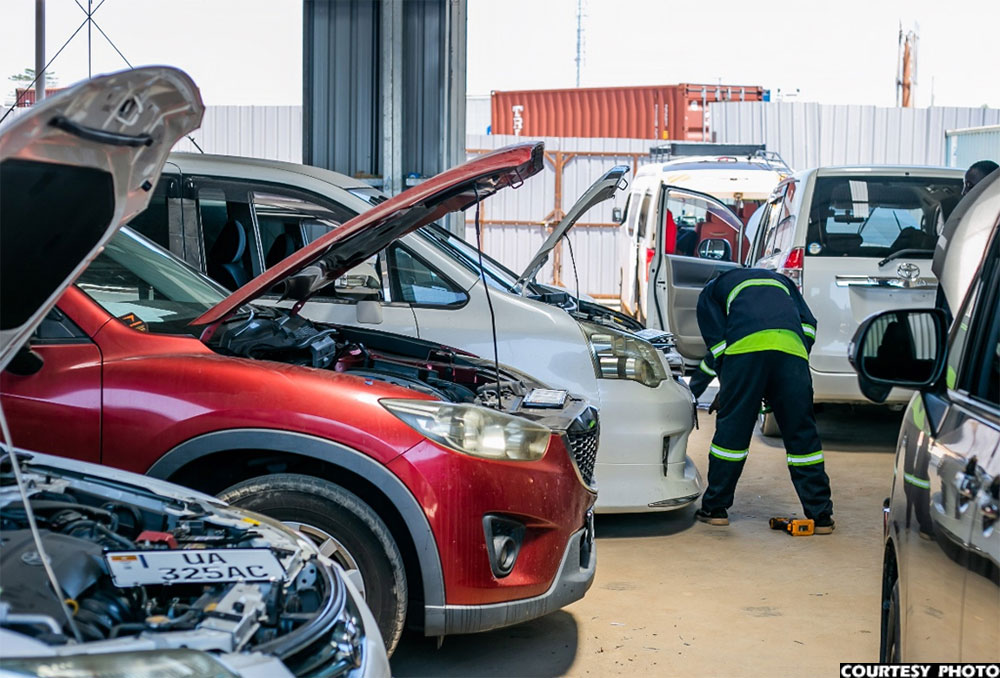
ITMS representative Joseph Tumwine said since the company expanded its production site in Kyambogo, it currently operates with more than 300 Ugandan employees and produces 2,500 number plate kits per day.
The level of localization has already reached 70 percent, and by the end of the year it will become the first full-cycle number plate production facility in East Africa.
ITMS says that currently, 84 percent of all registrations are completed within 24 hours after payment, pointing to strong operational performance and efficiency.
On average, total daily volumes range between 1,200 and 1,500 installations. Weekly installation figures reach up to 7,500 vehicles.
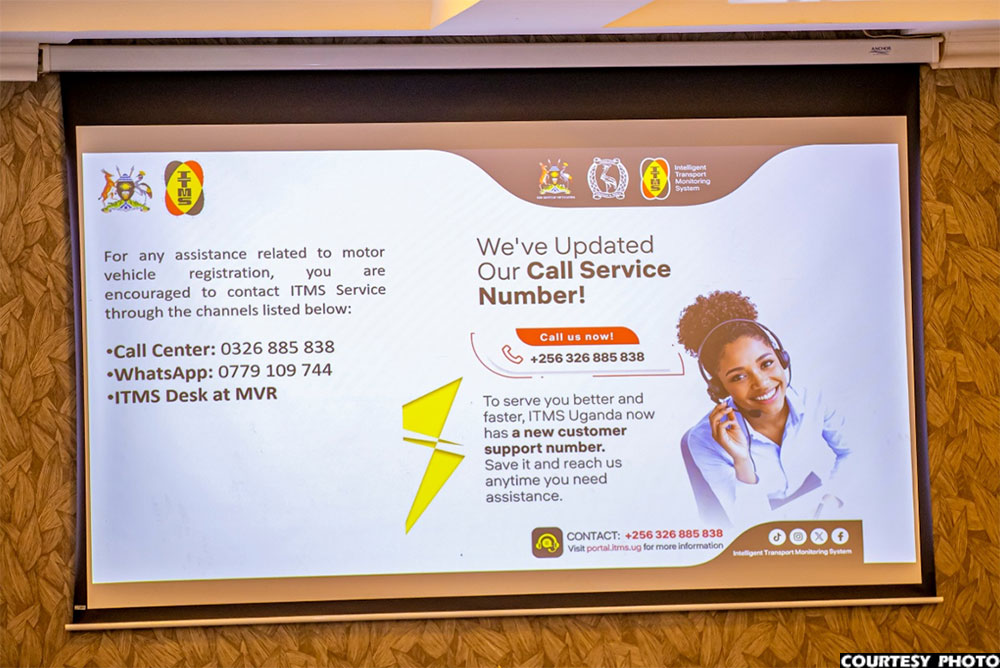
In addition to installation services, ITMS has deployed a new customer support number for any assistance related to motor vehicle registration.
As part of the network expansion, new installation centres have recently been opened in Gulu and Fort Portal, in addition to the running installation points in Malaba, Mutukula, Jinja, Masaka, Mbarara, and Arua.
Kampala is operating with several mobile units and 26 stationary installation centres.
URA proposed closer cooperation with the ministry to harmonise systems and reduce bureaucracy.
The tax body said the key objective is to reach 100 percent installation within 24 hours from the moment of application.