
Uganda’s first micro-tunnelling water project boosts jobs, sanitation in Adjumani
Speaking during the handover ceremony in Adjumani on May 24, 2026, Paul Ghona, the NWSC Adjumani district manager, said the project reflects government efforts to expand water services to underserved communities.
The project, valued at sh60b, also introduced a faecal sludge treatment plant in Adjumani district aimed at improving sanitation and lowering the cost of waste management. (Credit: Rhyman Agaba)
ADJUMANI - A government-backed water infrastructure project in Adjumani district is not only improving access to clean water but also introducing Uganda’s first use of Micro-Tunnelling Technology (MTT), a modern engineering method credited with protecting the environment during construction.
Micro-tunnelling is a trenchless construction technique used to install underground pipelines, conduits or cables with pinpoint accuracy without disrupting the surface.
Because the tunnels are too small for workers to enter, the process relies on a remotely controlled Microtunnel Boring Machine (MTBM) guided by a laser.
The Adjumani Water Supply and Sanitation Project, implemented by China Communications Construction Company Limited (CCCC) under the supervision of the National Water and Sewerage Corporation (NWSC), was financed by the World Bank and completed in April 2026.
The project now supplies clean and safe water to Adjumani town, Pakele, Ciforo, Dzaipi and surrounding refugee-hosting communities that for years struggled with chronic water shortages.
Raw water is extracted from the White Nile through an intake system constructed at Arra village before being transported through a nine-kilometre ductile iron pipeline to a modern treatment plant at Pachara village.
According to engineers, one of the most innovative features of the project was the use of Micro-Tunnelling Technology to install pipelines beneath the White Nile without interfering with the surrounding ecosystem.
Nick Afayo, the Adjumani district engineer, said the technology was being applied in Uganda for the first time.
“We are proud that CCCC introduced a modern technology that enabled the extraction of water without damaging the environment,” Afayo said on Sunday in Adjumani. “This innovation raises Uganda’s engineering standards and demonstrates the value of modern infrastructure investment.”
Ben Anyama, the former Adjumani LC5 chairperson, also praised the contractor for ensuring environmental protection during the construction works.
Beyond engineering innovation, the project has significantly improved access to clean water in both host communities and refugee settlements, where water demand had overwhelmed existing infrastructure.
CCCC established decentralised water supply systems in Pagirinya, Nyumanzi and Olua refugee settlements through the Logowanga, Melijo and Ajugopi networks.
The systems include boreholes, storage tanks, pipelines and public water points aimed at reducing congestion and long waiting hours at collection centres.
Speaking during the handover ceremony in Adjumani on May 24, 2026, Paul Ghona, the NWSC Adjumani district manager, said the project reflects government efforts to expand water services to underserved communities.
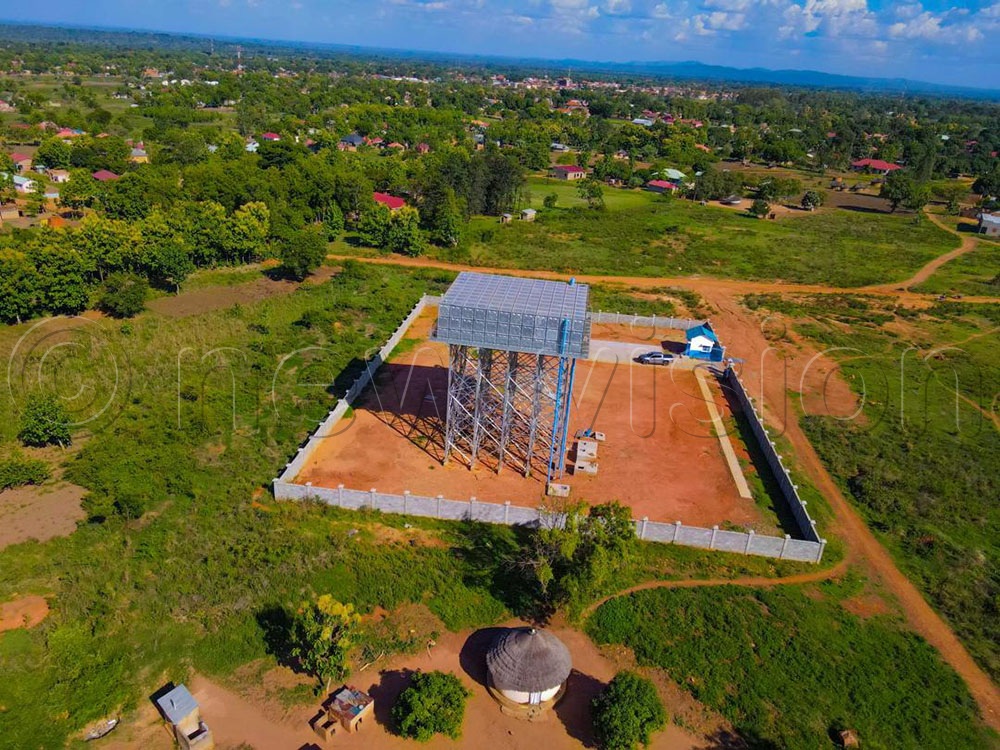
Beyond engineering innovation, the project has significantly improved access to clean water in both host communities and refugee settlements, where water demand had overwhelmed existing infrastructure. (Credit: Rhyman Agaba)
“The Government of Uganda remains committed to ensuring that all Ugandans, regardless of where they live, have access to clean and safe water,” Ghona said. “We encourage communities to connect to the system, protect the infrastructure and use the water responsibly.”
Residents say the intervention has eased the burden on women and children who previously spent hours searching for water.
“Accessing water has always been a painful challenge for us,” said Syliver Muroga, the local chairperson of Arro Central. “This intervention by the government and CCCC is a blessing to our people. We appreciate the good work done.”
Jobs and sanitation gains
The project, valued at sh60b, also introduced a faecal sludge treatment plant in Adjumani district aimed at improving sanitation and lowering the cost of waste management.
Godfrey Chandiga, a sociologist attached to CCCC, said residents previously had to transport sludge to Kampala for treatment at a high cost.
“This is the first facility of its kind in the district,” Chandiga said. “It will improve sanitation and reduce the cost of waste management for households and institutions.”
During the two-year construction period, the project created employment opportunities for more than 260 local workers.
Kenneth Nuwamanya, an engineer and surveyor working with CCCC, said the project helped him gain practical engineering experience from Chinese experts.
“I gained practical engineering knowledge from Chinese experts and improved my professional skills,” Kenneth said. “The exposure and training I received will help me contribute to future infrastructure projects in Uganda.”
The construction works also boosted local businesses around the project sites.
Annet Asienzo, a food vendor in Mijale village, said her business grew because of increased customer traffic from workers.
“The workers used to buy food from us daily, and business improved greatly,” she said. “The project helped many families earn income.”
Under its corporate social responsibility programme, CCCC also constructed seven public sanitation facilities in markets, trading centres and taxi parks across Adjumani district to improve hygiene and reduce open defecation.
Local leaders say the completion of the project is expected to improve public health, sanitation, economic activity and environmental sustainability across Adjumani district and neighbouring refugee settlements.