
Parliament targets six-month timeline for minimum wage agreement
“We can crack this in six months. Government can also deliver in a timely manner, so I hope we can move quickly because for us as Parliament, we are ready. This has been a long effort that we should have done yesterday, not even today,” Tayebwa said.
Officials say this gap has had spillover effects beyond Uganda’s borders, weakening the country’s bargaining position in international labour markets where remittances remain a significant economic contribution.
KAMPALA - Parliament has committed to fast-track negotiations on Uganda’s long-debated minimum wage, setting a six-month timeline to reach a final agreement, in a move that signals renewed political urgency on the issue.
Speaking at the annual Labour Convention and Expo organised by the Ministry of Gender, Labour and Social Development, Deputy Speaker Thomas Tayebwa said lawmakers are ready to break through longstanding delays and deliver a framework within months.
“We can crack this in six months. Government can also deliver in a timely manner, so I hope we can move quickly because for us as Parliament, we are ready. This has been a long effort that we should have done yesterday, not even today,” Tayebwa said.
The pledge marks a shift from previous timelines that had pushed progress on the minimum wage into the 2025–2030 development plan, following consultations led by the labour ministry.
State Minister for Gender, Labour and Social Development Davinia Anyakun echoed Parliament’s stance, linking the minimum wage debate to broader concerns about the welfare of Ugandan migrant workers, particularly in the Middle East.
According to data from the International Labour Organisation and Uganda’s Ministry of Foreign Affairs, about 270,000 Ugandans worked in the Middle East between 2016 and 2023, many in the care economy. Domestically, more than half of the population, approximately 25.49 million people, are of working age.
“We realised that Filipinos, Pakistanis and other nationals are being paid more money for the same job. So, we intend to move as a region in these negotiations,” she said.
The push is being coordinated under the Regional Ministerial Forum on Migration for East and Horn of Africa, a coalition of 11 countries working to harmonise labour migration policies and protect workers’ rights in destination markets such as the Gulf Cooperation Council.
Uganda currently lacks an effectively enforced national minimum wage, leaving many workers, particularly in the informal sector, without guaranteed income protections.
Labourers in agriculture, domestic work and small-scale industries often operate under non-negotiable contracts with limited benefits.
Officials say this gap has had spillover effects beyond Uganda’s borders, weakening the country’s bargaining position in international labour markets where remittances remain a significant economic contribution.
Earlier this year, the Ministry of Labour indicated that a cabinet paper on the minimum wage was in preparation, with technical teams reviewing sector-specific considerations, including the ability of some businesses to absorb wage adjustments.
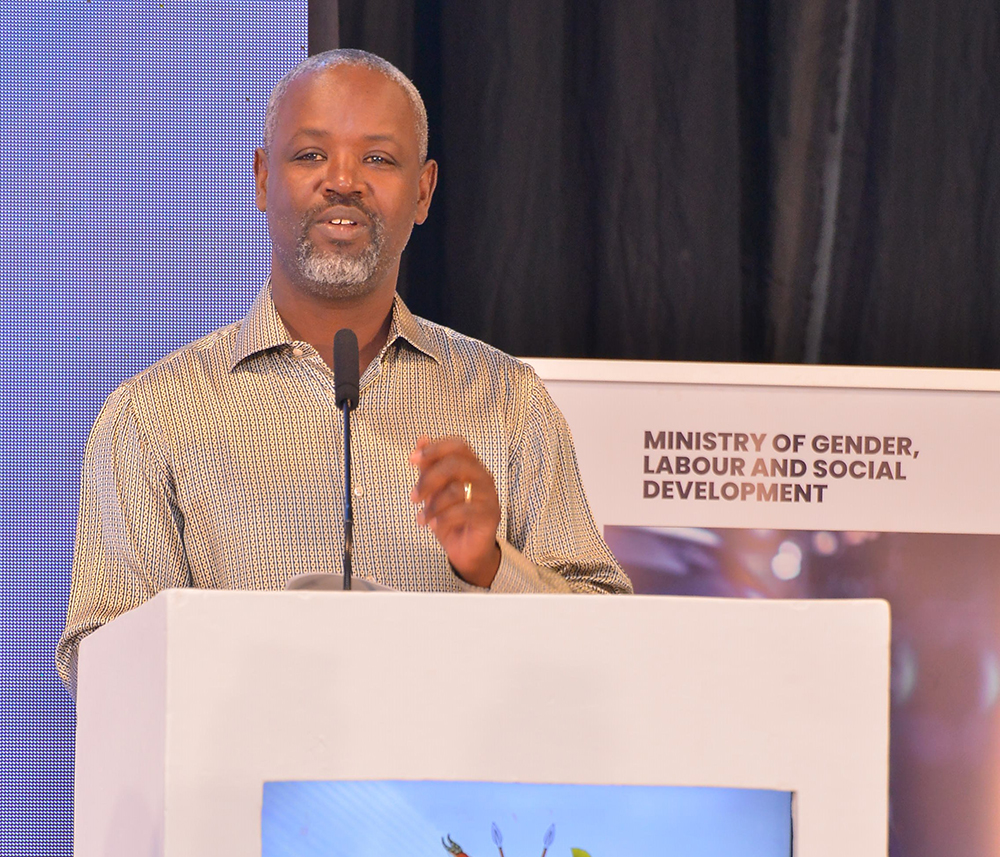
Speaking at the annual Labour Convention and Expo organised by the Ministry of Gender, Labour and Social Development, Deputy Speaker Thomas Tayebwa said lawmakers are ready to break through longstanding delays and deliver a framework within months. (Courtesy Photo)
Lessons from the Region
Uganda’s renewed push comes as neighbouring Kenya continues to refine its structured minimum wage system, which varies by sector, skill level and location.
Kenya operates multiple wage councils, including general, agricultural and maritime bodies, allowing for tailored wage regulations. In 2024, the country implemented a 6 percent wage increase, following consultations with employers through the Federation of Kenya Employers.
The system also differentiates between major urban centres such as Nairobi and other regions, with higher wage thresholds in cities reflecting cost-of-living differences.
Analysts say such frameworks have strengthened Kenya’s position in negotiating labour terms abroad, particularly in the Middle East, where wage disparities among migrant workers remain a concern.
With Parliament signalling readiness to act and regional pressure mounting to protect migrant workers, attention now turns to whether Uganda can translate political will into enforceable policy within the promised six months.