
Okello sentenced to death for murdering four toddlers in Ggaba
After a marathon on court sessions, the High Court in Kampala has convicted Christopher Okello Onyum of murder and sentenced him to death.
Christopher Okello Onyum was convicted of murder and sentenced to death by the High Court at Ggaba Community Church in Kampala on April 30, 2026. (Credit: Alfred Ochwo)
___________________________
GGABA MURDER TRIAL
By Joseph Kizza
Christopher Okello Onyum, a 39-year-old Ugandan-born American, has been sentenced to death after being found guilty of murdering four toddlers at a day care in early April this year in Uganda's capital Kampala.
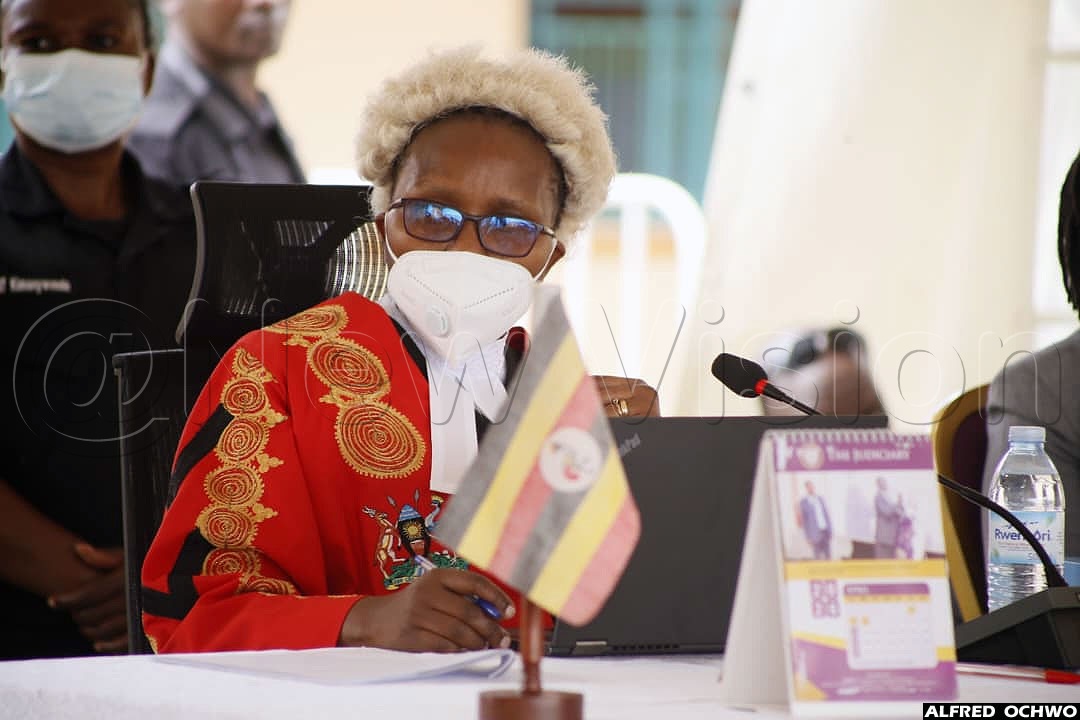
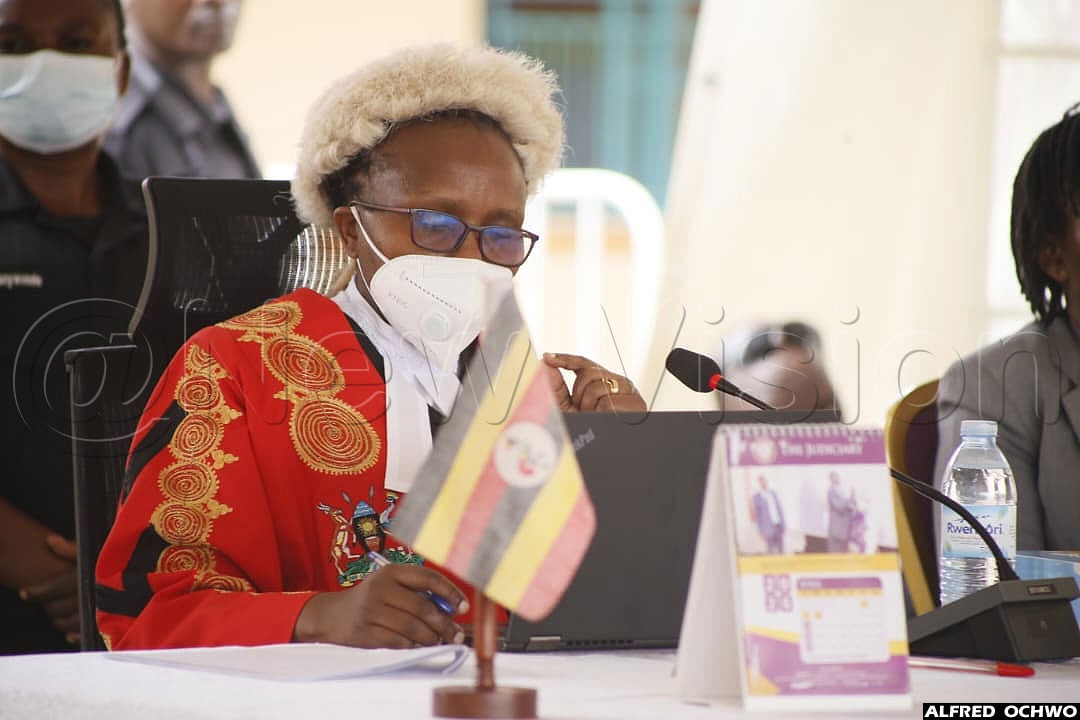
After a marathon of mobile High Court sessions held at Ggaba Community Church in Ggaba parish, Makindye division, not far from where the brutal deaths occured, it all came down to Justice Alice Komuhangi Khaukha's final ruling on Thursday (April 30).
After a lengthy session on a warm day, the judge convicted Okello of four counts of murder, before delivering his punishment after a brief court recess.
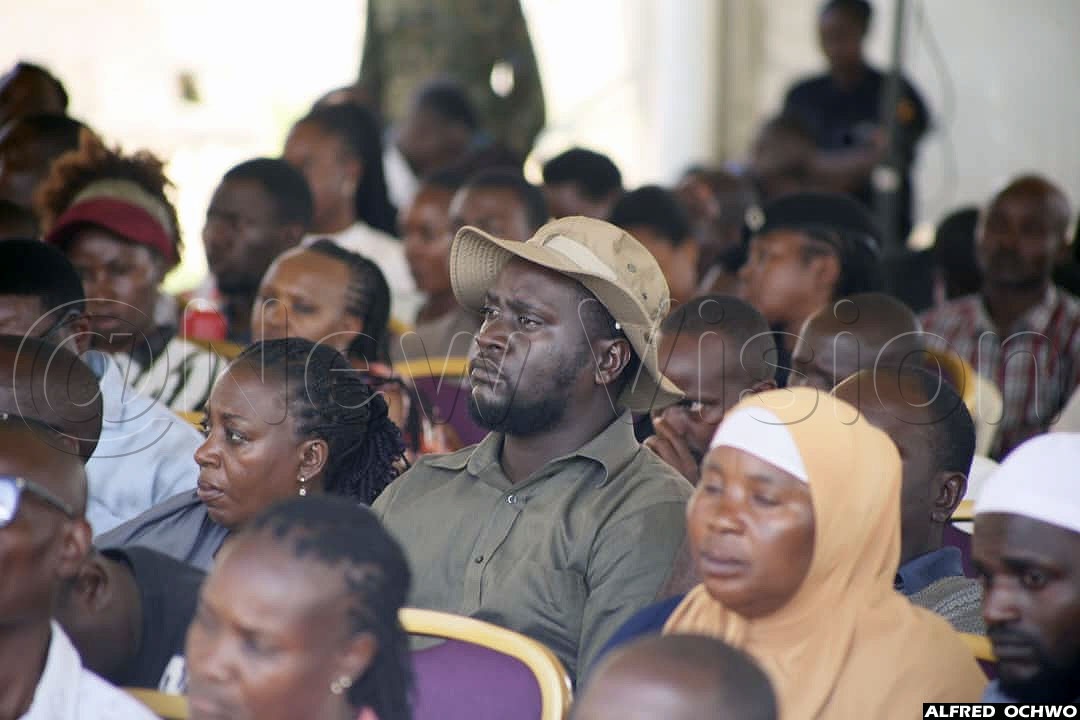
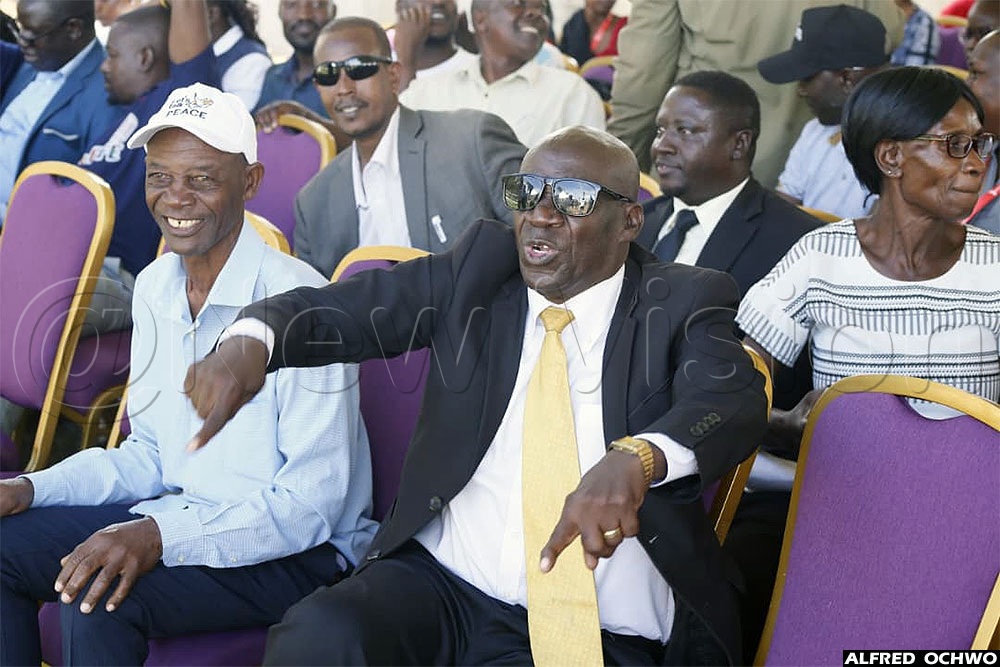
The audience at the venue broke into emotional celebrations and applause when Justice Komuhangi ruled that Okello was guilty of killing Ryan Odeke, Keisha Agenrwoth, Gideon Eteku and Ignatius Sseruyange — all aged under three.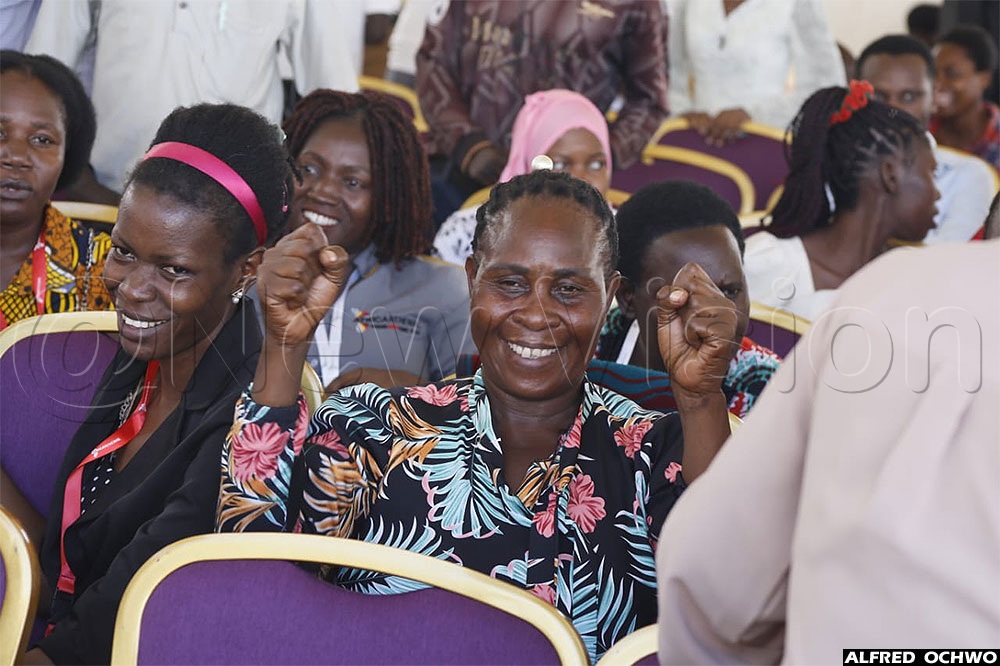
The four young children — three males and a female — were fatally stabbed by a knife-wielding Okello on what had been a routine day at Early Childhood Development Programme Centre on April 2.
The day care was founded by Ggaba Community Church.
Eleven days after that dark day, Okello appeared in court for the first time and was charged with four counts of murder — one for each slain child. He pleaded not guilty to all the charges.
In the end, the state reigned supreme in a trial that has captured the nation's attention.
"We are well pleased with the verdict of the court on each of the four counts," said chief state attorney Jonathan Muwaganya when invited to speak before sentencing.
"As prosecutors, we are advocates for the people and I am instructed to thank the court and the Judiciary administration for bringing justice closer to the people, on whose behalf the courts derive judicial power."
He thanked the community, including the families and relatives of the young victims, for their "resilience and cooperation throughout this justice-seeking process".
'Deserves no mercy'
"In Section 172 of the Penal Code Act, a person who is convicted of the offense of murder is liable to suffer death. We are aware that Uganda no longer has a mandatory death penalty. But the death sentence, my lord, is still good law and even though the courts are not mandated to pass a death sentence as a must, they can still do so in deserving cases," said Muwaganya.
"It is our considered prayer that the ends of justice in this matter will best be served if the highest sentence is passed. My lord, we are persuaded in our thinking that the most just being is God."
The prosecutor (pictured below) cited biblical writings in which death is condemned by God Himself.
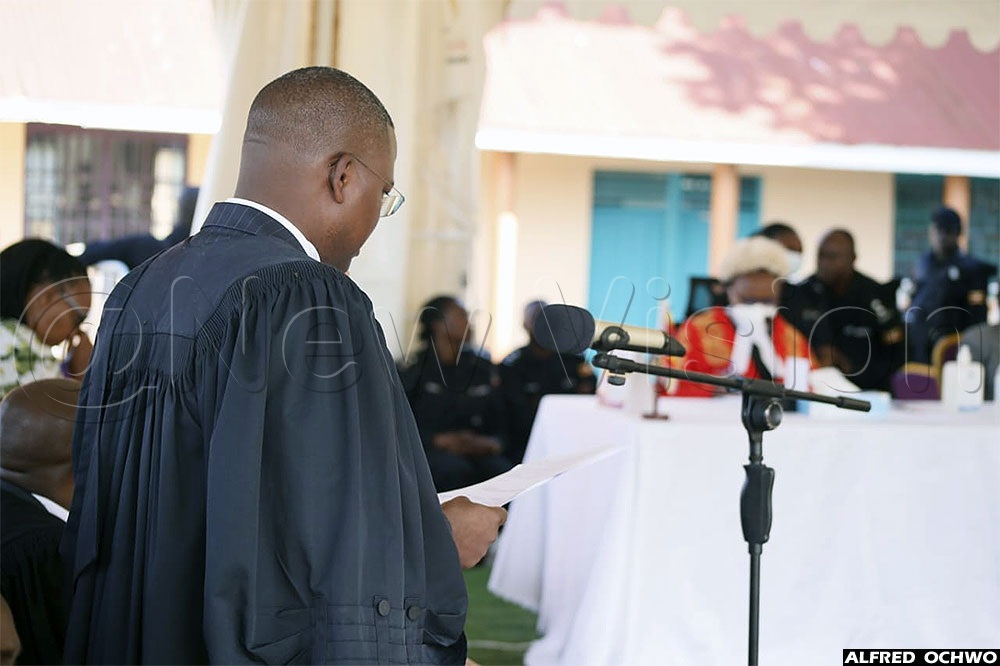
"Persons that have no regard to human life should not deserve to preserve theirs. Whoever sheds human blood, according to the Bible, by humans their blood shall be shed," said Muwaganya.
On what court should consider the punishment for the convict to be, the prosecution team said this particular crime exhibited the "highest degree of cruelty and meticulous planning".
"My lord, this particular crime was not committed instantly. It never arose in just the state of the moment. The convict thought through his actions, planned his actions and followed through to the detail, hence intending every consequence of his actions. The person who plans crime in that manner deserves no mercy," said Muwaganya.
"A person who applies a knife on another deserves no mercy."
'Too dangerous to society'
The prosecutors also said the victims were "defenseless minors, the most innocent in our communities", and that "the children who witnessed the execution of the four will permanently live with that trauma all through their lives, and the same applies to the caretakers and the entire Ggaba community".
"It is our considered submission that there has never been a better case in our recent history to fit within the category of the rarest of the rare. An offence that is so aggravated in nature than the present case," said Muwaganya.
"We implore the court to consider other factors that may justify the passing of the death sentence. The convict is an able-bodied man. A man by whose age was in the position of a father figure to the victims. But he chose to deploy his God-given abilities, his energy, his brain and his financial resources in the planning and execution of this crime that ended the chapter of four innocent souls.
"My lord, we are persuaded that a person of the convict's nature is too dangerous to society Extremely dangerous that if he is not eliminated or at least permanently incapacitated, he will still have the potential to hurt humanity."
Citing official crime reports, the prosecutors also said the offence of murder is rampant in Uganda. They said the lack of punitive sentences by the courts is one of the factors fueling homicide cases in Uganda.
"When sentences are light, there is an incentive to commit crime," said Muwaganya.
In conclusion, he added: "My lord, if you are not persuaded to issue the highest sentence of death, at least be pleased to pass a sentence of imprisonment for life so that the convict stays behind the bars all his natural life. It is only then that our society will be safer without him."
'I don't have anything to say'
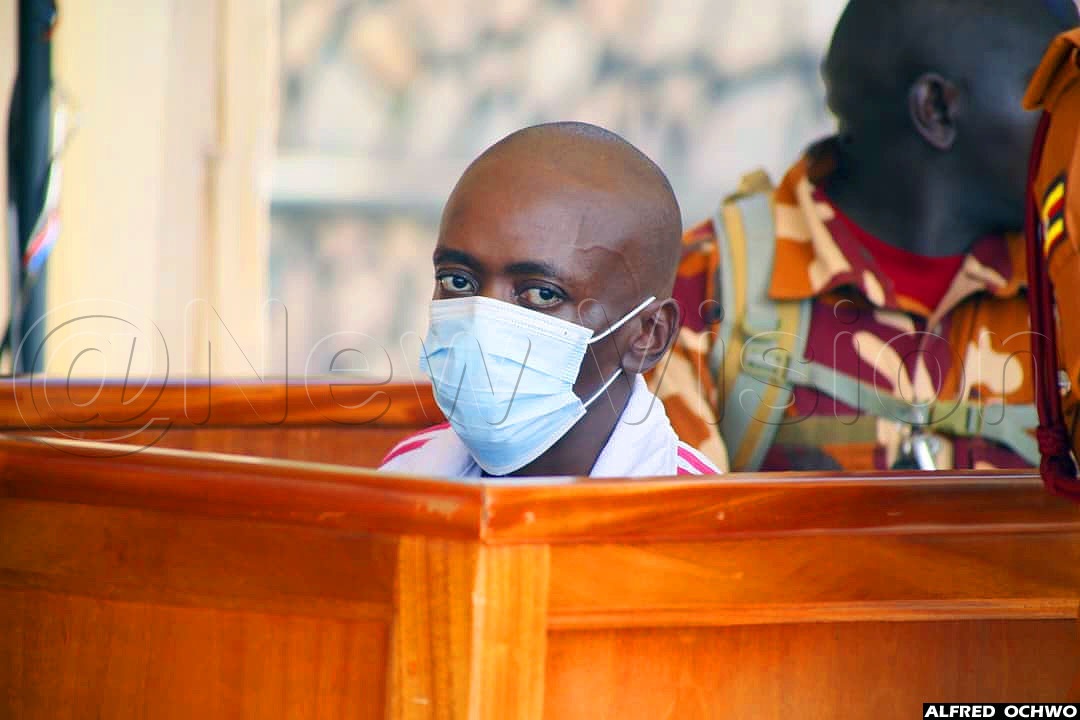
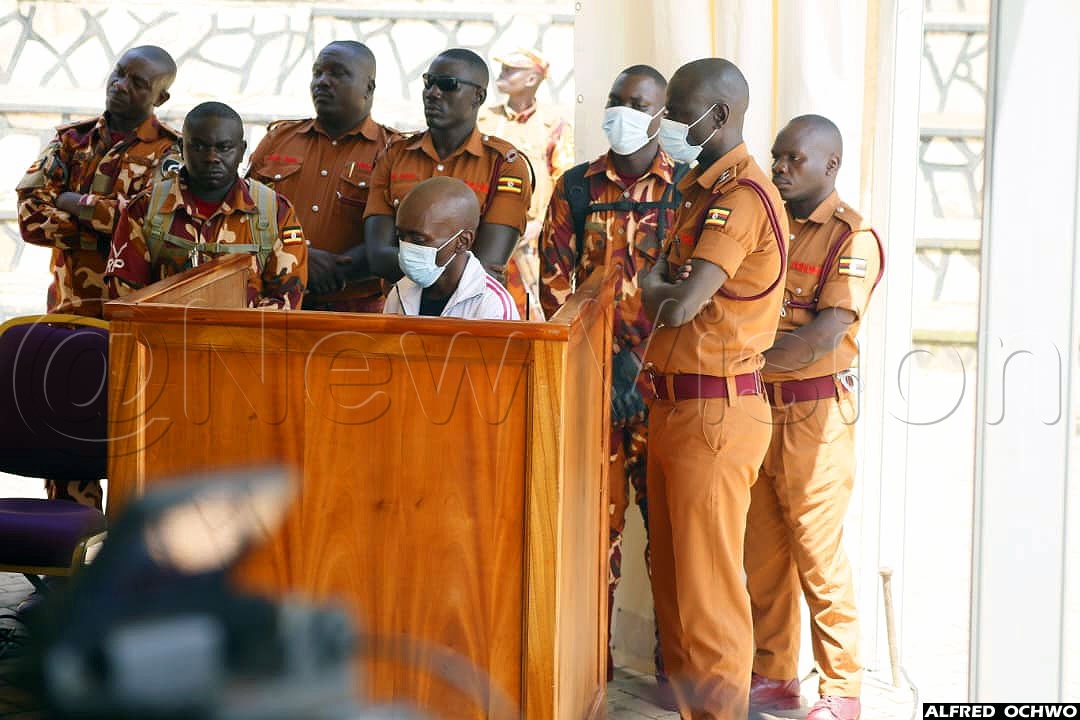
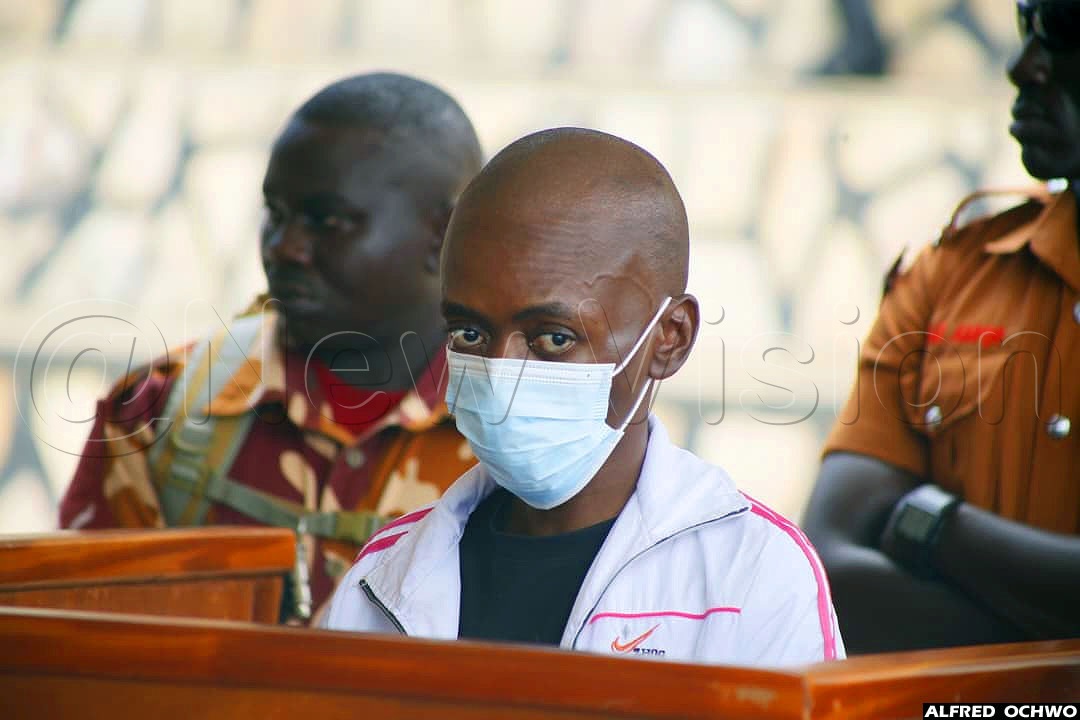
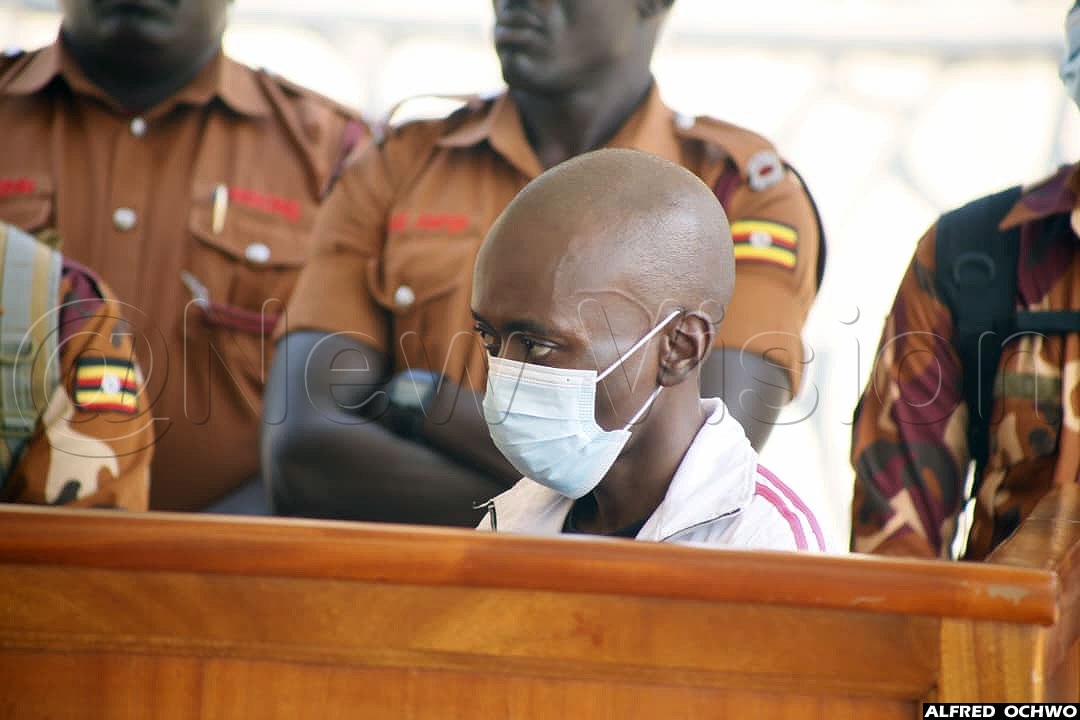
Invited to address the court before sentencing, convict Okello, wearing a face mask, stood almost speechless, his hands jittery holding the microphone.
"Do you have anything to say?" the judge coaxed him into speaking.
"No."
"You don't even want to apologise to Uganda? Should I take it that you don't have anything to say?"
"Yes, my lord. I don't have anything to say," said Okello, before handing back the microphone and retaking his seat in the heavily guarded dock.
The defense lawyers also had a chance to address the court.
She said the convict is a first-time offender with no previous, relevant or recent conviction. Making a case for a lenient punishment, Awero spoke of a man hailing from a "broken" family on top of suffering from sickle cell disease.
"Broken and dysfunctional families always lead to broken and dysfunctional people," she said.
To decide on the sentence, Justice Komuhangi explained that she had considered the submissions of both the prosecution (for a maximum sentence of death) and the defense (for leniency).
"I have also considered that the convict has not expressed any remorse at all," she said, adding that she is had every reason to believe the murders were for ritual purposes.
"I would find no reason why someone would leave their home in the morning to come and slaughter children who were in their safe space at school. That is why I am convinced that this was for ritual purposes."
The judge said she agreed with the prosecution that these crimes fall under the category of the rarest of the rare.
"The convict must be given a sentence that will not only speak to him but also to those friends of his whose identities he refused to disclose and any other person in this country who believes in sacrificing blood for wealth.
"Let them know that it is highly risky because they will be found like Mr Okello was found and they will not escape the long arm of the law."
The judge then delivered her sentenced.
"In light of the above, I have found no reason why I should not sentence Mr Okello with a maximum sentence. I hereby sentence him to suffer death for the murder of Eteku Gideon in count one, Keisha Agenrwoth in count two, Sseruyange Ignatius in count three and Odeke Ryan Odeke in count four, in a manner authorized by law."
Komuhangi then told the convicted murderer that he has a right of appeal against both the conviction and the sentence within 14 days from today.
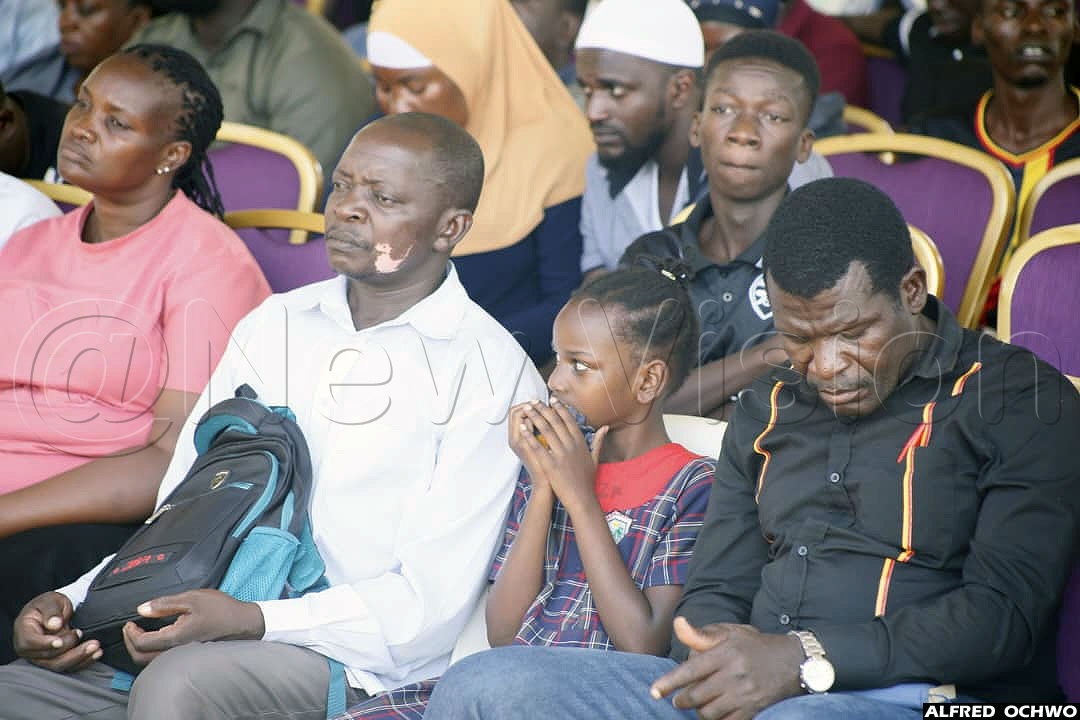
Celebrations rang across the audience inside the court precinct and outside where jubilant residents lined the road to watch the convict driven back to jail.
Beyond reasonable doubt
In a criminal case like this one, the prosecution has to prove beyond reasonable doubt that there was death of a human being(s), the death was by an unlawful act, there was participation of the accused in the death, and there was malice aforethought.
These are the ingredients or elements of murder.
In her ruling, Judge Komuhangi said the prosecution presented evidence in the form of postmortem reports by Dr Abdul Katongole of City Mortuary Mulago, who conducted the autopsies, as confirmation that death had indeed occured. The parents of the victims and two staffers of the day care (caretaker and coordinator) also appeared in court in the initial days of the trial and confirmed the deaths of the children.
The judge said eyewitness accounts and the nature of the injuries on the bodies of the children was proof enough that their deaths was by an unlawful act.
On the participation of the accused person in the crimes, Komuhangi said the accused person himself did not deny killing the children. Additionally, the prosecution also adduced corroborated evidence to support the fact that Okello actively took part in the murders, including a report by the scene of crime officers, a series of different CCTV footage as well as a DNA analysis report.

'Defenseless, innocent babies'
Delivering their joint layman's opinion on Monday this week, the three-strong team of assessors decided that Okello is guilty of the crime.
Musa Musana, Racheal Ainomugisha and Maria Theopista Kyolijja told the judge that the prosecution team of chief state attorneys Muwaganya and Anna Kiiza had sufficiently proved that Okello is culpable of the four murders.
They cited the medical reports of experts as proving that Okello was in a stable mental state at the time of committing the crimes.
The assessors also based their collective opinion on CCTV evidence presented in court as well as call data records and testimony from staff of the day care.
The trio said the prosecutors had not just placed Okello at the crime scene; they had also demonstrated his participation in the commission of the murders.
In her judgment on Thursday, Komuhangi said the court agreed with the assessors that the accused indeed commited crimes.
On the fourth ingredient of murder, malice aforethought, she said it is a mental element and therefore not easy to prove with direct evidence.
"But inferences may be made from a number of things, including the nature of the weapon used, the part of the body targeted, the nature of injuries and the conduct of the accused person before, during and after the commission of the offense," said the judge.
She pointed to the prosecution evidence from the testimonies of the two staffers of the day care, who said they saw the accused person "aggressively and gruesomely cut the necks of the four children with a knife" on that fateful April 2 late morning.
Justice Komuhangi also said there was evidence in the form of images from the scene of crime officers of the grave injuries inflicted on the children as well as the killer knife that the accused tossed over the chain link fence at the scene of crime.
"The above evidence would be sufficient to prove malice aforethought because there would be no other inference that a person pounces on defenseless, innocent babies and goes ahead to cut their necks as if slaughtering a goat or a chicken in that accurate and precise manner other than that of malice aforethought," ruled the judge.
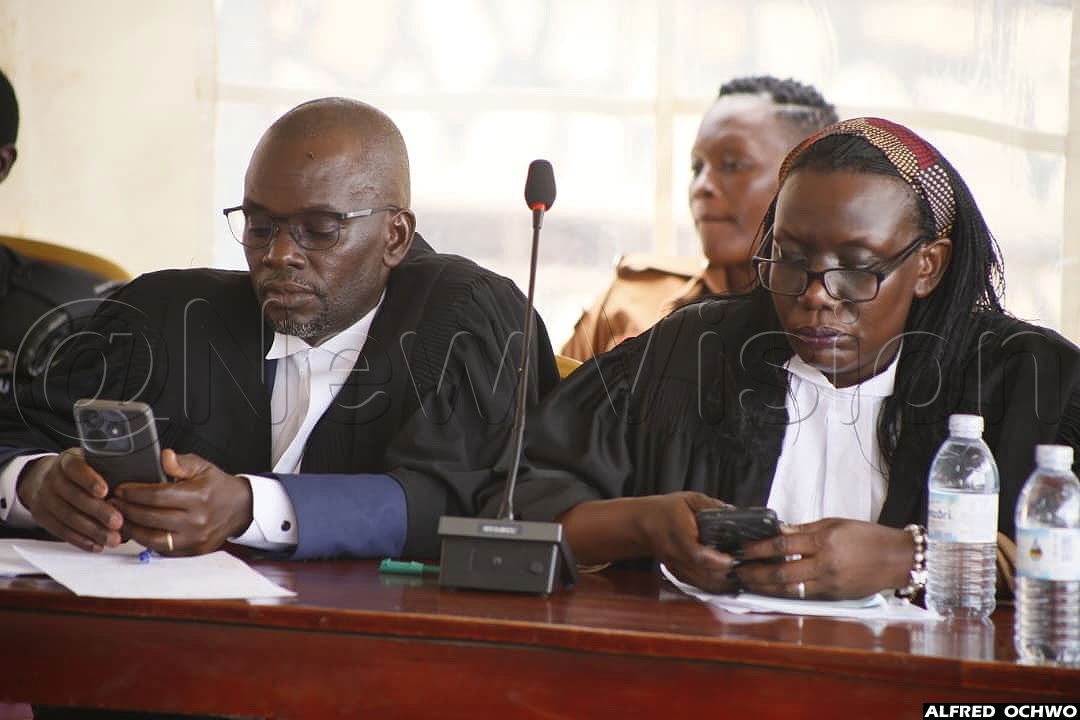
During the final oral submissions on Monday, the defence legal team of Richard Kumbuga and Sarah Awero argued that the man standing trial was suffering from schizophrenia, a mental disorder, and therefore urged court to acquit their client.
Kumbuga particularly drew on the law to make a case for Okello.
In his submission, citing the Penal Code Act, the defence lawyer argued that a person is not criminally responsible for any act of omission if, at the time of doing it, he or she is, through any disease affecting his or her mind, incapable of understanding his or her actions.
While giving his unsworn testimony last week, Okello told court of how he had endured a "distressing period" between January and March this year.
He spoke of an unsettled period of being pursued by some people over money, which forced him into hiding. He also said he tried to rob a bank as well as kill his brother's family.
In his defense, Okello did not deny killing the children but said he did not do so deliberately. He denied being foreminded in murdering the toddlers. He told court there were some circumtances that forced him to act the way he did on April 2.
Only two of his selected four witnesses showed up in court, with court failing to reach the other two because the availed phone numbers, one an American number, were off.
In her ruling, Justice Komuhangi said Okello did not disclose the circumstances under which he was forced to commit the crime and neither did he reveal the identities of his so-called friends that turned on him, reportedly threatening his life in the days leading to the fateful day.
The defense team had banked on the insanity defense to bolster their case.
"When someone [in this case Okello] raises a defense on insanity, then it becomes his responsibility to prove to the court that actually that was the condition that he was in at the time the offense was committed," said Komuhangi.
In processing her verdict, the judge evaluated the evidence provided by the accused person in a bid to support the insanity defense:
▪️Was the accused person suffering from the disease of the mind at the time the offense was committed?
▪️Did that disease of the mind render him incapable of knowing the nature and quality of his actions?
▪️Did he or not know that what he was doing was wrong by reason of that disease of the mind?
Komuhangi said that, for instance, the accused is the only person who testified that he was not mentally okay when committing the murders on April 2.
She also said the accused person did not invite his biological parents, who are still alive, to come to testify in his defense on the issue of having been admitted to Butabika Hospital six years ago.
Diminished responsibility
The judge said the other probable defense that would be available to the accused person would be a defense of diminished responsibility.
This is a partial defense to murder that reduces the charge to manslaughter if a defendant’s mental capacity was substantially impaired by a recognized medical condition at the time of the killing.
This sort of defense requires proof of an abnormal mental state that impaired the ability to understand conduct, form judgment, or exercise self-control.
However, Justice Komuhangi said, there was no where in his adduced evidence that Okello talked about "a retardation of his mind".
"The only issue that the accused person suffers from and was talked about by many witnesses is sickle cell disease," she added.
"And when Dr [Roger] Agenda [of C-Care IHK, who examined his medical sanity on December 30, 2025 during processing of Okello's Ugandan citizenship] was asked as to whether sickle cell anaemia is not an underlying cause for mental illness, he said it is not but it is a risk factor.
"And he said this [risk factor] is as a result of too much pain and also the strength of the medication for the sickle cell disease. But he hastened to add that when he was examining the accused person, the accused person did not present any symptoms of any mental disabilities that may have been caused by sickle cell disease," said the trial judge.
On the painkilling medication, including Diclofenac, that the accused was found in possession of upon his arrest, court found that the defense' argument that it was medication for a mental illness did not hold water.
"In light of the above, I also find that the defense of diminished responsibility is not available to the accused person," ruled Komuhangi.
"On the contrary, the prosecution adduced evidence to show that at all material times, the accused was of a normal mental status and in control of his actions."
Okello was found to have not only searched online for car rental services and names of schools for young children, but also for videos of beheadings by ISIS, an extremist armed group.
The judge said she had found the accused man "was very sane in gruesomely slaughtering four innocent children" and she had decided the prosecution had proven all the ingredients of murder beyond reasonable doubt.
"In agreement with the joint opinion of the assessors, I hereby convict Christopher Okello Onyum of the offense of murder contrary to sections 171 an 172 of the Penal Code Act Cap 128 in" all the four counts.
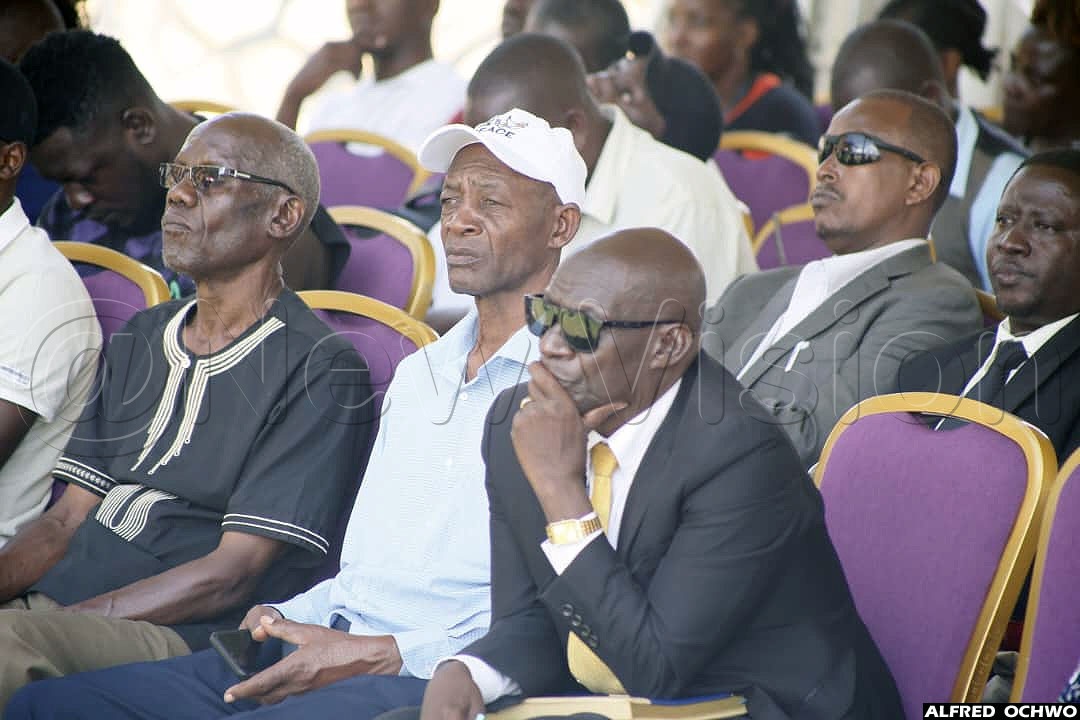
In pictures: Ggaba residents celebrate



_____________________________
RELATED STORIES
▪️Ggaba murder suspect pleads not guilty to all four charges
▪️ Ggaba day care caretaker gives chilling account of fateful day
▪️'He charged at me with a knife but I ducked for cover'
▪️Experts who examined Ggaba accused murderer Okello testify in court
▪️ Okello faces uphill battle defending himself in Ggaba murder trial
▪️ Okello begins defense in Ggaba murder trial on Friday
▪️ 'I tried to rob a bank and kill my brother's family'