Okello begins his defense in Ggaba murder trial on Friday
Accused of murder, Okello has selected four people as witnesses to testify in support of his defense.
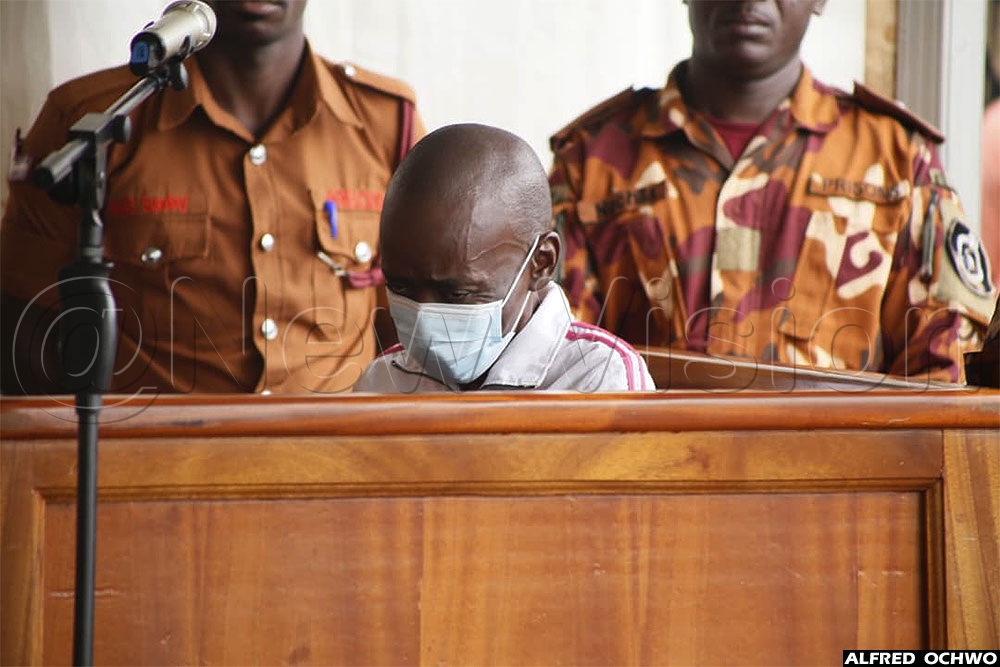
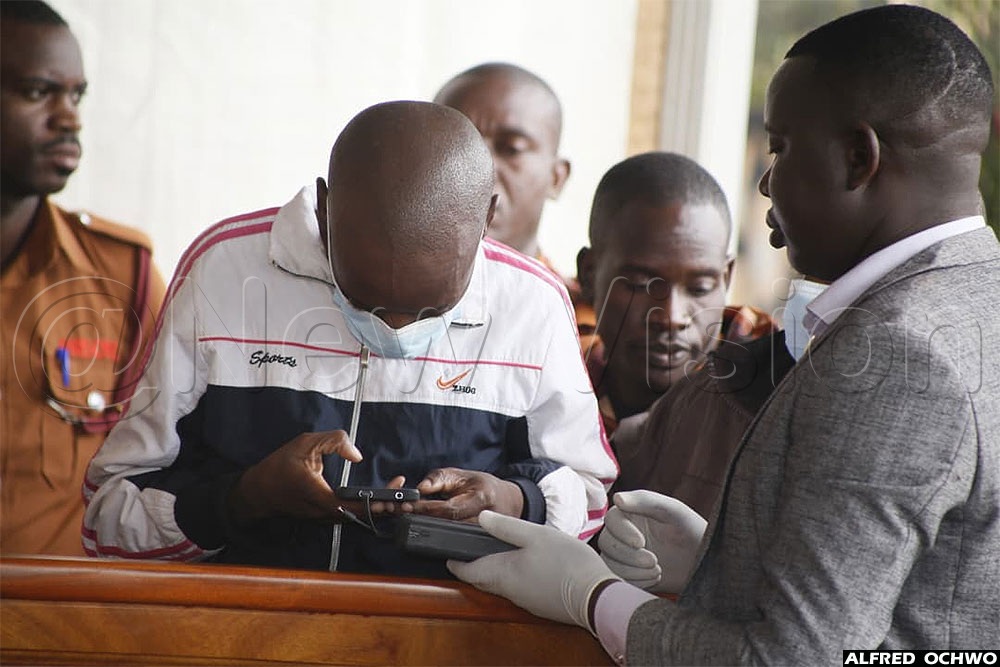
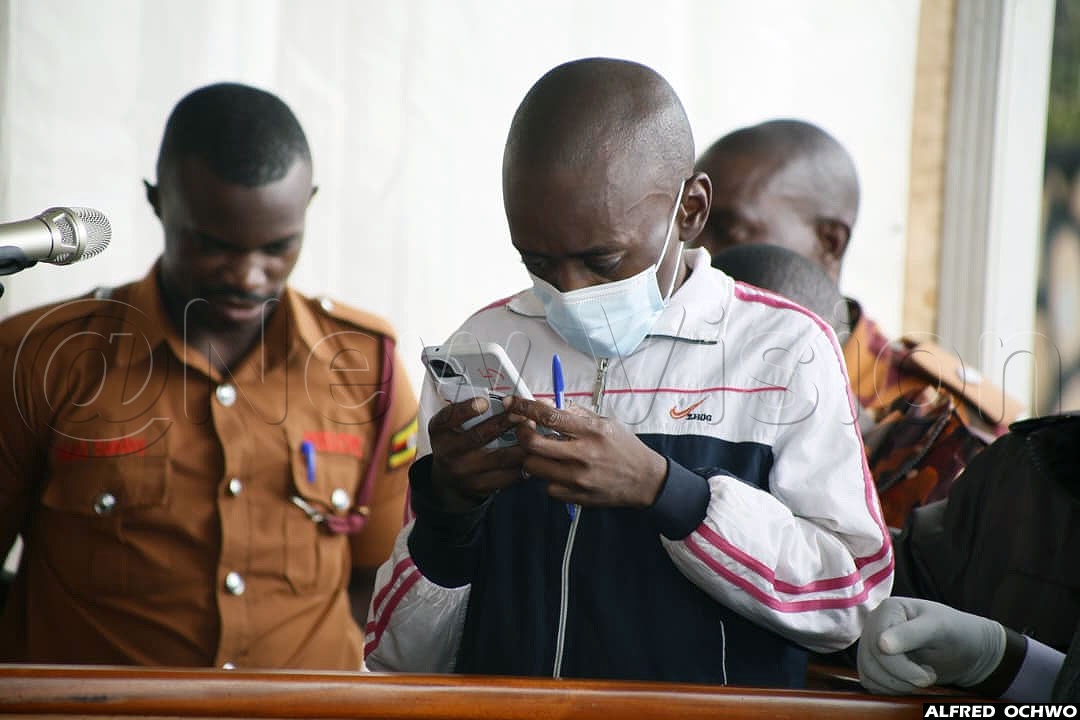
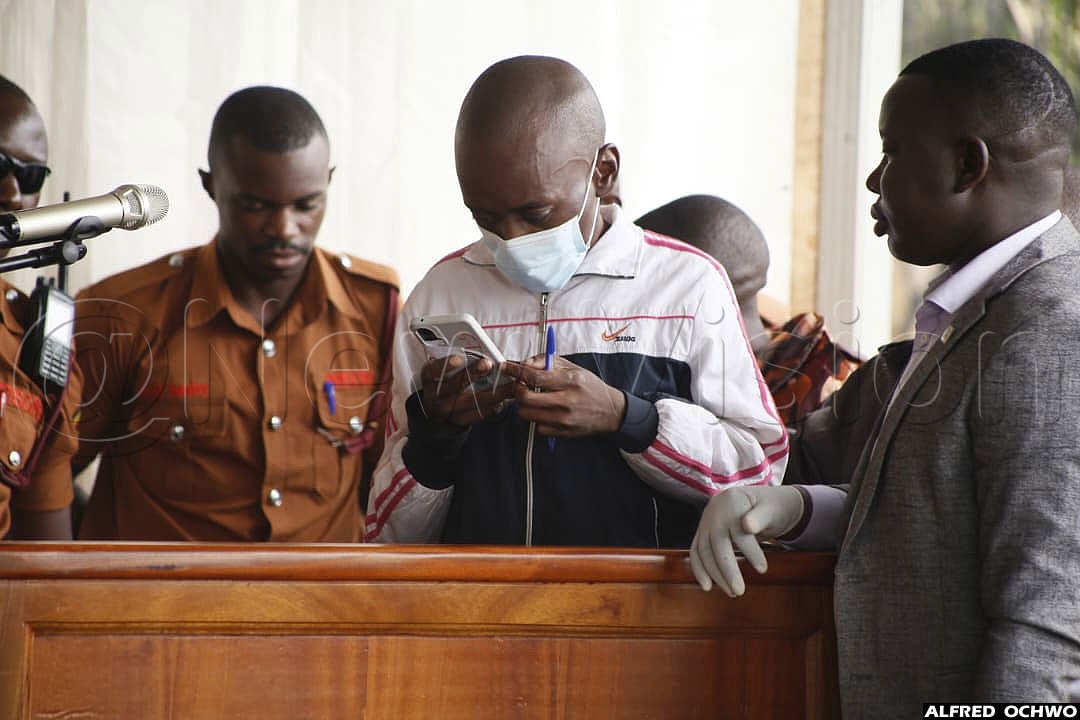
Christopher Okello Onyum, who is accused of murdering four toddlers on April 2, 2026, uses one of his phones to extract contacts he wants as witnesses to support his defence, during his mobile High Court trial at Ggaba Community Church in Kampala on April 23, 2026. (Credit: Alfred Ochwo)
_______________________
GGABA MURDER TRIAL
By Joseph Kizza
In a dramatic change of heart on Thursday, Christopher Okello Onyum, accused of murder, switched from choosing to give a sworn testimony to opting to tell his story without taking oath in a trial that has gripped the nation.
Yet, it was not the only moment of indecisiveness on show.
Justice Alice Komuhangi Khaukha had given the man accused of murdering four toddlers exactly three weeks ago in Ggaba an hour to "fully compose and organise" himself and return to give his sworn testimony.
But once the mobile High Court was back in session, instead of taking the witness stand as initially thought, Okello, wearing a light blue face mask, told the judge he was not ready.
"Are you prepared to give your own evidence now?" the presiding judge asked him.
"No, not evidence, my Lord," responded the accused.
"What are you prepared to do?" probed Khaukha.
"I was advised that I could submit the defence tomorrow. Maybe a little later," replied Okello, before soon admitting: "I am not ready."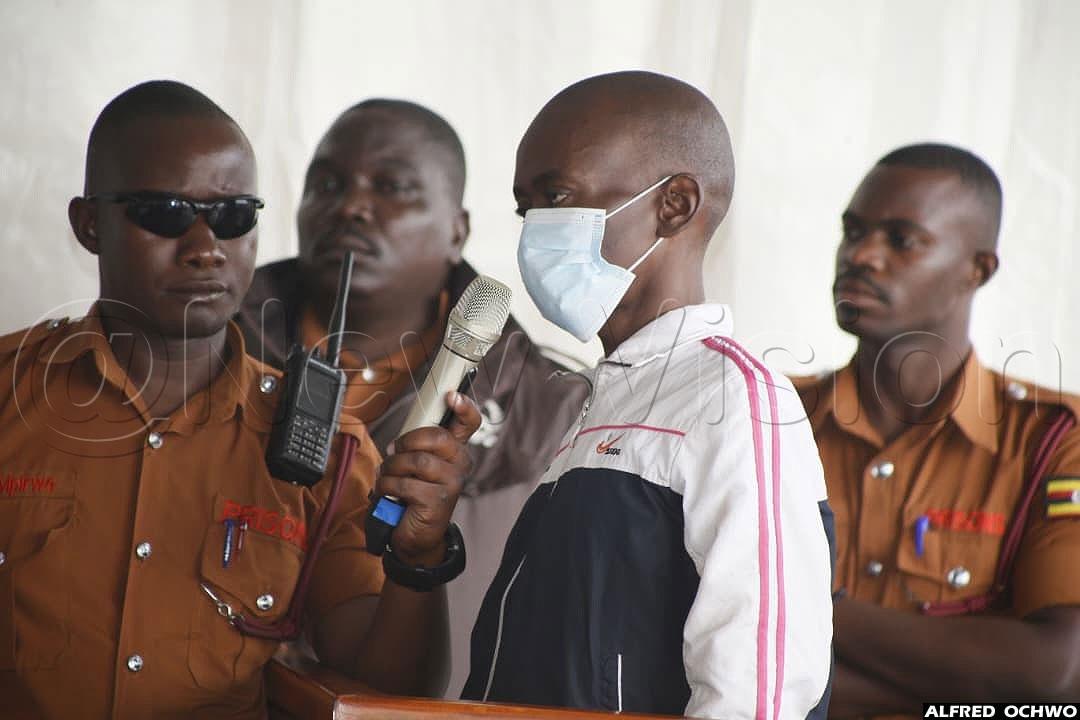
'I will change'
And when the judge informed the accused that he has to be cross-examined if he chose a sworn testimony, Okello changed his earlier position.
"So, are you still going to give a sworn testimony or you want to change your option?" asked the judge.
"I will change. To an unsworn testimony, my Lord," said the accused.
Subsequently, the judge gave him "some more time" to ready himself and adjourned the trial until Friday morning, when Okello is expected back to give his testimony. It means he will tell his story uninterrupted — without anyone, including primarily his lawyers, leading him.
Case to answer
Earlier on Thursday, the presiding judge had decided Okello has a case to answer and therefore his trial would continue after the prosecution had closed its case after producing 18 witnesses in the course of eight days.
Okello is standing trial for the murder of toddlers Gideon Eteku, Keisha Agenrwoth, Ignatius Sseruyange and Ryan Odeke on April 2 at Early Childhood Development Programme Centre in Ggaba.
He pleaded not guilty to four counts of murder at the start of his trial last week.
More than a week on, after getting confirmation from the accused himself that he had understood her decision that he has a case to answer, Justice Khaukha told Okello he had options, under the law, on how to proceed with his defense.
▪️One, he could choose to keep quiet because of a presumption of innocence.
▪️He could also opt to give his evidence without swearing (taking an oath).
▪️And thirdly, he could alternatively decide to give his evidence under oath.
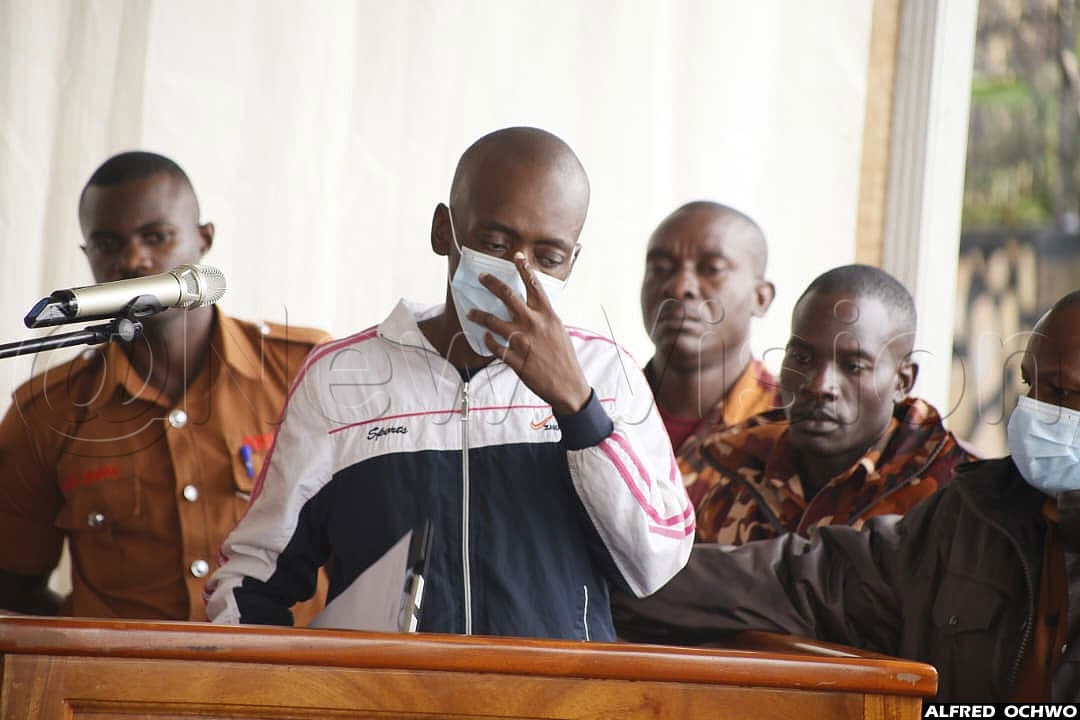
"In each of those options, you have a right to call witnesses to give evidence in your favour," the judge told Okello, who stood in the portable dock under heavy guard on the eighth day of the mobile High Court trial at Ggaba Community Church in Makindye division in Uganda's capital Kampala.
The judge then explained to the accused what each of the three options entails, before breaking off the court session to allow Okello to consult with his lawyers.
When they returned half-an-hour later, Okello told the court he had decided he would give a sworn testimony. That meant he would take the witness stand and be asked questions regarding the case.
Under Article 28(3)(c) of Uganda's constitution, a person charged with a criminal offense has a right to be given adequate time and facilities for the preparation of their defense.
Over the course of one week, Okello has sat in court throughout the proceedings in which the evidence of the 18 prosecution witnesses was taken.
"I observed that at the commencement of this hearing, the accused person confirmed to the court that he had interacted with the two lawyers that had been assigned to him at the expense of the state," said Justice Khaukha.
She also said Okello and his lawyers had confirmed to the court that they had gone through the disclosures of evidence. "The accused person personally confirmed that his lawyers had discussed with him the disclosures."
When the court broke off briefly on Thursday, Okello returned to inform the court that he was in position to give a sworn testimony.
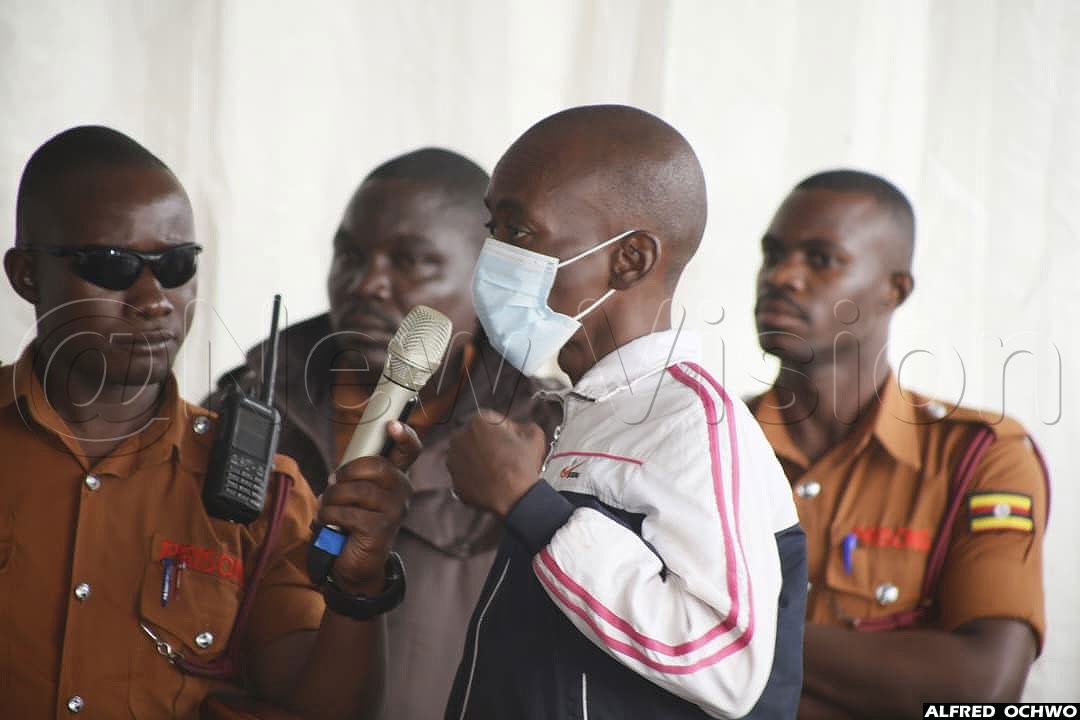
Regarding his witnesses, he asked to check for their particulars from the phones which had already been admitted as exhibits — a request the presiding judge granted. And after the phones had been powered, Okello extracted the names and contact details of four people himself, which he wrote on a piece of paper and presented to court.
He retrieved the contacts under the watchful eye of Superintendent of Police Kenneth Henry Angulo, a 34-year-old digital forensics analyst who had examined the phones as exhibits in the course of police investigations into the case.
Angulo is attached to the Cyber Crime Department under the Directorate of Forensic Services.
'It is an exhibit now'
"I note that the accused has not provided the physical addresses of the named witnesses. So, the registrar of this court will use the availed telephone numbers to reach out to these witnesses so that they are able to come and give evidence for the accused person," said the judge.
"I am satisfied that he has been accorded adequate time and facilities to be able to defend himself."
Khaukha then gave Okello an hour to prepare himself to give his defence, only for him to return with a change of mind.
Meanwhile, as the judge was concluding with the adjournment, the accused had one final request: "My Lord, I pray that court grants me to look at my phone another time."
"To look at your phone? But we gave you the phone, and you scrolled through it," responded Khaukha.
"My Lord this time we are going to use the Internet to download the rest of the information we can find," appealed Okello.
But the judge stood her ground: "It is an exhibit now and unfortunately I will not give you that opportunity. So, let's come here tomorrow at 9am and you give your evidence."