
EAC ministers to discuss cross-border infrastructure, oil investment
Kasebayo said Uganda is preparing to enter commercial oil production, with crude oil exports expected to be transported through the East African Crude Oil Pipeline (EACOP), which is currently 92% complete. The pipeline will connect Uganda's oilfields to the export terminal at Tanga Port in Tanzania.
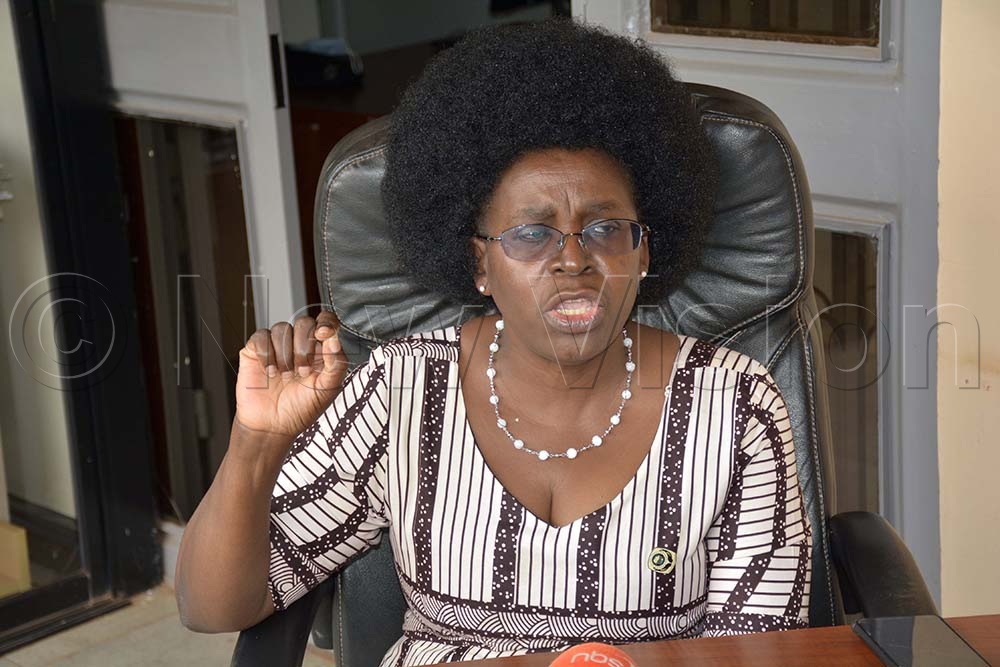
Kristina Kasebayo, the Head of Compliance at the Uganda National Oil Company (UNOC), said Uganda is promoting investment in oil exploration as the country prepares to begin production from the Kingfisher and Tilenga oilfields in June 2027. (Credit: Wilfred Sanya)
East African countries are set to hold a regional ministerial meeting to discuss cross-border infrastructure development and investment in the oil and gas sector.
This comes at a time when the region has entered a new phase of oil exploration and production, spearheaded by Uganda and Kenya. Regional stakeholders say strengthening cross-border trade and infrastructure will be critical to increasing crude oil production and unlocking the region's petroleum potential.
Kristina Kasebayo, the Head of Compliance at the Uganda National Oil Company (UNOC), said Uganda is promoting investment in oil exploration as the country prepares to begin production from the Kingfisher and Tilenga oilfields in June 2027.
Kasebayo's remarks were contained in a press release dated November 10, 2026.
Uganda, which is often referred to as the Pearl of Africa, is positioning itself to become one of the region's leading oil producers once its commercial fields reach full production capacity.
The meeting is scheduled to take place in Juba, South Sudan, on November 24–25, 2026, according to South Sudan's Minister of Petroleum, Daniel Awow.
Kasebayo said Uganda is preparing to enter commercial oil production, with crude oil exports expected to be transported through the East African Crude Oil Pipeline (EACOP), which is currently 92% complete. The pipeline will connect Uganda's oilfields to the export terminal at Tanga Port in Tanzania.
She said Uganda is also seeking to sustain investment in upstream petroleum activities and plans to launch a new licensing round in 2026/2027.
"First oil will start before the end of our financial year in June 2027, which will position us as an oil-producing country," Kasebayo said.
Minister of Energy and Mineral Development, Monica Musenero. (Credit: Wilfred Sanya)
According to Kasebayo, Uganda's crude oil has already gained international recognition, positioning the country to engage global buyers as export infrastructure nears completion. Uganda's crude oil is marketed under the name "Pearl Sweet".
Meanwhile, plans for a domestic oil refinery at Kabaale in Buseruka Sub-county, Hoima District, within the Kabalega Industrial Park, are at an advanced stage. The refinery is expected to strengthen national energy security and support domestic fuel supply.
Moagi is expected to participate in a regional National Oil Companies (NOCs) session titled Resource Renaissance: Energy-Fueled Growth for a New Generation.
The discussions will examine how cooperation between African national oil companies can improve resource extraction, accelerate infrastructure development and attract investment.
"We would like to accelerate infrastructure build-out and support South Sudan's near-term ambition to increase crude output from 174,000 barrels per day, with a longer-term ambition of reaching 450,000 barrels per day," the statement said.
The meeting will provide an opportunity to accelerate exploration and expand refining capacity across South Sudan's 14 available oil blocks.
It comes at a time when Kenya is also preparing to join the region's oil-producing countries, with first production from the South Lokichar Basin expected in December 2026.
The project, developed by Gulf Energy, targets an initial production of 20,000 barrels per day, with output expected to rise to 50,000 barrels per day in the second phase.
In September 2026, Nigerian businessman Aliko Dangote launched a $16b (about Sh65 trillion) oil refinery project in Lamu, Kenya, through the Dangote Group. The proposed refinery is expected to have a processing capacity of 700,000 barrels per day.