
Bududa targets better services, disaster preparedness with sh50.94b budget
The proposal was presented during the district budget conference held at Eastern Palace Hotel on November 13, 2026.
Bududa district leaders attending the budget meeting. (Photos by Andrew Nakhaboya)
________________
For thousands of families living on the steep slopes of Mount Elgon, every rainy season brings the fear of landslides and floods. For them, disaster preparedness is not merely a development priority but a matter of life and death.
Bududa District, which has 28 lower local governments, faces significant disaster risks, with more than 80 percent of its lower local governments reportedly located in high-risk areas.
More than 16 years after the devastating 2010 Nametsi landslide, which killed more than 80 people and displaced hundreds, the district continues to struggle to protect vulnerable communities while addressing gaps in healthcare, education, roads and other essential services.
Against this background, Bududa district has proposed a sh50.94 billion budget for the 2027/2028 financial year, with education and health receiving the largest departmental allocations.
The proposal was presented during the district budget conference held at Eastern Palace Hotel on November 13, 2026. The meeting brought together political leaders, technical officers and other stakeholders to discuss development priorities and the allocation of available resources.
For residents in disaster-prone communities, patients struggling to access healthcare and farmers trying to transport produce to markets, the key question remains whether the planned expenditure will translate into real improvements in their lives.
District chairperson Geoffrey Wafukhulu Natubu said disaster preparedness and resilience must remain central to the district's development agenda, given its history of recurrent natural disasters.
He cited the 2010 Nametsi landslide, the 2018 Suume River disaster, the 2019 Bushika disaster and the October 2024 landslides and floods as reminders of the dangers facing communities.
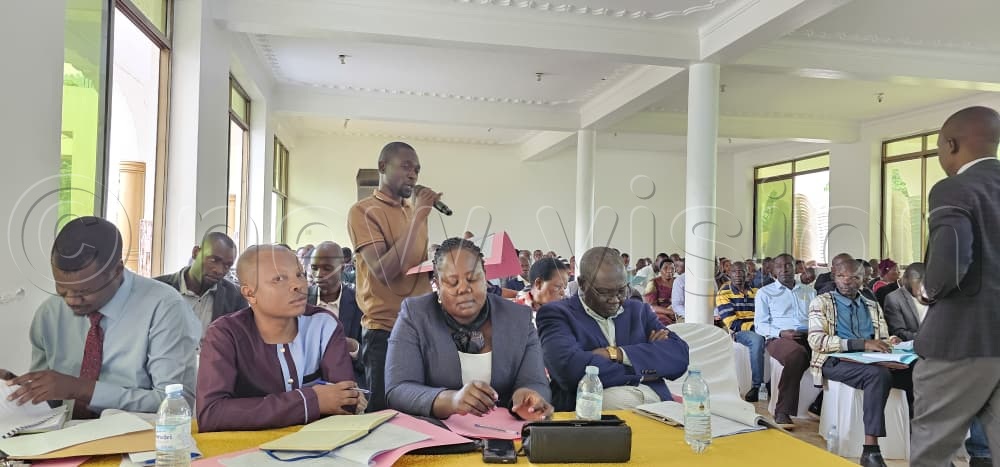
Leaders participating in the budget meeting
Natubu called for sustainable interventions to protect lives, property and livelihoods. He urged the government to increase investment in disaster preparedness and resilience.
He also identified poor road infrastructure as a major development challenge, highlighting the need to improve the Bubulo-Bududa Circular Road and Tsutsu Bridge to improve access to essential services and markets.
In agriculture, the district chairperson called for increased investment in production and market access. He also urged transparency and accountability in the implementation of the Northern Uganda Social Action Fund (NUSAF IV) to ensure that intended beneficiaries receive the programme's support.
Chief administrative officer Max Martin Mukula challenged heads of departments to align their work plans with available resources, prioritise critical interventions and ensure prudent use of public funds.
He said the district's development priorities should reflect the national budget theme of achieving full monetisation of Uganda's economy through commercial agriculture, industrialisation, expansion of services, digital transformation and market access.
Presenting the proposed financial plan, District Planner Evelyne Nandudu said Bududa had projected expenditure of sh50.94 billion for the 2027/2028 financial year.
She also reported that the district had utilised sh11.37 billion during the first quarter of the current financial year, representing about 22 per cent of its annual budget.
NRM district chairperson Mukhwana Koloto called for stronger cooperation between political leaders and technical officers. He said united leadership was necessary to lobby for additional Government resources and address the district's development challenges.
Closing the conference, Deputy resident district commissioner Mukamba Ibrahim, the guest of honour, emphasised the importance of teamwork in improving service delivery and implementing government programmes.
He urged parents and communities to prioritise education, warning that failure to invest in children's education could have long-term consequences.
“If you think education is expensive, try ignorance,” Mukamba said.
He also appealed to residents living in high-risk disaster areas to embrace Government resettlement programmes and relocate to safer places to protect their lives and property.
As Bududa prepares for the 2027/2028 financial year, the proposed sh50.94 billion budget presents an opportunity to address longstanding development challenges.
However, for families living under the threat of landslides, patients seeking medical care, children attending school and farmers struggling with market access, the success of the budget will be measured by the changes they experience in their communities.
Whether the proposed billions will translate into safer settlements, better-equipped health facilities, improved schools and accessible roads will depend on how effectively the district prioritises, allocates and accounts for public resources.
For the people of Bududa, development will not be measured by the size of the budget but by how much it changes their lives.
The district's budget planning is part of Uganda's broader local government budgeting framework, which requires annual estimates, work plans and public accountability for local government spending.