
Court finds Okello guilty of murdering four toddlers in Ggaba
Justice Alice Komuhangi Khaukha says she has found Christopher Okello Onyum "was very sane in gruesomely slaughtering four innocent children" and therefore guilty of murder.
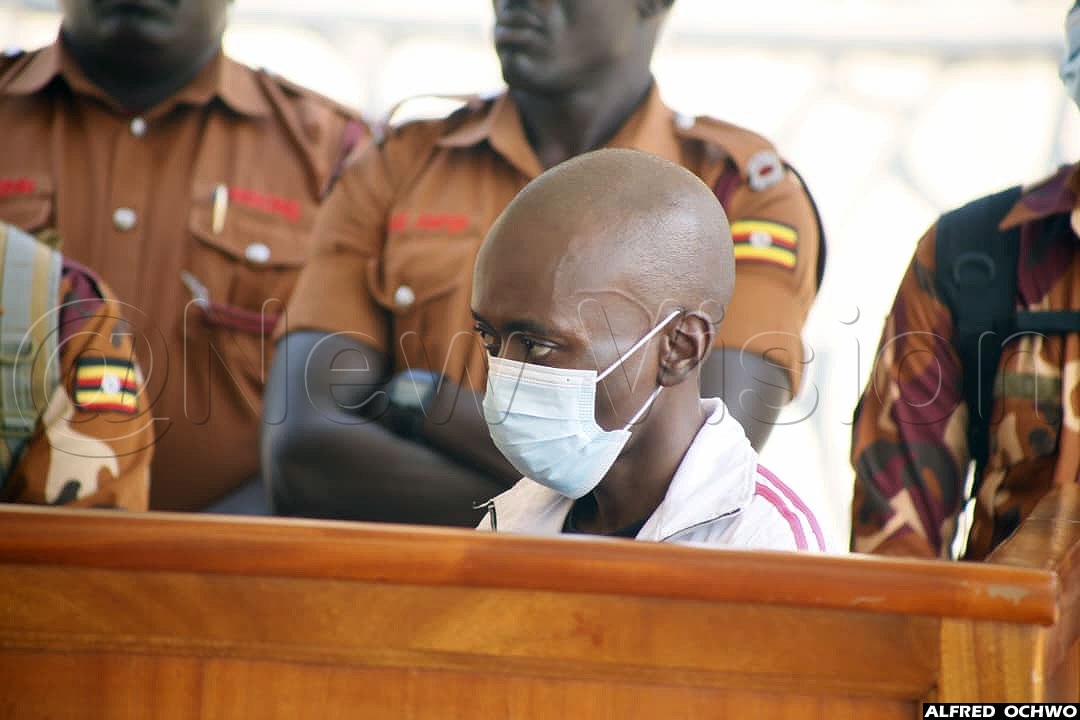
Christopher Okello Onyum was convicted of four counts of murder by the High Court on April 30, 2026. (Credit: Moses Nsubuga)
___________________________
GGABA MURDER TRIAL
By Joseph Kizza
Christopher Okello Onyum, a 39-year-old Ugandan-born American, has been found guilty of murdering four toddlers at a day care in early April this year in Uganda's capital Kampala.
After a marathon of mobile High Court sessions held at Ggaba Community Church in Ggaba parish, Makindye division — not far from where the brutal deaths occured — Justice Alice Komuhangi Khaukha on Thursday (April 30) convicted Okello of four counts of murder.
The young victims, all aged below three, were Ryan Odeke, Keisha Atim Agenrwoth, Gideon Eteku and Ignatius Sseruyange.
The four children — three males and a female — were fatally stabbed by a knife-wielding Okello on what had been a routine day at Early Childhood Development Programme Centre on April 2. The day care was founded by Ggaba Community Church.
Eleven days after that dark day, Okello appeared in court for the first time and was charged with four counts of murder — one for each slain child. He pleaded not guilty to all the charges.
Under Ugandan law (Penal Code Act), the punishment for murder is either the death penalty or life imprisonment. 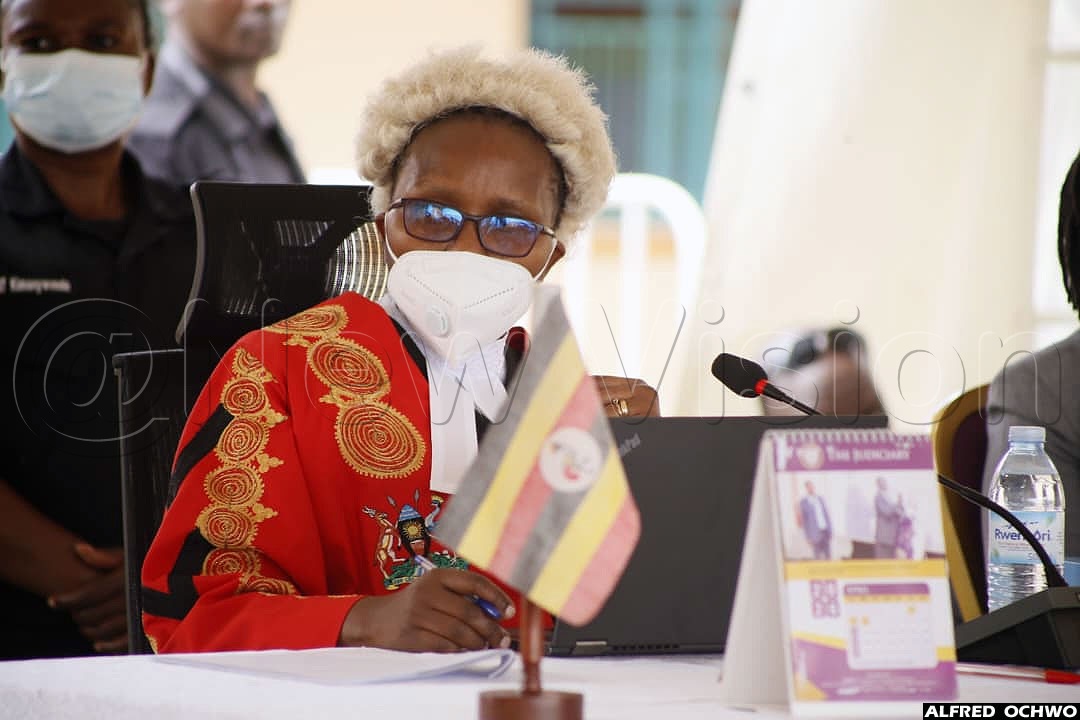
Beyond reasonable doubt
On the ingredients or elements of murder, the prosecution has to prove beyond reasonable doubt that there was death of a human being(s), the death was by an unlawful act, there was participation of the accused in the death, and there was malice aforethought.
In her ruling, Judge Komuhangi said the prosecution presented evidence in the form of postmortem reports by Dr Abdul Katongole of City Mortuary Mulago, who conducted the autopsies, as confirmation that death had indeed occured. The parents of the victims and two staffers of the day care (caretaker and coordinator) also appeared in court in the initial days of the trial and confirmed the deaths of the children.
The judge said eyewitness accounts and the nature of the injuries on the bodies of the children was proof enough that their deaths was by an unlawful act.
On the participation of the accused person in the crimes, Komuhangi said the accused person himself did not deny killing the children. Additionally, the prosecution also adduced corroborated evidence to support the fact that Okello actively took part in the murders, including a report by the scene of crime officers, a series of different CCTV footage as well as a DNA analysis report.

'Defenseless, innocent babies'
Delivering their joint layman's opinion on Monday this week, the three-strong team of assessors decided that Okello is guilty of the crime.
Musa Musana, Racheal Ainomugisha and Maria Theopista Kyolijja told the judge that the prosecution team of chief state attorneys Jonathan Muwaganya and Anna Kiiza had sufficiently proved that Okello is culpable of the four murders.
They cited the medical reports of experts as proving that Okello was in a stable mental state at the time of committing the crimes.
The assessors also based their collective opinion on CCTV evidence presented in court as well as call data records and testimony from staff of the day care.
The trio said the prosecutors had not just placed Okello at the crime scene; they had also demonstrated his participation in the commission of the murders.
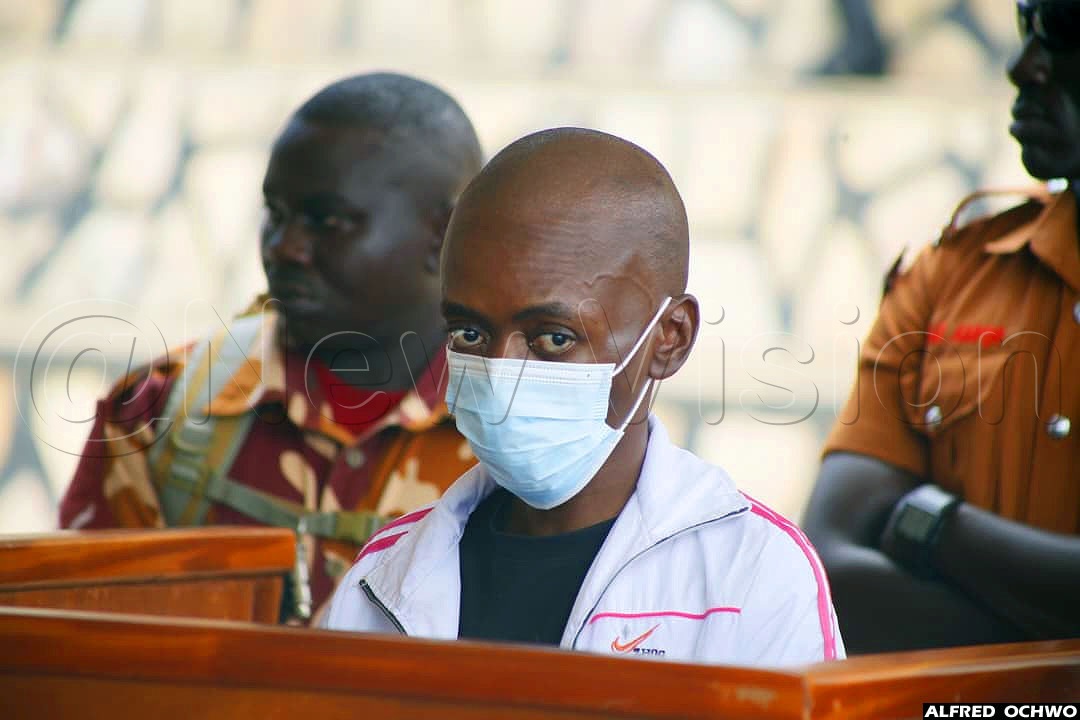
In her judgment on Thursday, Komuhangi said the court agreed with the assessors that the accused indeed commited crimes.
On the fourth ingredient of murder, malice aforethought, she said it is a mental element and therefore not easy to prove with direct evidence.
"But inferences may be made from a number of things, including the nature of the weapon used, the part of the body targeted, the nature of injuries and the conduct of the accused person before, during and after the commission of the offense," said the judge.
Justice Komuhangi also said there was evidence in the form of images from the scene of crime officers of the grave injuries inflicted on the children as well as the killer knife that the accused tossed over the chain link fence at the scene of crime.
"The above evidence would be sufficient to prove malice aforethought because there would be no other inference that a person pounces on defenseless, innocent babies and goes ahead to cut their necks as if slaughtering a goat or a chicken in that accurate and precise manner other than that of malice aforethought," ruled the judge.
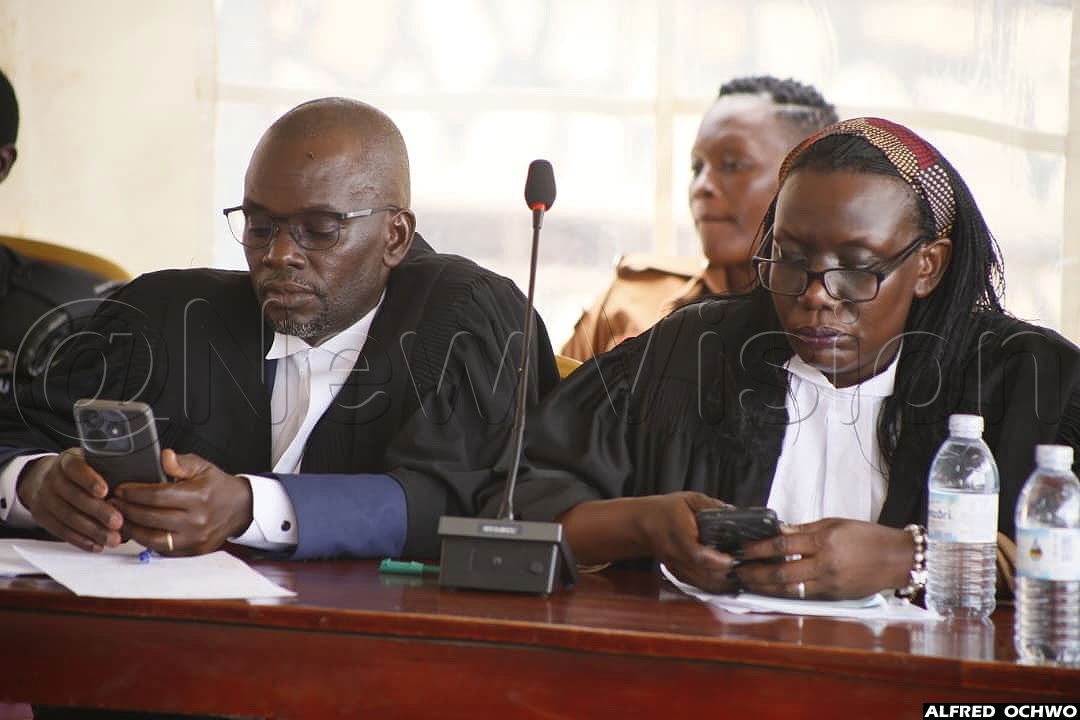
During the final oral submissions on Monday, the defence legal team of Richard Kumbuga and Sarah Awero argued that the man standing trial was suffering from schizophrenia, a mental disorder, and therefore urged court to acquit their client.
Kumbuga particularly drew on the law to make a case for Okello.
In his submission, citing the Penal Code Act, the defence lawyer argued that a person is not criminally responsible for any act of omission if, at the time of doing it, he or she is, through any disease affecting his or her mind, incapable of understanding his or her actions.
While giving his unsworn testimony last week, Okello told court of how he had endured a "distressing period" between January and March this year.
He spoke of an unsettled period of being pursued by some people over money, which forced him into hiding. He also said he tried to rob a bank as well as kill his brother's family.
Insanity defense
In his defense, Okello did not deny killing the children but said he did not do so deliberately. He denied being foreminded in murdering the toddlers. He told court there were some circumtances that forced him to act the way he did on April 2.
Only two of his selected four witnesses showed up in court, with court failing to reach the other two because the availed phone numbers, one an American number, were off.
In her ruling, Justice Komuhangi said Okello did not disclose the circumstances under which he was forced to commit the crime and neither did he reveal the identities of his so-called friends that turned on him, reportedly threatening his life in the days leading to the fateful day.
The defense team had banked on the insanity defense to bolster their case.
"When someone [in this case Okello] raises a defense on insanity, then it becomes his responsibility to prove to the court that actually that was the condition that he was in at the time the offense was committed," said Komuhangi.
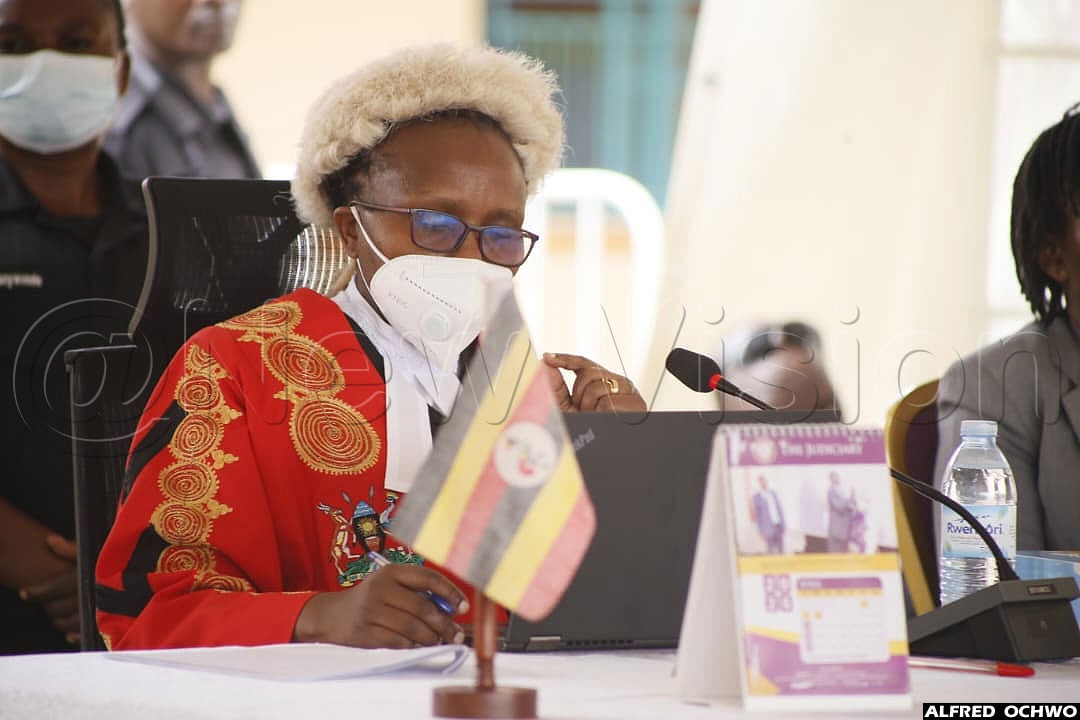
In processing her verdict, the judge evaluated the evidence provided by the accused person in a bid to support the insanity defense:
▪️Was the accused person suffering from the disease of the mind at the time the offense was committed?
▪️Did that disease of the mind render him incapable of knowing the nature and quality of his actions?
▪️Did he or not know that what he was doing was wrong by reason of that disease of the mind?
Komuhangi said that, for instance, the accused is the only person who testified that he was not mentally okay when committing the murders on April 2.
She also said the accused person did not invite his biological parents, who are still alive, to come to testify in his defense on the issue of having been admitted to Butabika Hospital six years ago.
Diminished responsibility
This is a partial defense to murder that reduces the charge to manslaughter if a defendant’s mental capacity was substantially impaired by a recognized medical condition at the time of the killing.
This sort of defense requires proof of an abnormal mental state that impaired the ability to understand conduct, form judgment, or exercise self-control.
However, Justice Komuhangi said, there was no where in his adduced evidence that Okello talked about "a retardation of his mind".
"The only issue that the accused person suffers from and was talked about by many witnesses is sickle cell disease," she added.
"And when Dr [Roger] Agenda [of C-Care IHK, who examined his medical sanity on December 30, 2025 during processing of Okello's Ugandan citizenship] was asked as to whether sickle cell anaemia is not an underlying cause for mental illness, he said it is not but it is a risk factor.
"And he said this [risk factor] is as a result of too much pain and also the strength of the medication for the sickle cell disease. But he hastened to add that when he was examining the accused person, the accused person did not present any symptoms of any mental disabilities that may have been caused by sickle cell disease," said the trial judge.
On the painkilling medication, including Diclofenac, that the accused was found in possession of upon his arrest, court found that the defense' argument that it was medication for a mental illness did not hold water.
"In light of the above, I also find that the defense of diminished responsibility is not available to the accused person," ruled Komuhangi.
"On the contrary, the prosecution adduced evidence to show that at all material times, the accused was of a normal mental status and in control of his actions."
Okello was found to have not only searched online for car rental services and names of schools for young children, but also for videos of beheadings by ISIS, an extremist armed group.
The judged said she had found the accused man "was very sane in gruesomely slaughtering four innocent children" and she had decided the prosecution had proven all the ingredients of murder beyond reasonable doubt.
She also sided with the court assessors' opinion that Okello is guilty of murder.
Court broke off and would resume at 3pm for the sentencing.
_____________________________
RELATED STORIES
▪️Ggaba murder suspect pleads not guilty to all four charges
▪️ Ggaba day care caretaker gives chilling account of fateful day
▪️'He charged at me with a knife but I ducked for cover'
▪️Experts who examined Ggaba accused murderer Okello testify in court
▪️ Okello faces uphill battle defending himself in Ggaba murder trial
▪️ Okello begins defense in Ggaba murder trial on Friday
▪️ 'I tried to rob a bank and kill my brother's family'