
Balimwezo decries rampant illegal disposal of human waste in Kampala
“We have a big challenge of solid waste management, including faecal matter. In Kampala, many of our people don’t have toilets and pit latrines and therefore do open defecation, which causes diseases,” Balimwezo said.
The Lord Mayor of Kampala, Ronald Nsubuga Balimwezo (C), interacts with the KCCA executive director, Hajat Sharifah Buzeki (L), as the Kawempe Division Mayor, Emmanuel Serunjoji, looks on during the launch of the Weyonje Sanitation Challenge at Lutunda village-Kanyanya in Kawempe Division on Saturday, November 21, 2026. (Credit: Francis Emorut)
The Lord Mayor of Kampala, Ronald Nsubuga Balimwezo, has decried the widespread dumping of faecal matter in the city's corners, saying the Kampala Capital City Authority (KCCA) enforcement team will conduct operations across the five divisions to arrest people without pit latrines or toilets.
Balimwezo said the five divisions of Kampala are grappling with poor waste management, as some residents dispose of waste on streets and in drainage channels, creating health hazards.
He noted that poor waste management and sanitation have increased the disease burden among city dwellers, making many unproductive and forcing them to incur high costs of treating illnesses
According to available statistics from the authority, Kampala generates approximately 2,000 to 2,500 tonnes of solid waste per day, but only 40% to 50% of it, roughly 1,200 tonnes daily, is collected.
The remainder is illegally dumped in drainage channels or burned.
Organic matter accounts for 80% of Kampala's waste, while plastics account for 6%. Other materials, such as textiles, glass and paper, make up the remaining 14%.
“We have a big challenge of solid waste management, including faecal matter. In Kampala, many of our people don’t have toilets and pit latrines and therefore do open defecation, which causes diseases,” Balimwezo said.
He added that many slum dwellers use drainage channels as toilets. Others defecate in polythene bags, buckets and basins before disposing of the faecal matter in drainage channels during the night.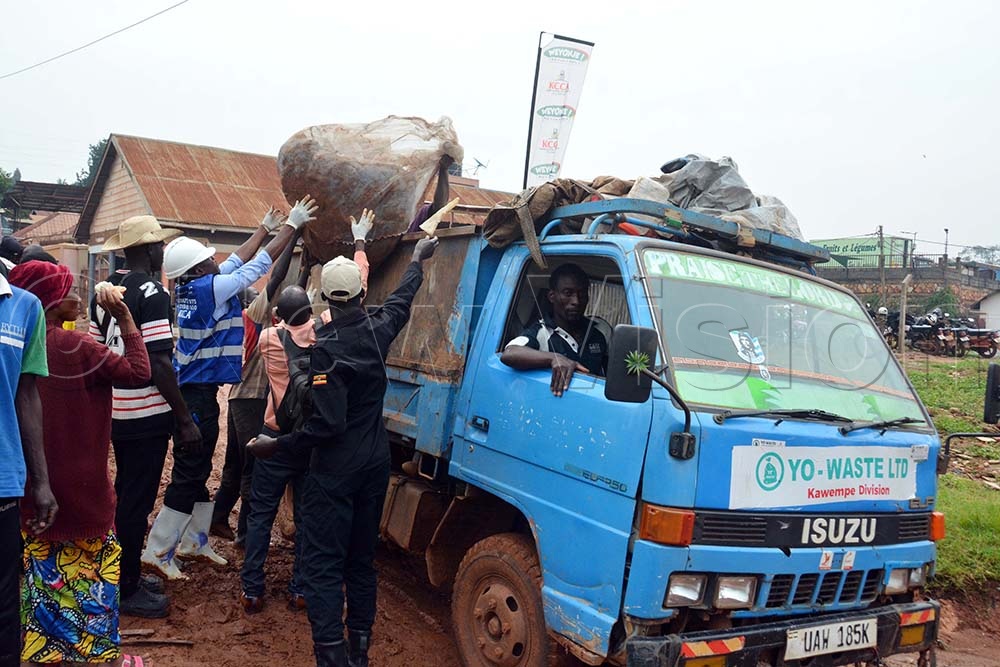
Cleaners loading a heap of waste onto the truck during the Weyonje Sanitation Challenge cleaning exercise at Lutunda Village-Kanyanya in Kawempe Division on Saturday, November 21, 2026. (Credit: Francis Emorut)
Balimwezo made the remarks during the launch of the 2026 Weyonje Sanitation Challenge at Lutunda zone, Kanyanya parish, in Kawempe division, on November 21, 2026.
On the risk of disease outbreaks, particularly cholera, Balimwezo said the situation is worsened by people who throw faecal matter onto rooftops, after which rainwater washes it into places where residents collect water for consumption.
He said the practice would no longer be tolerated, adding that the authority would conduct operations to apprehend those responsible.
“Very soon we are going to conduct operations in residences as leaders we should tell people face on. If you have no toilet or pit latrine, you are going to be arrested, and they should get to know that,” Balimwezo said.
He emphasised the need to sensitise communities across Kampala's five divisions, urging local leaders to play a critical role in educating residents about the dangers of poor waste disposal and the diseases it causes.
Diseases caused by poor waste disposal
Diseases associated with poor waste disposal include typhoid fever, cholera, diarrhoea and dysentery, vector-borne and pest-related diseases, and intestinal parasitic infections.
Other illnesses include malaria, which can result from stagnant rainwater, leptospirosis, fly-borne infections, skin infections and respiratory illnesses, particularly asthma, linked to toxic smoke from burning waste.
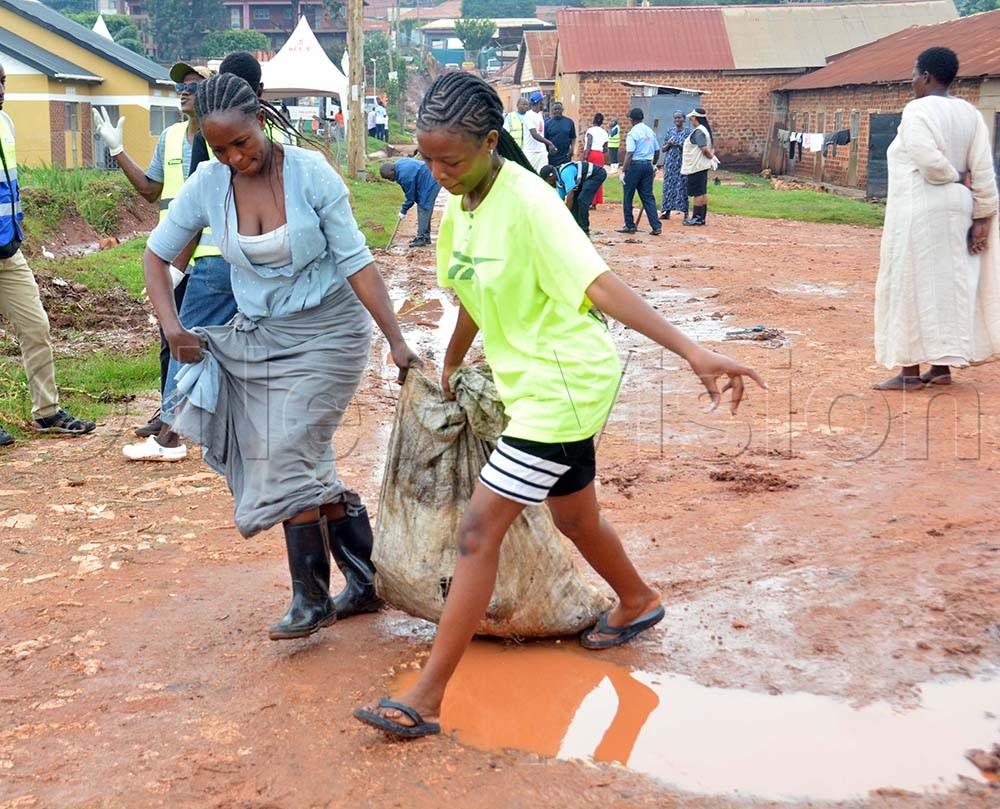
Women carrying garbage along Isa Kike Sebunya Lane during the Weyonje Sanitation Challenge cleaning exercise at Lutunda Village-Kanyanya in Kawempe Division on Saturday, November 21, 2026. (Credit: Francis Emorut)
A national economic assessment by the Economic Policy Research Centre (EPRC) and the World Bank indicates that poor sanitation and waste management cost the Government sh1.5 trillion annually in direct healthcare expenses and sh5.9 trillion in total economic losses. Kampala accounts for a disproportionate share of these costs because of its high population density and waste accumulation.
The national cost of treating malaria is estimated at $577 million (about sh2.43 trillion).
The Lord Mayor also urged the authority's administration to pay Kampala's cleaners and workers on time to prevent garbage from remaining uncollected.
He said he had received complaints from some cleaners who had not been paid for October, with November nearing its end.
KCCA executive director Sharifah Buzeki responded that her agency did not owe any cleaner payment, but asked Kawempe Division town clerk John Bosco Bashinyora to explain the delay.
Bashinyora informed the audience that the paperwork had been completed and the payment schedule sent to the Ministry of Finance, Planning and Economic Development for processing.
Residents speak out
The LC1 chairman of Lutunda village, Kanyanya, Godfrey Muyira, said most residents in his community do not have toilets or pit latrines and resort to open defecation in drainage channels or use polythene bags, popularly known as flying toilets, which they throw into the channels.
He also complained that the drainage channel along Isa Kike Sebunya Lane floods when it rains and is blocked by dumped waste.
Angelina Namukasa, a resident of Lutunda village, said the cost of constructing a pit latrine is high and some residents cannot afford it, forcing them to resort to open defecation.
Paul Semogerere said community leaders need to step up efforts to sensitise residents about the dangers of poor waste disposal, particularly the diseases it causes, which are expensive for low-income earners to treat.