
Uganda expands diagnostic imaging capacity as radiology experts gather in Kampala
About 14 regional referral hospitals now have functional CT scanners, he said. Yet the equipment's full potential remains unrealised because of a shortage of personnel with the specialised skills required to operate it and interpret the results.
Participants observe advanced diagnostic equipment during the conference. (Photos by Fred Mubanda).
__________________
Uganda is making strides in expanding access to modern diagnostic imaging services, raising hopes that fewer patients will need to travel abroad in search of medical diagnoses that can increasingly be obtained at home.
The country's growing investment in diagnostic equipment, including computed tomography (CT) scanners, magnetic resonance imaging (MRI) machines and ultrasound technology, is strengthening its capacity to identify a range of diseases, according to Dr. Crescent Max Tumusiime, head of the Department of Radiology at Mulago National Specialised Hospital and president of the Association of Radiologists of Uganda.
But the expansion of equipment has exposed another challenge: a shortage of specialists trained to operate the machines and interpret the images they produce.
Dr. Tumusiime raised the issue during the First Joint Annual Radiology and Imaging Scientific Conference 2026, held Nov. 13 and 14 at Hotel Africana in Kampala. The meeting brought together radiologists, radiographers, sonographers, imaging technologists, physicians, medical physicists and biomedical engineers from Uganda and abroad.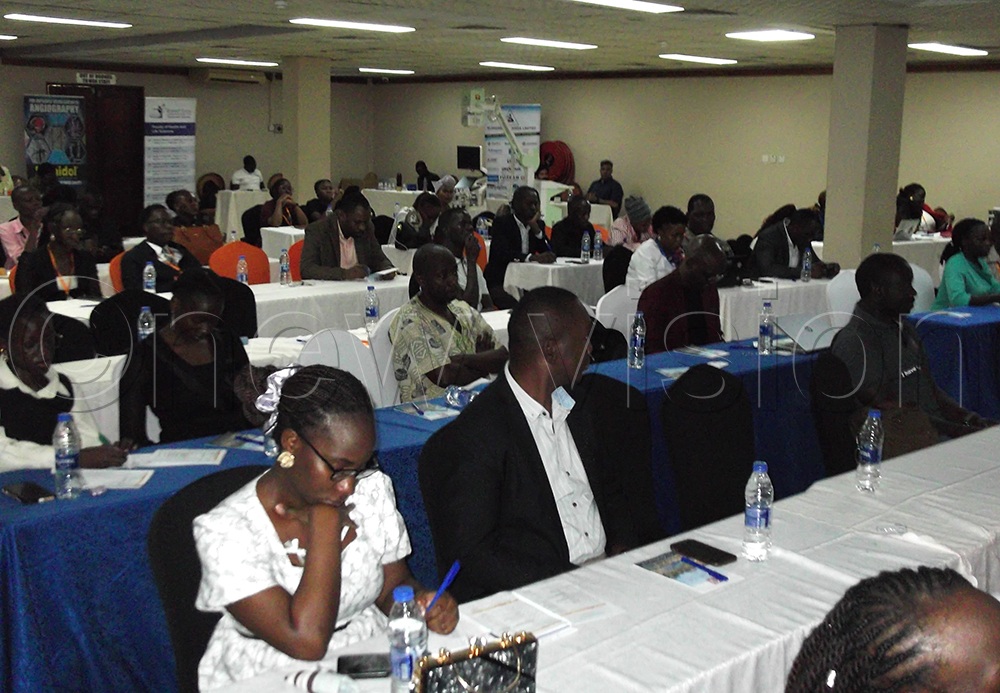
Some of the scientific experts who attended the inaugural Annual Radiology and Imaging Scientific Conference 2026. (Photos by Fred Mubanda).
Organised by the Uganda Society for Advancement of Radiology and Imaging, the Uganda Association for Sonography, the Association of Radiologists of Uganda and the Society of Radiography of Uganda, the conference was held in collaboration with the Mediterranean and African Society of Ultrasound, Ernest Cook University, Makerere University and Mulago National Specialised Hospital.
Under the theme "Precision Imaging-Advancing Breast and Abdominal Imaging through Emerging Technologies," the two-day gathering focused on the growing role of advanced imaging in diagnosing diseases, particularly breast and abdominal conditions, including cancer.
For Dr. Tumusiime, the conference was also an opportunity to change public perceptions about the country's diagnostic capabilities.
He said many of the imaging services for which Ugandans travel abroad are now available locally, and encouraged patients to make greater use of the facilities within the country.
He called for more Ugandans to pursue careers in radiology and medical imaging, arguing that expanding the specialist workforce would help the country make better use of its growing technological capacity.
Uganda can already diagnose a range of conditions affecting the breast, abdomen and brain, Dr. Tumusiime said, although patients requiring certain specialised treatments may still need to seek care abroad.
The government's position reflects a similar effort to bring diagnostic services closer to patients.
Dr. Chris Baryomunsi, the minister of health, said the government was gradually decentralising modern imaging services to district-level health facilities as part of a broader effort to improve access to quality health care.
In a message delivered at the conference by Dr. Susan Nabadda Ndidde, commissioner of National Health Laboratory and Diagnostic Services, who represented him, the minister said the government had invested in a range of technologies, from digital X-ray and ultrasound machines to CT scanners and MRI units.
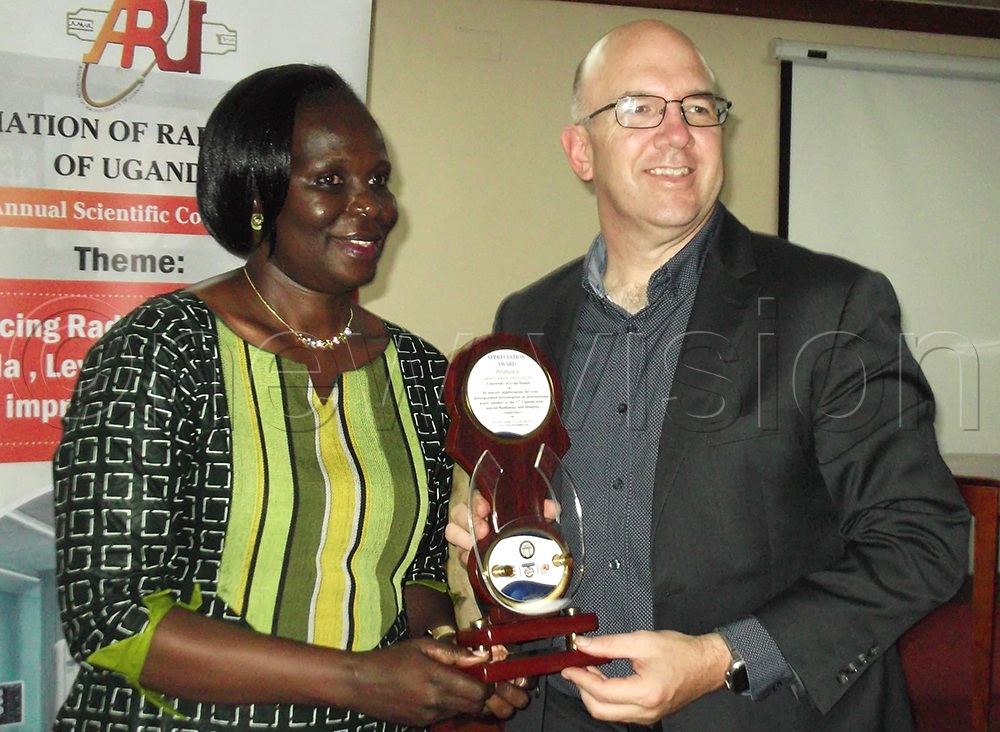
Dr Susan Nabadda Ndidde, Commissioner of National Health Laboratory and Diagnostic Services, awards Prof. Dell Dunn of the University of Utah, United States. (Photo by Fred Mubanda)
He described radiology as an essential component of precision medicine, which relies on accurate diagnosis to ensure that patients receive appropriate treatment at the right time.
Modern imaging, he said, has become increasingly important in emergency care, the diagnosis of noncommunicable diseases such as cancer and cardiovascular conditions, and the management of maternal and child health, particularly through obstetric ultrasound.
Timely and accurate imaging can help doctors make better clinical decisions, avoid unnecessary surgery and reduce hospital stays, ultimately improving patient outcomes and saving lives, he said.
The government must also invest in recruiting and training specialists capable of operating the machines and interpreting the resulting images. He further emphasised the importance of radiation safety, regular equipment calibration and quality-control measures to protect patients and ensure reliable diagnoses.
The conference also highlighted the role of international partnerships in building Uganda's specialist workforce.
Professor Dell Dunn of the University of Utah in the United States said the gathering offered an opportunity for international experts to exchange knowledge, strengthen professional relationships and contribute to the development of radiology training in Uganda.
Professor Dunn, who said he had visited Uganda six times since 2021, pointed to a longstanding educational partnership between his institution, Makerere University and Mulago Hospital.
He attended the conference with a team of five specialists, including Professor Patrick Kobes, a specialist in radiology and imaging sciences whose work focuses on musculoskeletal imaging at University of Utah Health.
The discussions, Professor Dunn said, also gave visiting experts an opportunity to learn about Uganda's progress in adopting emerging technologies, including ultrasound elastography, while examining policy priorities and future developments in medical imaging.
The collaboration is expected to continue over the next three years through subspecialty radiology training and fellowship exchange programmes aimed at strengthening expertise within Uganda.
Makerere University and Mulago Hospital have also been selected for a three-year partnership with the Radiological Society of North America to support the development of specialised radiology skills through fellowship programmes.
For Uganda, the challenge now extends beyond acquiring modern scanners. It is to ensure that hospitals have the trained personnel, technical support and quality-control systems needed to turn those machines into accessible, reliable diagnostic services.
The conference underscored both the progress already made and the work that remains before advanced imaging can reach more patients across the country.