
'They come in late': Cervical cancer silently killing women in Soroti
Medical experts are calling for early screening as "our best tool" to prevent or treat cervical cancer.
Sister Mary Anyango, a midwife, screening a woman for cervical cancer at the screening unit at Soroti Regional Referral Hospital. (Credit: Samuel Ejoku)
________________________
HEALTH MATTERS
Data from the Cervical Cancer Unit at Soroti Regional Referral Hospital in Uganda's eastern city of Soroti reveals that the majority of women screened at the facility have early-stage cancer.
Early-stage cancer is typically painless and often causes no noticeable symptoms at all.
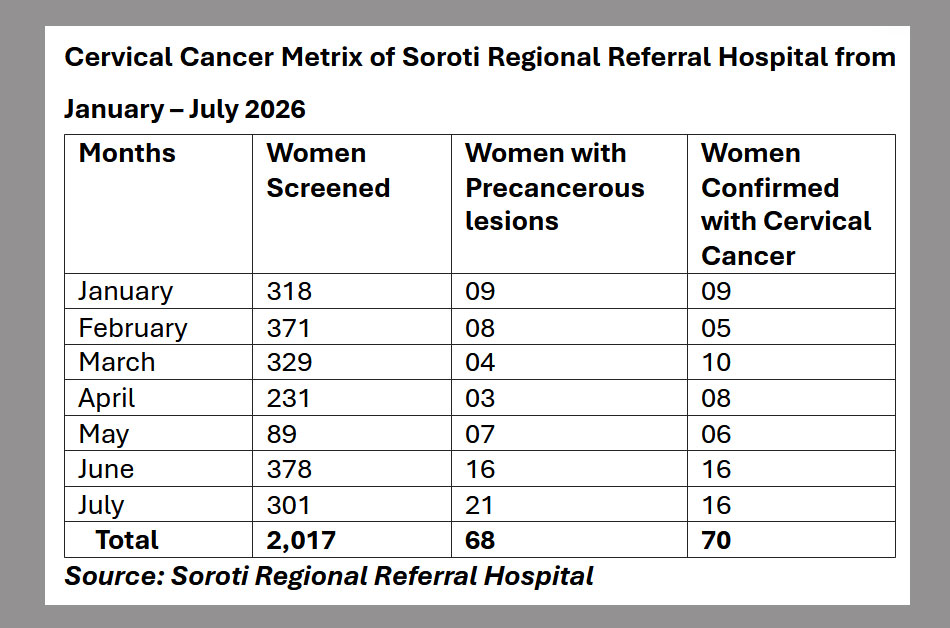
Out of the 2,017 women screened for cervical cancer at the Soroti facility between January and July this year, those with precancerous lesions stood at 68 percent and those confirmed with cervical cancer by histology at 70 percent.
Lucy, who prefers to use only her first name, shares her experience living with undetected cancer for years.
“My normal period used to last three days, but then I started having prolonged menstruation that went on for seven days. After the periods, I noticed a funny, foul-smelling discharge,” recalls the 58-year-old.
Because she experienced no physical pain, she delayed seeking medical attention for six months. Nonetheless, the discharge remained a constant concern.
“When doctors from Mulago National Referral Hospital visited Soroti on an outreach campaign, I decided to get screened. That was when they told me I had Stage 2 cervical cancer."
She recalls the moment of receiving the devastating news from the doctor.
“He seemed worried to disclose it after seeing my results. But I told him, 'Doctor, don't worry. Even if I have cancer, the God I serve will heal me'. Only then did he break the news."
Lucy was referred to an on-site gynaecologist at Soroti Regional Referral Hospital, but her initial encounter left her devastated.
“The first gynaecologist told me cervical cancer has no cure or medicine. He told me 'You are like a goat bought in October, grazed and watered until December when it is slaughtered'. That doctor passed away some few years ago,” she says.
Determined not to lose hope, Lucy sought a second opinion.
“The second gynecologist encouraged me and promised to manage my treatment. He told me to keep faith, saying that future examinations would come back clear,” she says, crediting her survival to early screening and seeking a second opinion.
Cervical cancer remains the most frequently diagnosed cancer among females at Soroti Hospital.
For 42-year-old Harriet Grace, the journey to screening began when she noticed unusual changes in her body.
“Fortunately, when they checked me, they found it was only an inflammation not cancer."
'They come in late'
Sister Mary Anyango, a midwife at the Soroti Hospital's cancer screening unit, says some women delay to seek medical attention and only present with advanced Stage 3 or Stage 4 cervical cancer.
Others present with precancerous lesions.
“When we perform VIA [Visual Inspection with Acetic Acid], we get results within a minute. This allows us to identify precancerous cells before they develop into full-blown cancer,” says Anyango, urging women to prioritize routine screening.
Sister Rachael Adong, also a midwife in the unit, attributes late presentation of women for screening and treatment to widespread lack of awareness in Teso sub-region.
“Most women in the community don’t fully understand cervical cancer. They only walk into a health facility when they feel severe discomfort, back pain, or experience bleeding,” she says.
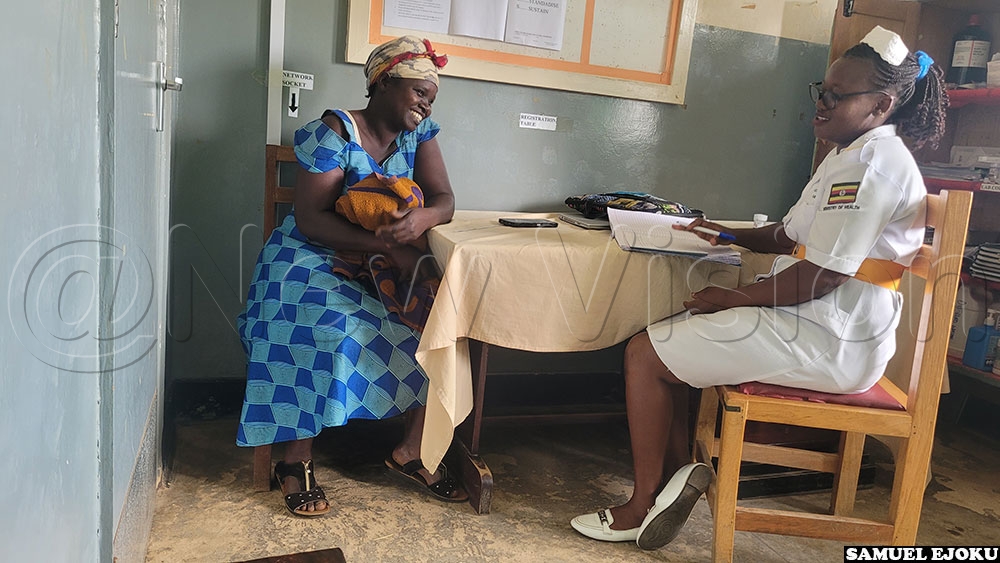
Sister Rachael Adong (R) getting the sickness history of a woman who came for cervical cancer screening at Soroti Regional Referral Hospital
Adong says seasonal routines and cultural perceptions also contribute to delayed diagnoses.
“We receive the highest number of women during the post-harvest season when agricultural work slows down. Many perceive cancer screening as something meant for healthy people, not those who are visibly sick.
"Culturally, people rarely visit a hospital without feeling ill, prioritizing farm and family work over preventative screening."
Adong emphasizes that early-stage (Stage 1 & 2) cervical cancer and precancerous lesions are painless and completely treatable.
“Women with precancerous lesions feel no pain or discomfort. If caught at this stage, they can be treated and cured.”
'We can reverse the disease if...'
Typically, the primary cause of almost all cervical cancers is a persistent infection with high-risk types of the Human Papillomavirus (HPV), a common sexually transmitted infection.
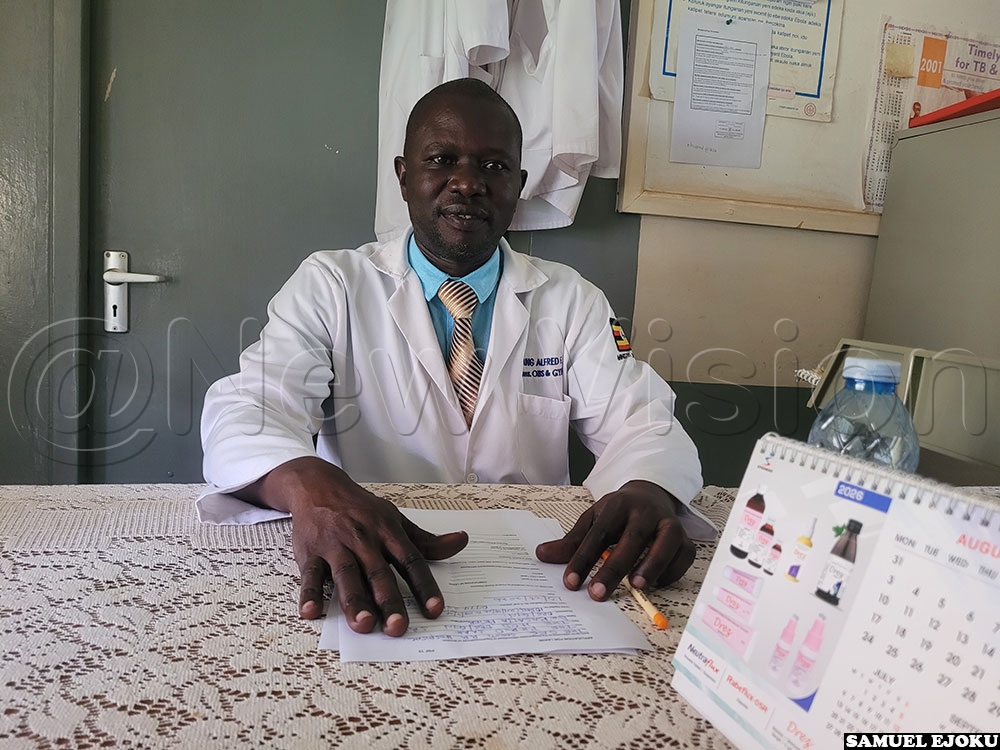
“HPV is transmitted through skin-to-skin contact, contact with infected surfaces, or shared items," says Dr Alfred Francis Ogwang (pictured below), a senior consultant obstetrician/gynecologist at Soroti Hospital.
Ogwang cautions against relying solely on symptoms for diagnosis.
“In its early stages, cervical cancer is entirely asymptomatic. You feel normal and experience no pain. Symptoms such as foul-smelling discharge, irregular bleeding, or bleeding usually only appear as the disease progresses."
Ogwang says late presentation remains the biggest barrier to effective treatment.
“Women don't come for early screening, and that is our main challenge. We can reverse the disease if caught early. Prevention through screening is our best tool.”
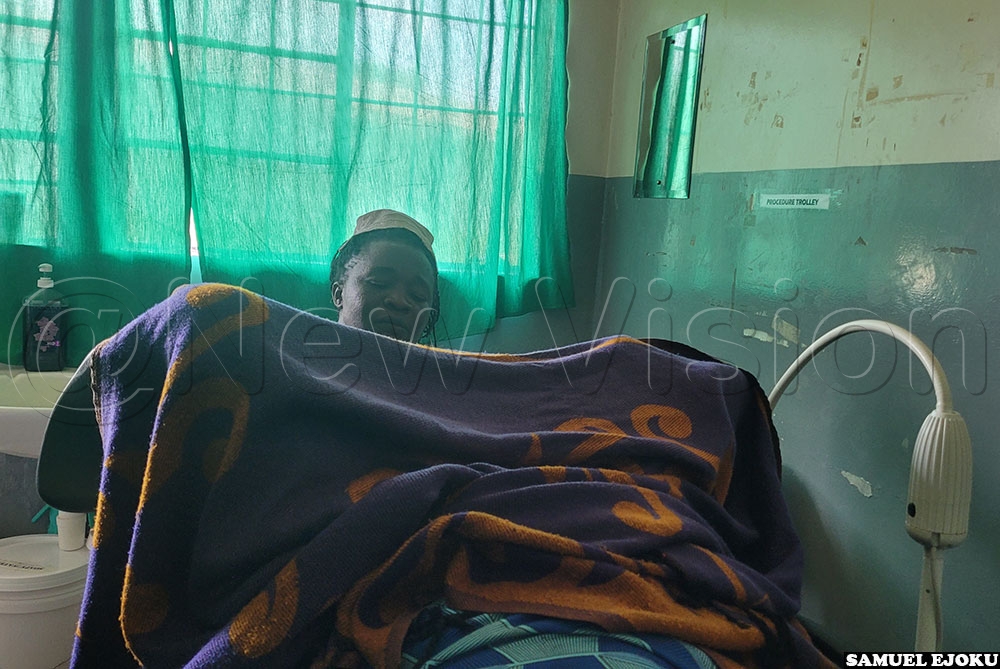
Sister Mary Anyango, a midwife, screening a woman for cervical cancer at the screening unit at Soroti Regional Referral Hospital
Palliative care
Sharon Ayao, the assistant nursing officer in of charge palliative care at Soroti Hospital says her unit receives cancer patients at Stage 3 and 4 for palliation.
Some patients present with urine flowing or unable to pass urine. For those in such a situation, nurses insert a catheter to stop the leakage of urine or enable them pass urine.
Other patients present with backache because the cancer cells are invading the lower part of the spine that is around the sacrum, which causes weakness of the lower limbs and a burning sensation in the feet.
Some of them present with swelling of the limbs, coupled with weakness.
For those discharging a foul smell, Ayao says they advise them to crash at least three tablets of flagyl to insert in their vagina to clear the smell.
“The reason for enrolling these patients for palliative care is not about treating them or to prolong their lifespan. It's actually about adding beauty to the remaining days by you controlling pain and managing the symptoms which are complicating the patient's life,” she says.
“When not offered palliative care, the life of a patient with cancer of the cervix at advanced stage can end shortly. What want to relieve the symptoms which are causing discomfort like the foul vaginal discharge. We want to remove that smell so that they can associate freely with the community and their families.
"Then we want to control pain so that they live a pain-free life. And when you are free of pain, you can eat, you can talk, you can laugh, you can smile, that kind of thing," says Ayao.
“Then there is spiritual support. We counsel these patients and we prepare them to face their Creator."
Meanwhile, Dr Ogwang says they have started using radio talk shows and churches to create awareness on cervical cancer.
He advises women to get screened for cervical cancer whenever they go for any checkup, for instance for malaria.
____________________