
Relief after first-ever medical outreach at Kikondo landing site
“I am happy I have been tested, and I found myself fine, thanks to St. John Ambulance and doctors who brought such services to us. Many women desire to be tested and have family planning, but they cannot get the service because they have no money to transport them to distant government health facilities or to pay for private health facilities," she said.
Expectant mothers were each given a Maama Kit to help them during delivery in health centres. (Credit: Douglas Mubiru)
BUIKWE - Patients at Kikondo landing site, Kikondo village, Tongoro Parish, Nyenga Sub-county in Buikwe district sometimes have to travel outside their village to receive treatment for ailments.
However, on August 11, residents were all smiles as they received a first-ever medical camp at Kikondo landing site, where close to 800 residents were treated by St. John Ambulance Uganda medics.
The one-day medical camp, which targeted densely populated communities, with a major focus on pregnant mothers, child care, preventive health measures, health education, and awareness creation, left hundreds treated for various ailments.
Some of the services offered during the outreach included free medical consultations, HIV testing and counselling, malaria sensitisation, tuberculosis screening and awareness, family planning, immunisation of children, as well as Ebola prevention education.
With their programme dubbed 'Mama na Mwana' project, literally meaning mother and child, women were provided with quality community home-based care that left families in a healthier state.
For 21-year-old Rachael Musubika of Kikondo village, she turned up for HIV testing and family planning. 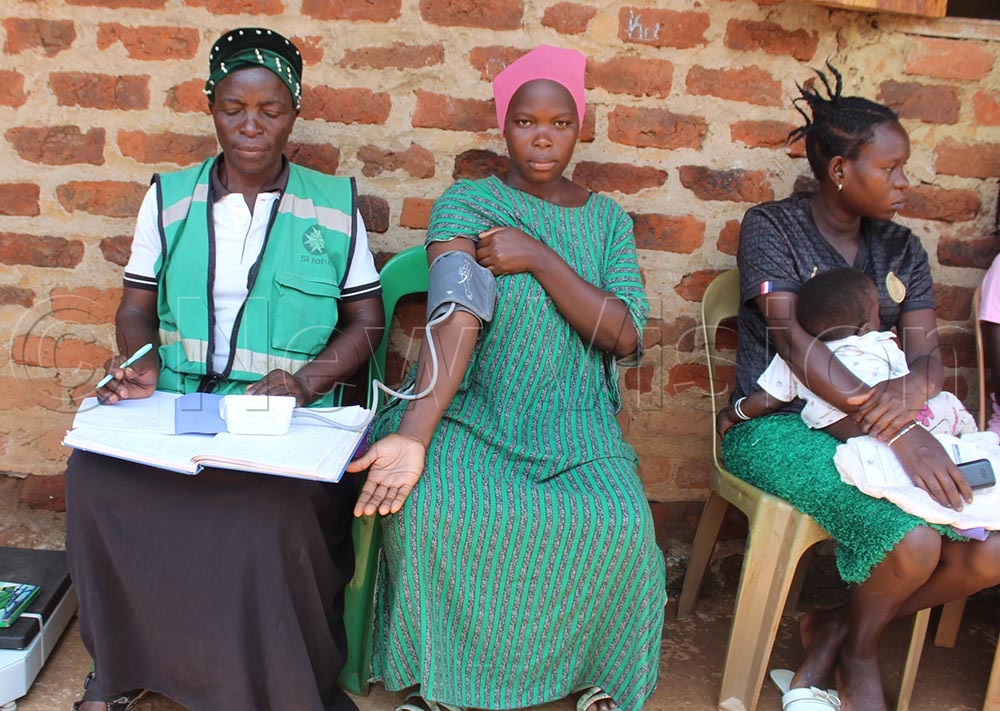
A pregnant mother having her blood pressure tested during the health camp.
“I am happy I have been tested, and I found myself fine, thanks to St. John Ambulance and doctors who brought such services to us. Many women desire to be tested and have family planning, but they cannot get the service because they have no money to transport them to distant government health facilities or to pay for private health facilities," she said.
Justine Nakintu, the organisation's programme coordinator, said the medical camp is one of the efforts aimed at promoting health and the well-being of different vulnerable communities.
She noted that they received more patients than they expected, insisting that patients identified as requiring referrals and operations were supported to go and seek medical care in specialised hospitals and affordable private and government facilities.
"Uganda's biggest challenge is no longer persuading women to deliver in health facilities but ensuring that those facilities can provide quality emergency care when complications arise. While access to facilities has expanded, our greatest bottleneck today is the gap in quality and timely emergency care, Nakintu remarked.
She stressed that delays in recognising danger signs, lack of essential equipment and referral hurdles continue to claim lives, particularly in underserved, rural, island and hard-to-reach communities.
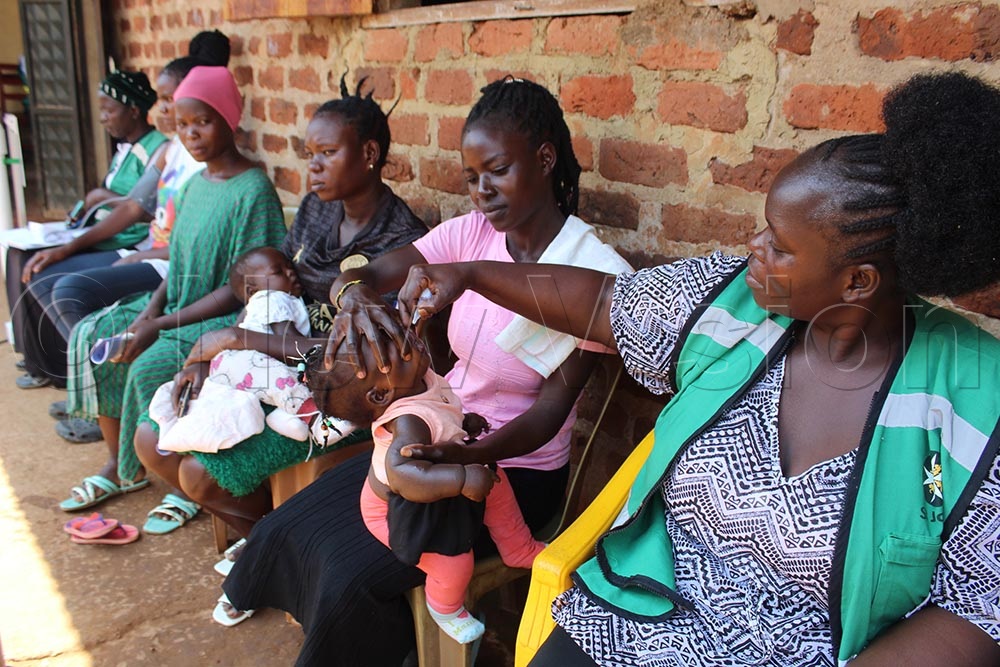
A medic immunising a toddler during the immunisation last minutes.
Statistics indicate that Uganda's maternal mortality ratio currently stands at 189 deaths per 100,000 live births, nearly three times higher than the Sustainable Development Goal target of fewer than 70 deaths per 100,000 live births by 2030.
Clinician John Paul Muzale said they used the outreach to call out male involvement in maternal healthcare, community screening for high-risk pregnancies and financial literacy to empower their families.
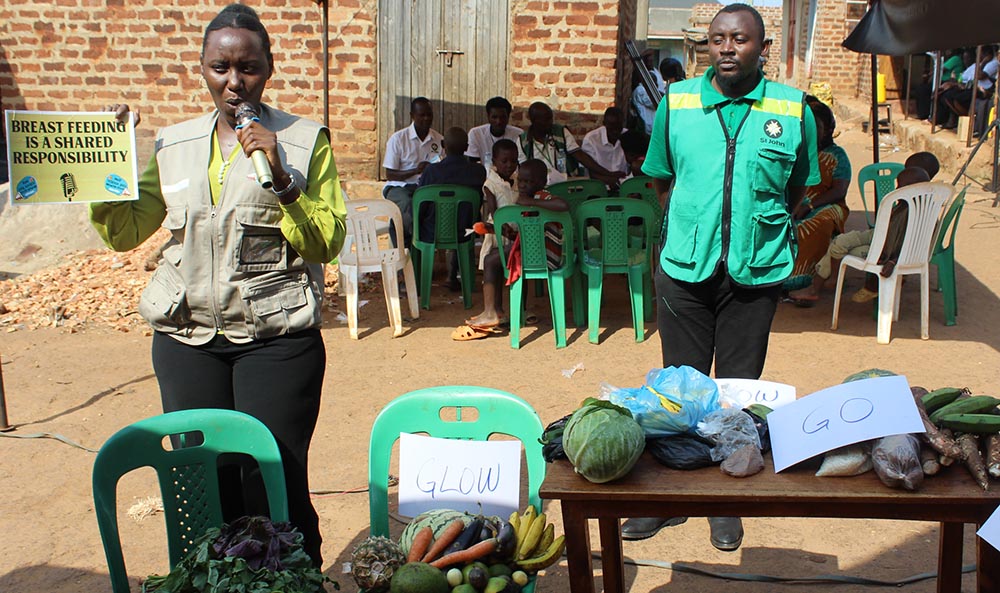
Prior, attendees were also taught about the basic foods pregnant mothers should eat or feed their children while at home.
Malnutrition
Prior, attendees were also taught about the basic foods pregnant mothers should eat or feed their children while at home.
"Breastfeeding remains an important component of early-life nutrition because it protects children against infections and different forms of malnutrition. However, protecting children from poor diets cannot stop at breastfeeding, Anna Mbabazi, a youth coordinator, told the crowds during the health camp.