
New strategy seeks to make Uganda’s health services more male-friendly
Dr Richard Kabanda, the commissioner for health promotion, education and strategic communication at the Ministry of Health, said the strategy seeks to address gaps in health programming that have historically left men and boys out.
Dr Olive Sentumbwe Reproductive, Maternal and Neonatal health expert. (Photos by Jovita Mirembe)
________________
The Ministry of Health has launched the National Health Sector Male Engagement Strategy to promote family health and increase men's participation in preventive healthcare.
Dr Richard Kabanda, the commissioner for health promotion, education and strategic communication at the Ministry of Health, said the strategy seeks to address gaps in health programming that have historically left men and boys out.
He said although men and women, as well as boys and girls, are likely to contract most diseases in similar ways, deaths are sometimes higher among men.
‘‘For a very long time, our programming in the health sector was focusing mainly on sick women and children, leaving out men. Meaningful engagement of men and boys in health promotion and equality in Uganda remains challenging because of inflexible and often conflicting social values and norms. The expectation this time is that our programming as the health ministry will involve men as critical stakeholders among the key audiences, engaging them all the time on crucial health issues’’ Kabanda said.
The strategy will prioritise services targeting men in both urban and rural communities, particularly preventive health services for non-communicable diseases.
Kabanda said many men suffer from non-communicable diseases such as diabetes, hypertension and cancer, including prostate cancer, but often only learn about their conditions when it is too late because they do not seek medical attention early.
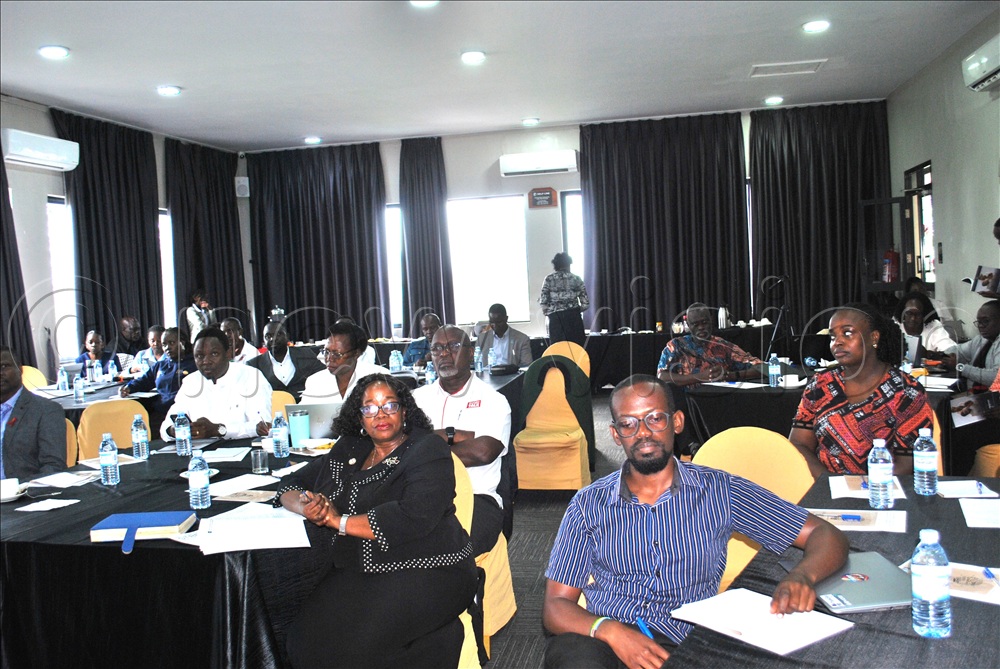
some of the participants who attended the strategy launch
Kabanda said this while launching the National Health Sector Male Engagement Strategy at Fairway Hotel in Kampala on September 29, 2026.
Dr Olive Sentumbwe, a reproductive, maternal and neonatal health expert, said the strategy includes respect for human rights and seeks to address negative, diverse and changing behaviours and mindsets among men to promote positive attitudes.
She said the programme focuses on integrating male-friendly services into the health sector.
The structures are beautifully bringing out the needs of women, but women have husbands behind them. Where will they sit? Where will they have their privacy? Men say they want to accompany their wives while they are receiving antenatal services and other health services, but they don't have any structures that support their presence," Sentumbwe said.
Dr Lydia Mungherera, a civil society personnel working with the Ministry of Health, said the strategy includes issues related to health services, behavioural change and building partnerships with local government structures.
She said local government was important because men constitute the largest number of local government leaders.
"Boys need to grow up as role models, preventing themselves from overdrinking alcohol and taking drugs, which can influence gender-based violence. Boys should know that beating a woman in the home is a blasphemy, and therefore growing up as responsible men to care for their families is good," she said.
Mungherera added that if what is in the strategy is implemented, which includes a better nation where there's gender equality, men attending health services, and men behaving responsibly as heads of households, a gentleman who cares for his family and for the nation will help the nation go forward.
The strategy launch was attended by officials from civil society organisations, the public sector, the private sector and the Ministry of Health.
The strategy was funded and supported by UNAIDS, UNFPA, UNICEF, WHO, Uganda Cares, Marie Stopes Uganda (MSI), Population Services International, AIDS Healthcare Foundation (AHF), International Primary Health Care (IPHCE) and HEPS Uganda.