
Study finds Mpox survivors need more than medical treatment to recover
Amuge said counsellors engaged survivors to understand their needs, revealing that some had been isolated by their communities and struggled to resume their normal lives after recovering from the infection.
Dr Pauline Amuge, the JCRC Deputy Director of Research presenting the findings of the study. (Photos by John Musenze)
________________
Mpox survivors in Uganda continue to face stigma, social isolation and loss of income after recovering from the disease, highlighting the need for psychological counselling and livelihood support alongside medical treatment, a programme implemented by the Joint Clinical Research Centre (JCRC) has found.
The one-year project conducted in Kampala and Wakiso districts provided psychosocial counselling to more than 150 survivors and vocational skills training to 100 others to help them rebuild their livelihoods and reintegrate into their communities.
Dr Pauline Amuge, the JCRC Deputy Director of Research, said the programme identified significant social and economic challenges among survivors, including losing jobs, customers, friends and family relationships because of the stigma associated with the disease.
“Although the Ministry of Health had done a very good job in sensitisation and providing treatment, the district teams informed us that they needed a lot of support in the psychosocial aspect,” Amuge said.
She was speaking during a meeting to present the programme's findings at the JCRC headquarters in Lubowa on October 15, 2026.
Amuge said counsellors engaged survivors to understand their needs, revealing that some had been isolated by their communities and struggled to resume their normal lives after recovering from the infection.
“Most of these survivors were actually being stigmatised, they were isolated in their communities, they lost their jobs,” she said.
She added that some survivors who depended on sex work lost customers, while others lost friends and family support, leaving them struggling to rebuild their lives.
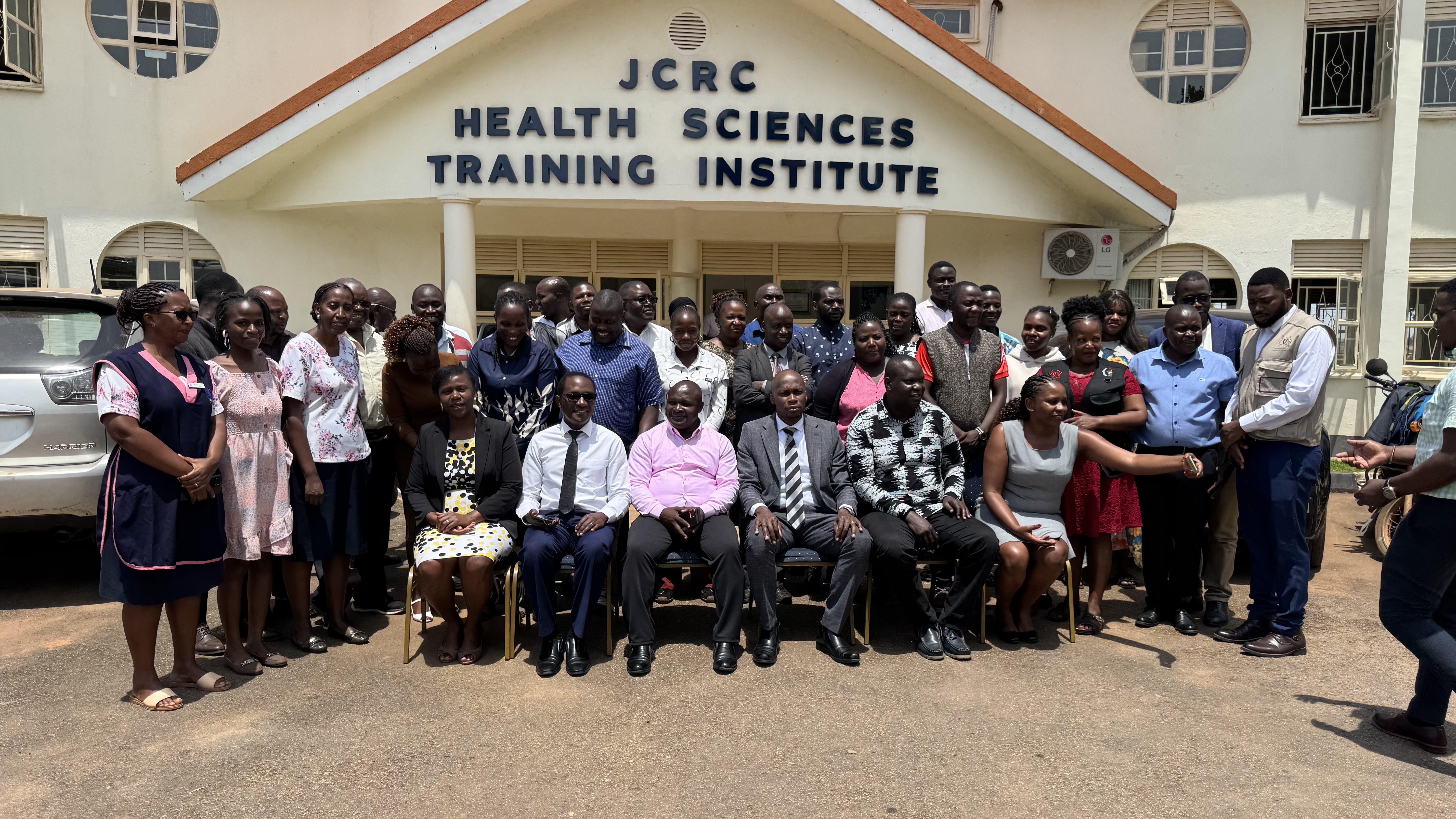
Health stakeholders from JCRC, Wakiso district and Kampala pose for a photo after the close out meeting of the project
A total of 100 survivors, including 50 from Kampala and 50 from Wakiso, were trained in producing liquid soap, bar soap, shampoo and bleach.
Amuge said the products could help survivors establish small businesses while also providing materials for infection prevention in the congested communities where many live.
However, the programme identified a further challenge where survivors lacked the capital needed to purchase raw materials and produce goods in sufficient quantities to sustain their businesses.
She called on government, local leaders and other development partners to support survivors with financing and help them organise into groups to expand their small enterprises.
“Even when they have been trained in these skills, they do not have the capital to produce big numbers or a huge amount of liquid soap, bar soap and shampoo,” Amuge said.
She urged government and its partners to adopt a holistic approach to outbreak response, ensuring that people affected by infectious diseases receive support beyond the immediate treatment period.
449 frontline personnel trained
The programme was implemented by JCRC in partnership with the Ministry of Health, Kampala Capital City Authority (KCCA) and Wakiso District Local Government, with support from the Autonomous Province of Trento in Italy through partner organisations.
Running from October 1, 2025, to September 30, 2026, the intervention targeted communities in Kampala and Wakiso, which were among the areas hardest hit during Uganda's Mpox outbreak. UNICEF reported that Kampala, Mukono and Wakiso together accounted for 70% of Uganda's confirmed Mpox cases as of February 28, 2025.
The programme combined community surveillance, vaccination, health education, frontline worker training and survivor support to strengthen prevention and response in high-transmission communities.
It trained 449 frontline personnel, comprising 201 health workers and 248 Village Health Team members, to identify suspected cases, strengthen community surveillance and refer patients for appropriate care.
According to the programme's documentation, demand for vaccination exceeded the available doses, prompting calls for additional supplies, particularly in communities considered at high risk of transmission.
A survey involving 384 community members found that about 85% knew how Mpox spreads, more than 95% said they would seek medical care promptly if they developed symptoms, and more than 83% expressed willingness to receive an Mpox vaccine.
The findings suggest that community awareness and willingness to seek care were encouraging among those surveyed, although vaccine availability remained a concern.
The programme also established a dedicated survivors' clinic at Glorious Clinic in Kimombasa, Kawempe, to provide health checks and counselling. Approval was secured for two additional clinics at Entebbe Regional Referral Hospital and Wakiso Health Centre.
Simpson Nuwamanya, the JCRC project surveillance officer, said integrating prevention with survivor recovery was central to the intervention.
“Our implementation approach deliberately integrated outbreak prevention with survivor recovery,” Nuwamanya said.
He said the programme strengthened frontline health workers' capacity to identify and manage Mpox patients while addressing the psychological and economic needs of people affected by the disease.
The programme's final report records that 774 suspected cases were screened, of which 265 were laboratory-confirmed, treated and discharged, with no deaths recorded among the confirmed cases during the reported project period.
Need for continued support
Dr John Bosco Nsubuga, a senior executive consultant at Entebbe Regional Referral Hospital, said the facility had treated about 3,800 Mpox patients during the intensive phase of the outbreak, from August 2024 to around July 2025.
The hospital, which houses Uganda's National Isolation Centre, worked with the Ministry of Health and other partners to provide clinical care and strengthen infection prevention and control in health facilities and communities.
Nsubuga said the outbreak had been brought under control, although occasional cases continued to be referred to the national treatment centre. He emphasised the importance of continued surveillance and early reporting, urging people who develop symptoms to seek care at their nearest health facility.