
Made in Uganda magnesium injection to fight pre-eclampsia launched
“Pregnancy is not a disease. It is a normal physiological condition, and ideally no woman should die because of pregnancy or childbirth-related complications.Unfortunately, some women develop complications such as pre-eclampsia, and this medicine is critical in saving their lives,” Baryomunsi said.
Health experts said the locally produced drug will improve access to one of the most effective treatments for preventing seizures in pregnant women suffering from severe pre-eclampsia and eclampsia.
KAMPALA - Uganda has launched the first locally manufactured Magnesium Sulphate Injection, a breakthrough expected to improve the treatment of pre-eclampsia.
The condition among pregnant women is one of the country's leading causes of maternal deaths.
The injectable medicine, branded Pistomag, was unveiled on July 24 at Piston Medical Limited's manufacturing plant in Namanve Industrial Park in Kampala.
Health experts said the locally produced drug will improve access to one of the most effective treatments for preventing seizures in pregnant women suffering from severe pre-eclampsia and eclampsia.
According to the Ministry of Health, pre-eclampsia is the second leading cause of maternal mortality in Uganda, accounting for about 15% of all maternal deaths.
The condition develops after 20 weeks of pregnancy and is characterised by dangerously high blood pressure and damage to vital organs, particularly the kidneys and liver. If left untreated, it can progress to eclampsia, causing life-threatening seizures for both mother and baby.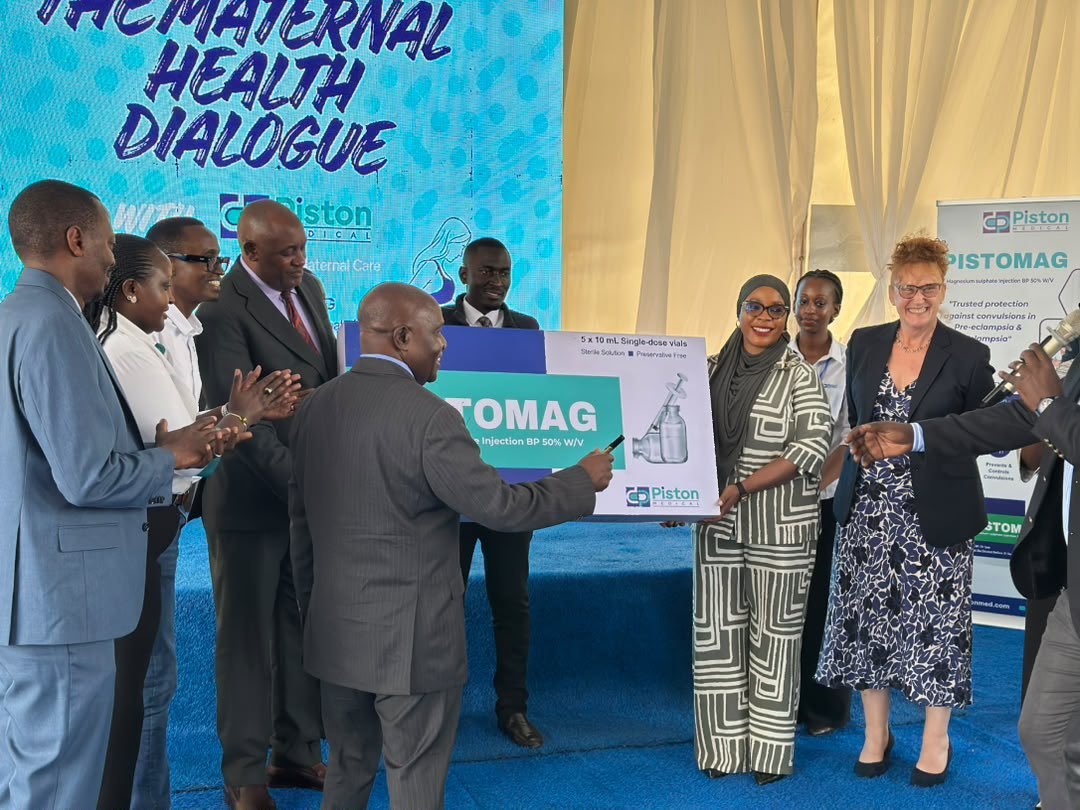
Dr Crispus Kiyonga launching the Magnesium Injection.
Presiding over the launch, the Second Deputy Prime Minister Dr Crispus Kiyonga said every new pharmaceutical product manufactured locally moves Uganda closer to self-reliance.
“The vision is for Uganda to produce as many of the medicines we need as possible instead of importing them,” said Kiyonga, who represented Prime Minister Robinah Nabbanja.
He also called for stricter regulation of medicine dispensing in Uganda, warning that unrestricted access to prescription medicines is fuelling antimicrobial resistance.
Kiyonga urged government to establish a dedicated pharmaceutical industrial park to provide manufacturers with cleaner environments suitable for medicine production.
“Pregnancy is not a disease. It is a normal physiological condition, and ideally no woman should die because of pregnancy or childbirth-related complications.
Unfortunately, some women develop complications such as pre-eclampsia, and this medicine is critical in saving their lives,” Baryomunsi said.
Baryomunsi said government would support local pharmaceutical manufacturers to ensure more essential medicines are produced within Uganda instead of relying on imports.

Aminah Mukalazi, the state ministter for privatisation during the launch of the magnesuim injection in Namanve at Priscon medical plant.
He noted that government has allocated about Shs1 trillion for procurement of medicines this financial year, saying increased local production would reduce import costs while strengthening medicine security.
"As the Ministry of Health, we shall support this innovation. We are happy that National Medical Stores and Joint Medical Stores are already procuring some of these products, and wherever the ministry can support, we are ready to do so,” he said.
He added that Uganda has made steady progress in reducing maternal mortality over the decades, with the maternal mortality ratio declining from more than 500 deaths per 100,000 live births in the 1990s to current levels through investments in skilled health workers, emergency obstetric care and essential medicines.
Baryomunsi explained that preventing maternal deaths requires addressing what health experts refer to as the three delays: delays in deciding to seek care, delays in reaching health facilities and delays in receiving quality treatment once at the health facility.
“The third delay is where medicines like magnesium sulphate become extremely important. A mother may reach the hospital in time, but if there are no health workers or there are no medicines, we can still lose her,” he said.
Obstetrician and gynaecologist Dr Moses Androma from Kawempe National Referral Hospital said magnesium sulphate remains the global gold standard for preventing and controlling seizures caused by severe pre-eclampsia and eclampsia.
“Magnesium sulphate has completely transformed the management of eclampsia. In Uganda, one patient requires a minimum of nine ampoules during treatment, but because some patients may require rescue doses, hospitals usually need at least ten ampoules per patient,” he said.
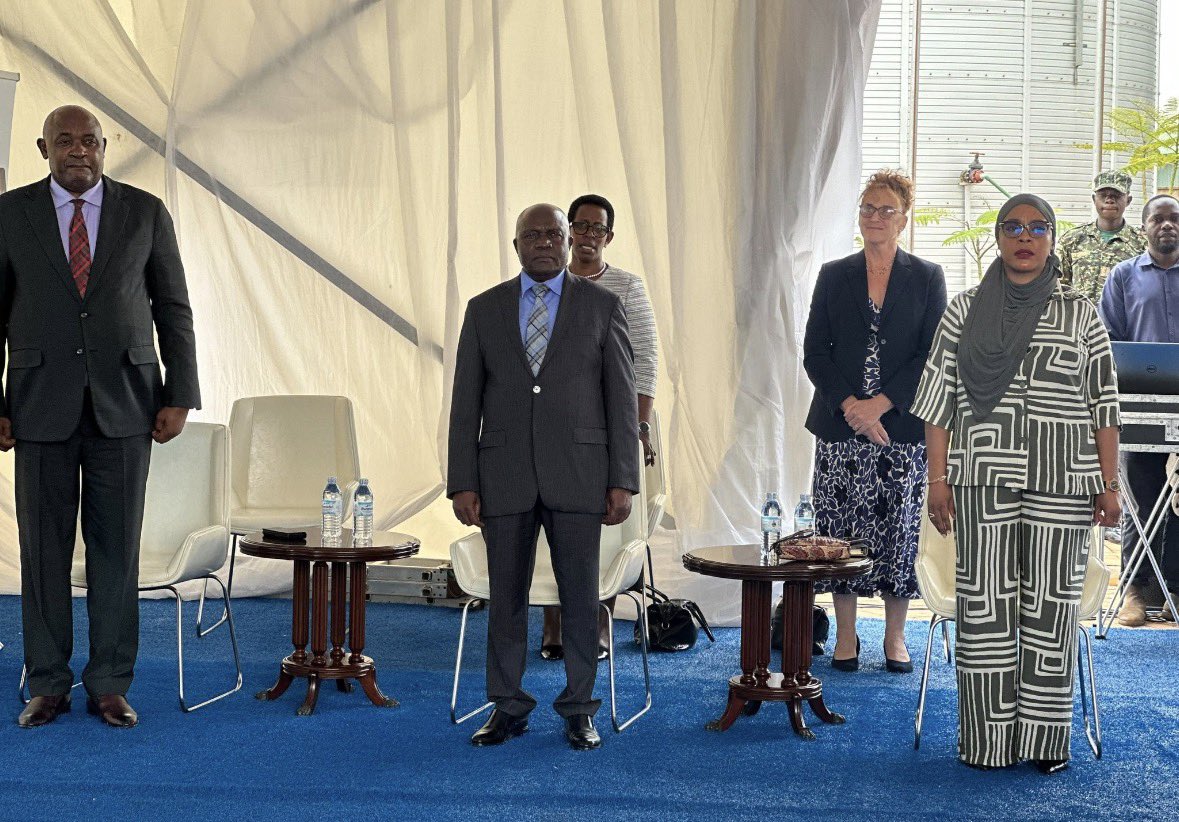
Dr Chris Baryomunsi (L), the Minister of Health Minister, 3rd Deputy Prime Minister Crispus Kiyonga and State Minister For Privitisation Aminah Mukalazi at the launch of the Magnesium injection in Namanve at Priscon Medical Plant.
He said the demand for the drug is enormous.
“At Kawempe National Referral Hospital alone, we admit between four and five mothers with pre-eclampsia every day. That means we need at least 50 ampoules daily. Imagine the demand across the entire country.”
The Chief Executive Officer of Piston Medical Limited, Benjamin Kiiza, said the company began operations in 2008 as an importer before transitioning into manufacturing in 2020 following government investment incentives.
He said the company currently holds approvals to manufacture 16 injectable medicines, six of which are already on the market.
Kiiza described Pistomag as one of the company's most important products because of its direct impact on maternal survival.
He revealed that market studies estimate demand for injectable medicines manufactured by the company across Uganda, Kenya, Tanzania, South Sudan and the Democratic Republic of Congo at approximately Sh178 billion annually.
Kiiza said Piston Medical has applied to export the medicines to Rwanda, Kenya and Somalia and has sufficient production capacity to serve the East African market.
However, he appealed to government to protect local manufacturers from unfair competition from imported medicines.
He also called for improved infrastructure within Namanve Industrial Park.
He cited poor road conditions that force trucks transporting medicines to spend hours accessing the main highway and an unstable electricity supply that increases production costs.