
Limited screening, low awareness fuelling undiagnosed diabetes
“Many people still believe diabetes only affects overweight individuals," says Dr Kauthrah Ntabadde, an epidemiologist.
Dr Kauthrah Ntabadde training primary healthcare workers on diabetes management and diagnosis. (Courtesy photo)
Diabetes continues to go undetected among many Ugandans largely because the disease develops silently.
In its early stages, diabetes may present with few or no symptoms, leading many people to assume they are healthy and therefore see no need for screening.
Limited access to health services, and low awareness about routine blood sugar testing further contribute to delayed diagnosis.
“Many people still believe diabetes only affects overweight individuals," says Dr Kauthrah Ntabadde, an epidemiologist.
“Yet, we are increasingly seeing cases among lean and non-obese adults, which challenges traditional assumptions about who is at risk.”
Ntabadde's work involves identifying the causes of a disease, those at risk of contracting it, and how to stop or control its spread.
She says diagnostic gaps also play a role. Common screening tools such as HbA1c tests can miss cases in populations with high rates of anaemia, while more accurate tests like the oral glucose tolerance test are rarely used due to cost and logistical constraints.
While understanding of these conditions has improved over the years, researchers are increasingly working to better understand why diabetes and related conditions, such as high cholesterol, may present differently across populations.
Ntabadde's input reflects findings from her own research examining cardiometabolic disease patterns in African-origin populations, as well as corroborating evidence from other investigators studying non-communicable disease trends across the continent.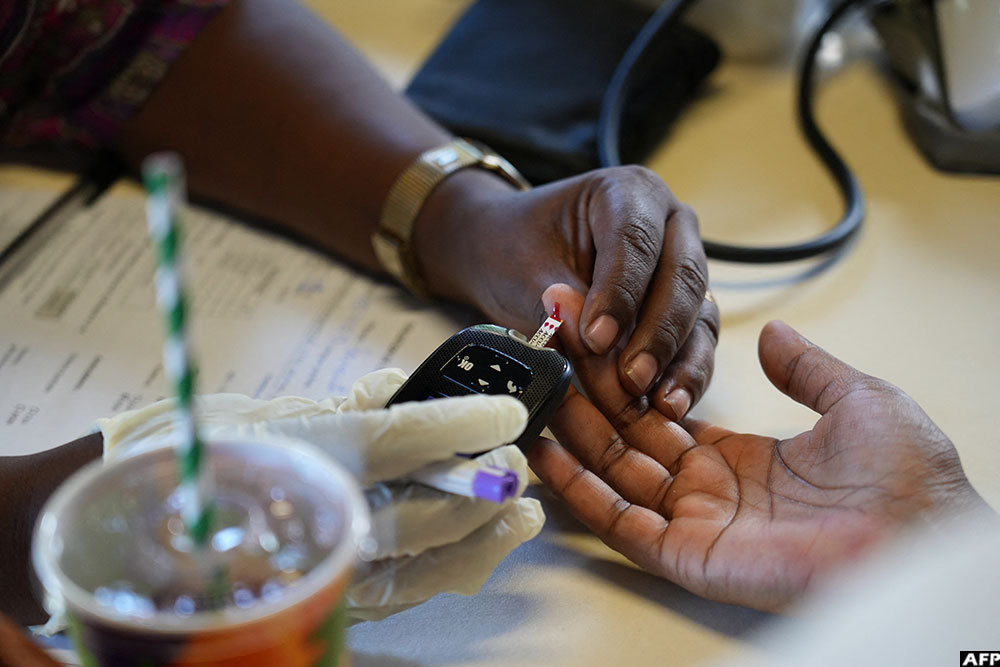
A nurse measures the blood sugar level of a patient suffering from diabetes.
She notes that while social media has played a positive role in promoting healthier lifestyles, from exercise challenges to improved eating habits, an equally important aspect of routine medical check-ups remains under-emphasised in Uganda.
“People have become more aware of diet and physical activity, which is encouraging. However, many still only visit a health facility when they are already very sick."
Warning signs ignored
According to the 2023 Uganda STEPS survey, about half of adults with raised blood sugar were previously unaware they had diabetes.
The survey further indicates that an estimated 86.7% of adults have never had their blood glucose measured. Many only receive a diagnosis after complications have already set in.
In an interview with New Vision on Wednesday (January 7), Ntabadde said early warning signs such as persistent fatigue, increased thirst, frequent urination, and unexplained weight changes, are often ignored or mistaken for other conditions.
Symptom-free individuals are frequently perceived as low risk and are less likely to be screened, leading to missed opportunities for early detection, particularly at community and primary healthcare levels.
According to Ntabadde, late diagnosis and poor disease control frequently result in severe complications, including kidney failure (requiring dialysis), stroke, heart disease, vision loss, chronic disability, and premature death.
Experts emphasise that early detection, timely treatment, and consistent follow-up care are key to reducing the growing burden of diabetes in Uganda.