
Ugandan named among global women leading fight against antimicrobial resistance
Kamoga called on government and stakeholders to commit adequate funding to implement the national action plan, strengthen infection prevention and control, and expand public awareness campaigns.
Regina Kamoga, the Executive Director of the Community Health and Information Network in a photo moment with Prof. Alison Holmes, Director Fleming Initiative.
Ugandan health advocate Regina Kamoga has been recognised among eight global female trailblazers championing the fight against Antimicrobial Resistance (AMR), a growing public health threat that is claiming millions of lives worldwide.
Kamoga, the Executive Director of the Community Health and Information Network (CHAIN), received the recognition under the Fleming Initiative in partnership with the Commonwealth Scientific and Industrial Research Organisation (CSIRO), Australia’s national science agency.
The eight women were selected through a multi-round global process for their exceptional leadership and efforts in addressing antimicrobial resistance.
Addressing the media on 5th March, Kamoga warned that antimicrobial resistance is a growing global crisis that affects everyone. She said the award highlights the vital role communities play in tackling the challenge.
Kamoga noted that many of the antibiotics currently in use were developed decades ago and emphasised the urgent need for investment in research and innovation to develop new medicines.
She also called for incentives for the pharmaceutical industry to encourage the development of new antibiotics using a One Health approach that integrates human, animal, and environmental health.
Kamoga urged health workers to improve prescribing and dispensing practices, emphasising the need for continuous training to ensure rational use of medicines.
According to Kamoga, incorrect prescriptions and misuse of drugs can lead to serious complications and even death.
“Antimicrobial resistance is not only a medical issue but also a community behaviour change issue,” she said.
Kamoga called on government and stakeholders to commit adequate funding to implement the national action plan, strengthen infection prevention and control, and expand public awareness campaigns.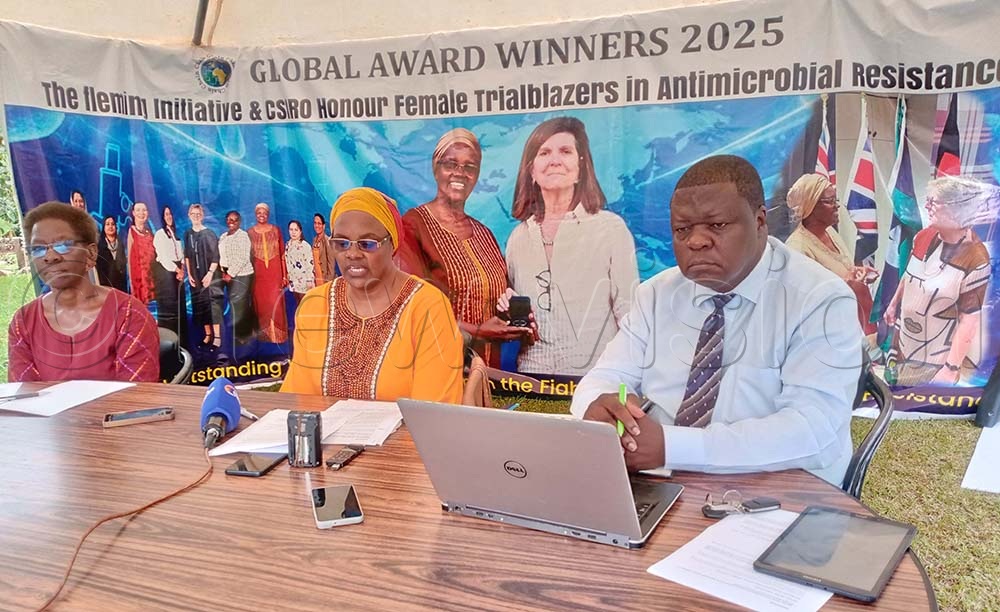
Regina Kamoga, the Executive Director of the Community Health and Information Network (C) speaking during a press conference as Gladys Nalukenge Program Manager and Dr Nathan Muyinda look on. (Credit: Violet Nabatanzi)
According to the World Health Organization, antimicrobial resistance directly caused about 1.27 million deaths globally in 2019 and contributed to nearly five million deaths.
Experts attribute the growing threat of AMR to several factors, including unregulated access to antibiotics through drug shops and community pharmacies, poor adherence to prescribed medicines due to low health literacy, and the high burden of infectious diseases such as Malaria, Typhoid fever, and Urinary Tract Infections.
Poverty and unethical practices by some healthcare providers also contribute to the misuse of antibiotics, while unregistered drug shop operators often dispense medicines without proper training.
Experts also warn that these challenges threaten to reverse Uganda’s progress toward Sustainable Development Goals and universal health coverage by making the management of diseases such as HIV, Tuberculosis, and malaria more expensive and less effective.
CHAIN campaigns
Through its initiatives, CHAIN has been promoting community awareness and health literacy, particularly among children. The organisation’s “Start Early” programme uses storytelling, music, dance, drama, and peer learning to teach children about infection prevention and responsible medicine use.
Over the years, CHAIN has reached more than 200 children and created antimicrobial resistance teen champions while establishing health literacy clubs in schools.
Dr Nathan Muyinda, Trainer CHAIN emphasised that people working in the animal industry should ensure that farmers’ access to antibiotics is properly regulated.
"When an animal needs treatment, it should be done under the guidance of a qualified veterinary professional, rather than a farmer simply going to a pharmacy, purchasing antibiotics, and administering the treatment without proper medical advice," he said