
Cheap, life-saving asthma inhalers remain out of reach for millions in Africa
Nearly 90% of COPD deaths among people under the age of 70 occur in low- and middle-income countries, where diagnosis, specialist care and access to treatment remain limited.
Asthma inhalers are the primary treatment for controlling airway inflammation and relieving breathing difficulties.
Chronic respiratory diseases kill millions of people each year, yet many patients across Africa cannot access the basic medicines needed to treat them, including asthma inhalers that can cost less than a dollar.
Asthma inhalers are the primary treatment for controlling airway inflammation and relieving breathing difficulties.
Chronic obstructive pulmonary disease (COPD) is now the fourth leading cause of death globally, claiming about 3.5 million lives in 2021, roughly 5% of all deaths worldwide.
Nearly 90% of COPD deaths among people under the age of 70 occur in low- and middle-income countries, where diagnosis, specialist care and access to treatment remain limited.
The problem came into sharp focus during a five-day (March 2nd-6th) media training workshop in Cape Town, where experts have insights about much-needed awareness on chronic respiratory diseases.
The training was organised by the World Health Organisation and the Pace University Centre for Global Health.
José Luis Castro, the World Health Organization Director-General’s special envoy for Chronic Respiratory Diseases.
José Luis Castro, the World Health Organisation Director-General’s Special Envoy for Chronic Respiratory Diseases, said lung diseases remain largely invisible in public debate despite their massive global toll.
“In 2024, chronic respiratory diseases killed nearly 3.5 million people,” Castro said. “These diseases limit productivity, strain health systems and deepen inequality.”
Sarah Rylance, a medical officer in the WHO’s Noncommunicable Diseases Management Unit, said besides inaccessibility, some important medicines used to treat asthma have been known for decades and are already listed on the WHO Essential Medicines List.
One of them is the bronchodilator inhaler salbutamol, often called the blue inhaler, which quickly opens the airways during an asthma attack.
“If someone is having an asthma attack and cannot breathe, this inhaler can save their life,” Rylance said.
Despite this, access remains highly uneven across countries.
According to the WHO, only about half of low-income countries report that emergency bronchodilator inhalers are widely available in primary healthcare facilities. Preventive steroid inhalers, the cornerstone treatment that helps control asthma and prevent severe attacks, are available in only about one-third of those countries.
The gap persists even though many of these medicines are inexpensive.
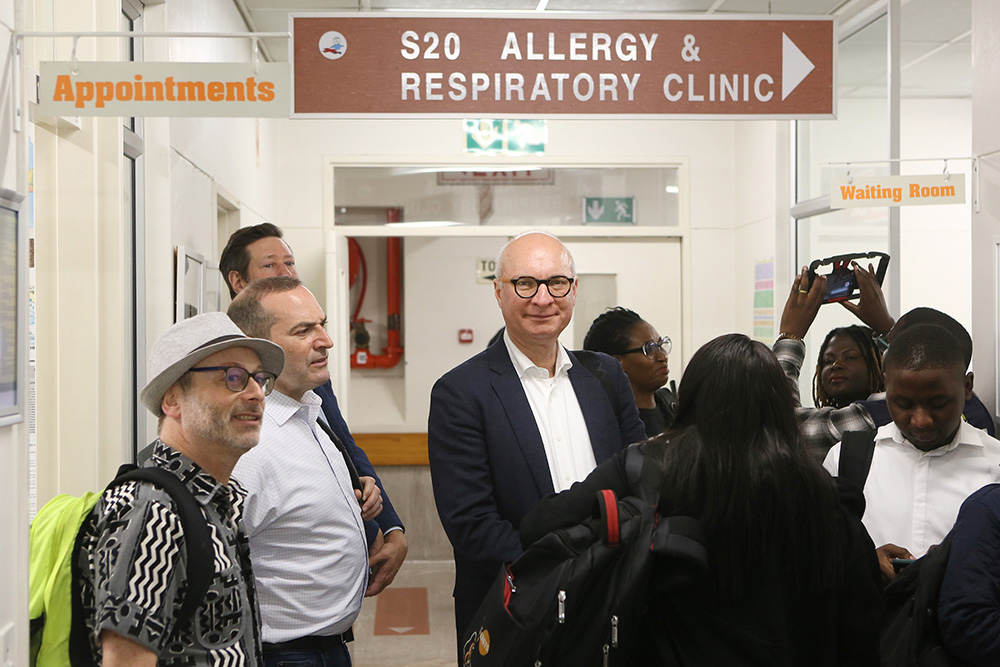
José Luis Castro, WHO Director-General Special Envoy for Chronic Respiratory Diseases during a site visit at The Red Cross War Memorial Children's Hospital, Cape Town.
“This is an inhaler that costs less than a dollar (US) in many places, but it is only widely available in about half of low-income countries,” Rylance said.
Rylance recalled a case from her clinical experience involving a young girl who had persistent coughing and breathing problems.
"Because many health systems in Africa are more accustomed to diagnosing infectious diseases such as tuberculosis, the girl was repeatedly treated for TB Her cough didn’t get better, so people thought maybe it was drug-resistant TB,” Rylance said.
“Eventually, she was referred to a clinic, and it became clear she had asthma.”
Once she received the correct treatment, including steroid inhalers, her symptoms quickly improved.
The case highlights a broader gap in diagnosis. Basic tools used to assess lung function remain scarce in many health systems.
According to WHO, simple diagnostic devices such as peak flow meters, small plastic tubes used to measure how well a person can breathe, are available in only about 16 percent of primary healthcare facilities in low-income countries.
Michael Levin, head of the Division of Asthma and Allergy in the Department of Paediatrics at the University of Cape Town, said asthma often signals the early rise of noncommunicable diseases.
Studies suggest that children growing up in urban environments are more likely to develop allergies and asthma than those in rural areas, where exposure to animals and natural microbes may help strengthen the immune system.
Despite these trends, large gaps remain in both data and treatment access across the continent. Many African countries still lack reliable national statistics on asthma prevalence, while millions of patients rely on outdated treatments or go without medication entirely.
Experts say addressing the crisis will require stronger health systems, improved diagnosis and universal access to essential medicines.