
Govt moves to introduce mandatory newborn hearing screening to combat deafness
“After that, interventions become much more challenging. That is why we need systematic screening at birth for every child.”
Increasing occupational noise exposure in urban industrial settings, birth complications such as neonatal jaundice or oxygen deprivation, and untreated conditions like impacted earwax or foreign objects in the ear also contribute to the high prevalence of hearing impairment.
The Government says it is in advanced stages of introducing mandatory hearing screening for all newborns as part of efforts to reduce the growing burden of deafness and hearing impairment in the country.
The initiative aims to address hearing loss early in life, which health ministry officials say often goes undetected until it leads to lifelong disabilities, placing significant social and economic burdens on families and the state.
As part of the plan, the Government is also moving to include hearing implants and related assistive devices on the Essential Medicines and Health Supplies List of Uganda (EMHSLU) to improve access and affordability.
Health ministry assistant commissioner for disability and rehabilitation Moses Muwanga announced the initiative during World Hearing Day commemorations on March 4, 2026.
Muwanga said the first three months of life are a critical window for effective intervention. “If deafness is addressed within the first three months, outcomes are very good,” he said.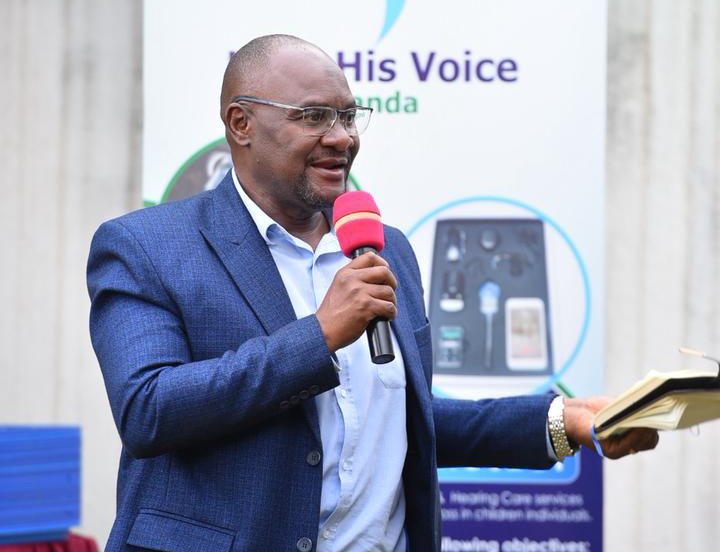
Moses Muwanga, assistant commissioner for disability and rehabilitation announced the initiative at the World Hearing Day commemorations.
“After that, interventions become much more challenging. That is why we need systematic screening at birth for every child.”
The proposed policy follows findings from a recent pilot study conducted in Mubende district, which revealed a link between maternal rubella (German measles) infection and hearing impairment in newborns.
Muwanga said the study showed that children born to mothers who contracted rubella during pregnancy were more likely to have hearing problems.
“Unfortunately, many mothers are unaware of this risk,” he noted.
Hearing loss challenge
The move comes amid growing concern over hearing loss in Uganda. According to the ministry, nearly 60% of Ugandans could be experiencing some form of hearing loss, much of it linked to preventable causes.
Health experts attribute most cases to infectious diseases such as meningitis, chronic ear infections (otitis media), and vaccine-preventable illnesses like measles and rubella, which can damage the auditory nerve.
Other causes include the use of ototoxic medications—such as certain antibiotics like gentamicin and anti-malarial drugs like quinine—which, while essential, require careful medical supervision to avoid harmful side effects.
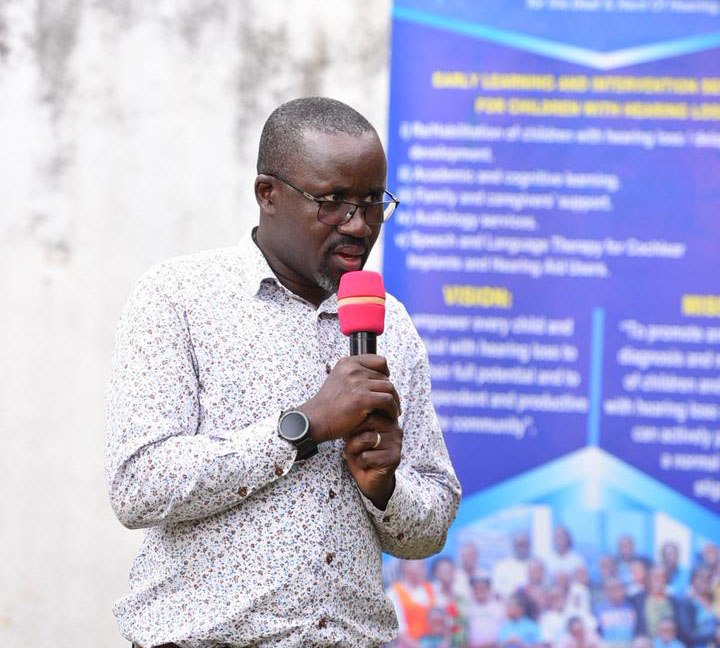
Eddie Mukaaya, founder and team leader Hear His Voice Uganda emphasised the importance of early intervention citing World Health Organization recommendations for universal newborn screening.
Increasing occupational noise exposure in urban industrial settings, birth complications such as neonatal jaundice or oxygen deprivation, and untreated conditions like impacted earwax or foreign objects in the ear also contribute to the high prevalence of hearing impairment.
“Prevalence rises from 1.7% among children to about 7% among adults, although high-quality national data remains limited,” Muwanga said.
He added that suspected cases identified during screening would be referred to higher-level facilities for confirmation and early intervention.
“Most deliveries occur at health centres, where midwives can conduct initial screening and refer accordingly. Expanding this nationwide would ensure that no child is left behind,” he said.
Muwanga also noted that limited vaccination coverage for rubella among women of reproductive age has historically worsened the problem.
“Many children were born blind and deaf because their mothers missed rubella immunisation. Early detection combined with vaccination could have transformed their lives,” he said.
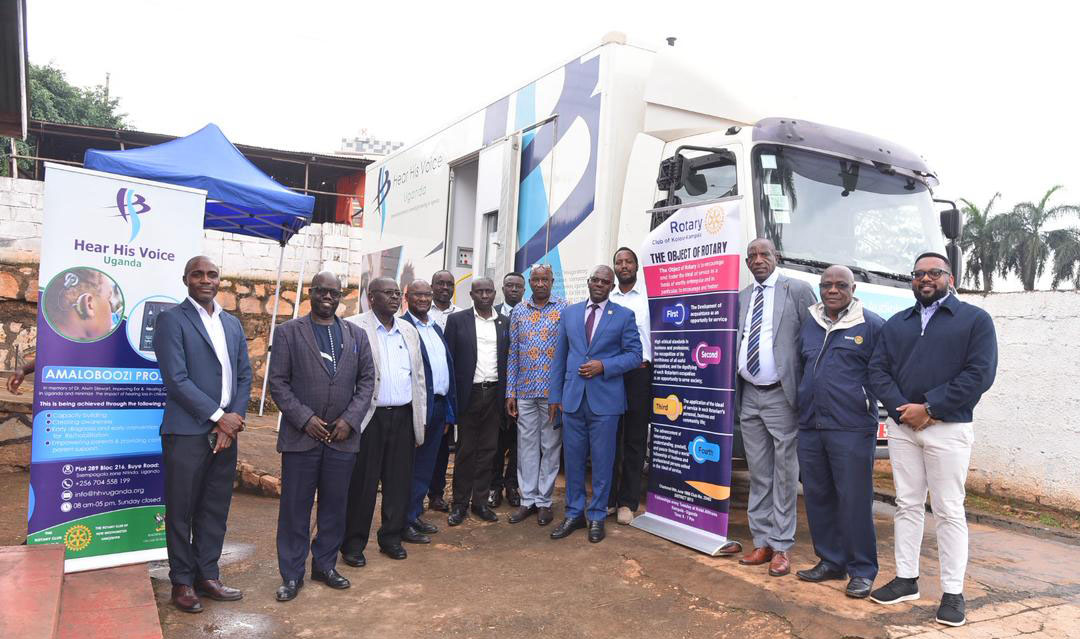
Rotary Club of Kololo has supported the provision of specialised equipment, the establishment of a sound booth for hearing tests, and a temporal bone laboratory for advanced medical training in Ntinda in partnership with Makerere University College of Health Sciences and Hear His Voice Uganda.
Early interventions
Eddie Mukaaya, founder and team leader of Hear His Voice Uganda, emphasised the importance of early intervention.
“The earlier we intervene, the better,” he said, citing World Health Organisation recommendations for universal newborn hearing screening.
He pointed to international models such as the Netherlands, where newborns are screened on the first day of life, diagnosed by three months, and provided with cochlear implants by six months—a system known as the “one-three-six” approach.
Mukaaya welcomed the government’s proposal to add hearing implants to the EMHSLU, saying it would significantly improve their availability and affordability.
The World Hearing Day event also featured discussions on hearing rehabilitation, classroom support for children with hearing impairments, and community strategies for improving early detection.
Dominic Tumwesigye of the Rotary Club of Kololo highlighted Rotary’s role in supporting hearing care initiatives.
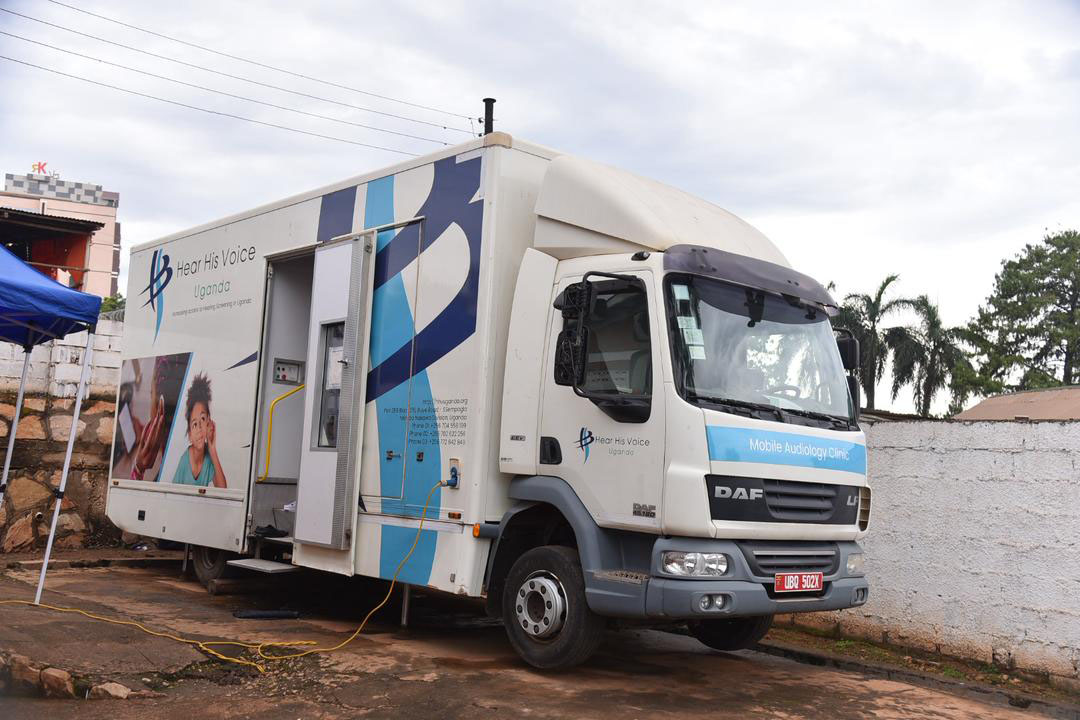
Mobile Audio Clinic used for outreaches. Government with support from partners is moving to prioritize early detection.
“We must remind ourselves that we also need to be healthy to serve others effectively,” he said.
He noted that through partnerships with Makerere University College of Health Sciences and Hear His Voice Uganda, Rotary has supported the provision of specialised equipment, the establishment of a sound booth for hearing tests, and a temporal bone laboratory for advanced medical training.
This year’s World Hearing Day was marked under the theme: “From communities to classrooms: hearing care for all children.”
In Uganda, the Rotary Club of Kololo, in partnership with Hear His Voice Uganda and Makerere University College of Health Sciences, commemorated the day with an event in Ntinda, where free hearing screening clinics were offered to the public.