
Govt warns parents risk jail for skipping child immunisation
"There are clauses in the Public Health Act that hold citizens accountable if they do not take their children for immunisation. Imprisonment and fines are provided for. For traditional vaccines such as BCG, polio, DPT and measles, immunisation is a must. It is not negotiable," said Ayume.
Front raw include: Stefan Lawson Chief of Health at UNICEF Uganda (2nd right), Dr. Kasonde Mwinga WHO Country Representative to Uganda (3rd right), Charles Ayume MP Koboko Municipality and State minister for primary healthcare (center), Prof. Charles Olaro Director General health services (3rd left), among other participants during the national immunization symposium at Serena Hotel in Kampala on June 25, 2026. (Credit: Maria Wamala)
KAMPALA - Government has warned that parents who fail to take their children for routine immunisation could face arrest, fines or imprisonment under Uganda's Public Health Act, as health authorities move to tackle rising numbers of unvaccinated children and declining uptake of some vaccines across the country.
Speaking at the National Immunisation Symposium at Serena Hotel on Thursday (June 25), primary health care state minister Dr Charles Ayume said government is considering enforcing provisions of the Public Health Act that make childhood immunisation mandatory, particularly for long-established vaccines that protect against diseases such as polio, measles, tuberculosis and diphtheria.
The warning comes amid growing concern among health officials over the persistence of zero-dose children — those who have never received a single vaccine — and declining completion rates for some immunisation schedules, especially in urban centres and refugee settlements.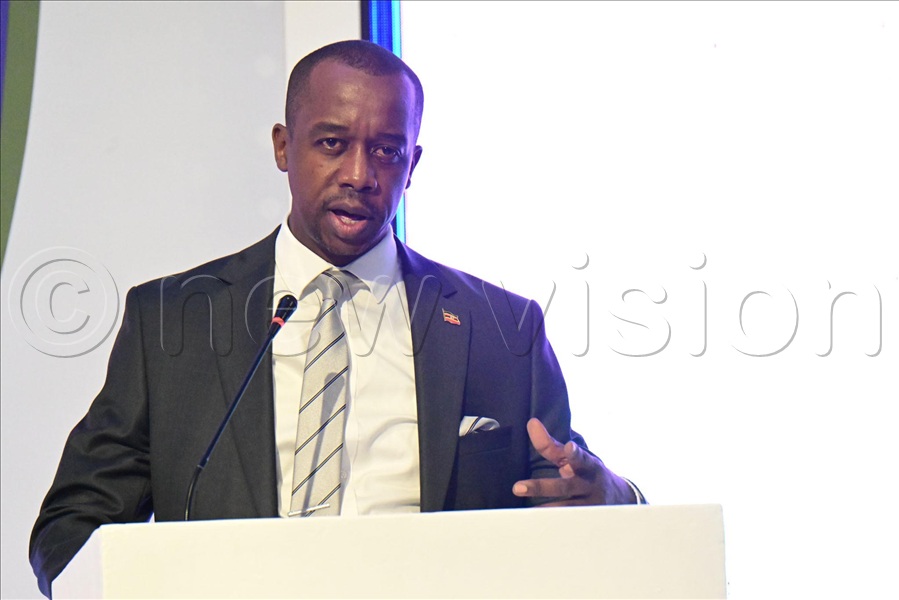
Charles Ayume MP Koboko Municipality and State minister for primary healthcare makes his remarks at the national immunization symposium at Serena Hotel in Kampala on June 25, 2026. (Credit: Maria Wamala)
"There are clauses in the Public Health Act that hold citizens accountable if they do not take their children for immunisation. Imprisonment and fines are provided for. For traditional vaccines such as BCG, polio, DPT and measles, immunisation is a must. It is not negotiable," said Ayume.
"We may have to invoke some of these clauses in the law. In those districts where parents are not taking their children for immunisation, we will arrest you. Why would you not take your children for vaccination?"
The symposium brought together policymakers, health workers, researchers, development partners and civil society groups under the theme 'Strengthening Partnerships, Innovations and Systems for Equitable Life-Course Immunisation'.
Ayume said Uganda has made significant progress in reducing childhood deaths through vaccination, but recent trends threaten to reverse some of those gains.
Dr. Michael Baganizi, the programmes manager of the Uganda National Expanded Programme on Immunisation (UNEPI), said the country has expanded from protecting children against six diseases in the late 1980s to 14 vaccine-preventable diseases today, including malaria, following the introduction of the malaria vaccine in 2025.
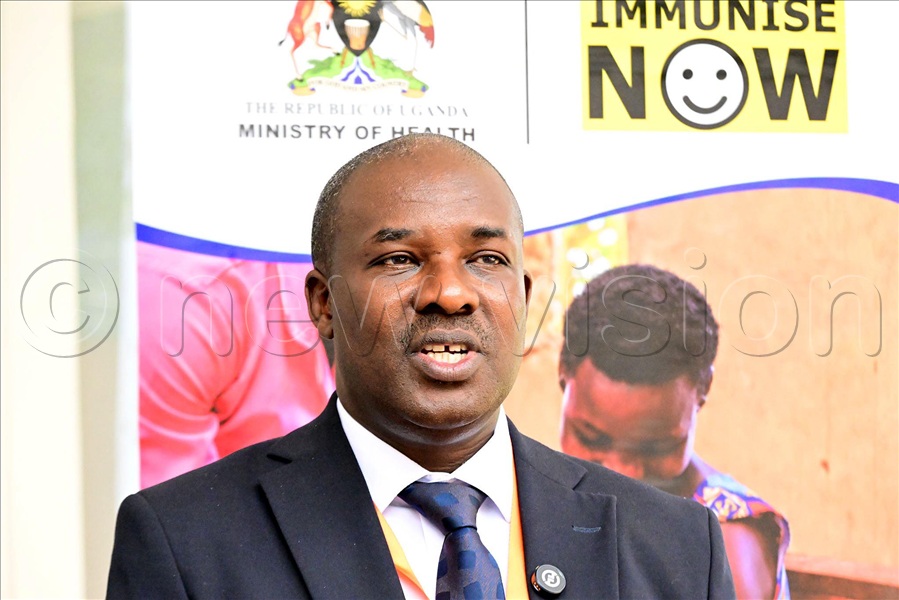
Dr. Micheal Baganizi, Program Manger Ministry of Health - Uganda National Expanded Program on Immunisation at the national immunization symposium at Serena Hotel in Kampala on June 25, 2026. (Credit: Maria Wamala)
Vaccines have helped eliminate or dramatically reduce illnesses that once killed thousands of Ugandan children every year, including polio, severe diarrhoea caused by rotavirus, pneumonia and measles.
"Polio disappeared. The lame children we used to see are no longer common. Severe measles deaths have greatly reduced. Pneumonia has reduced because of vaccination," said Baganizi.
However, he acknowledged that the immunisation programme is facing new challenges, particularly in ensuring that children complete all recommended doses.
One of the biggest concerns is the recently introduced malaria vaccine, which requires four doses administered at six months, seven months, eight months and 18 months.
But many mothers do not adhere to this schedule.
"When we introduced the malaria vaccine, there was a lot of enthusiasm. Mothers brought their children for the first dose, but as we moved to dose two, dose three and dose four, the numbers dropped," said Baganizi.
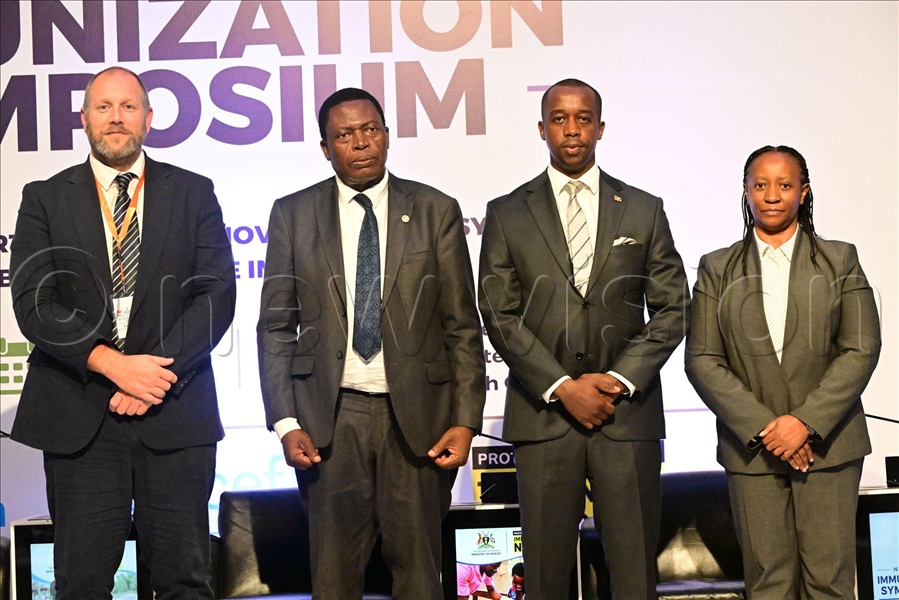
(L-R) Stefan Lawson Chief of Health at UNICEF Uganda, Prof. Charles Olaro Director General health services, Charles Ayume MP Koboko Municipality and State minister for primary healthcare and Dr. Kasonde Mwinga WHO Country Representative to Uganda share a group picture during the national immunization symposium at Serena Hotel in Kampala on June 25, 2026. (Credit: Maria Wamala)
"The main challenge is that mothers do not remember when to come back. They have to remember on their own and return to the health facility, but many fail to do so."
There has been a concern about recurring measles outbreaks that have been linked to missed vaccinations during and after the COVID-19 pandemic.
Uganda is planning a nationwide measles campaign in October targeting all children aged five years and below to close immunity gaps that have accumulated over the years.
"One of the things we saw is that some urban areas, including Kampala, have many zero-dose children. Refugee settlements also have many zero-dose children. That is very worrying," said Baganizi.
To address the challenge, minister Ayume proposed taking immunisation services closer to working mothers, particularly those operating in large markets. He said the health ministry is considering establishing clinic spaces in major markets to provide routine health services, including childhood immunisation.
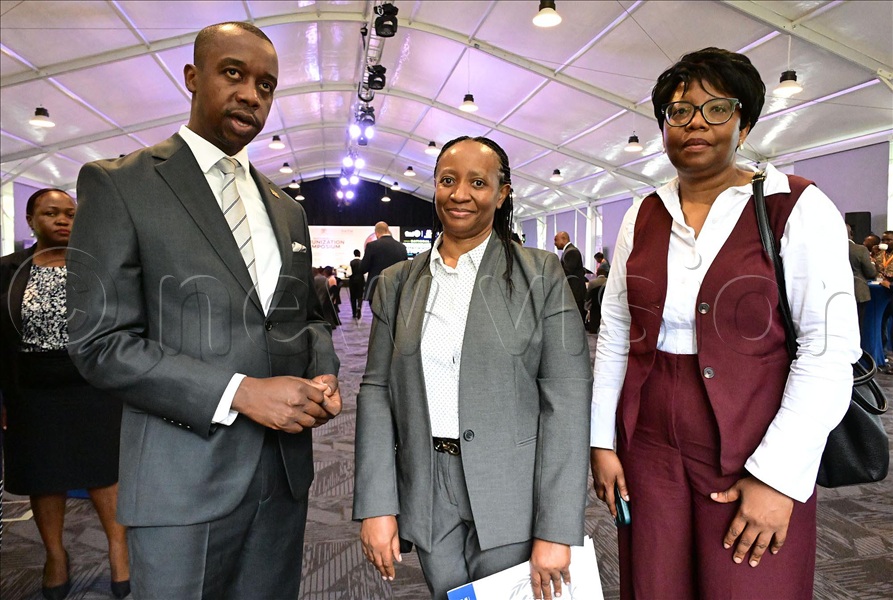
(L-R) Stefan Lawson Chief of Health at UNICEF Uganda, Prof. Charles Olaro Director General health services, Charles Ayume MP Koboko Municipality and State minister for primary healthcare and Dr. Kasonde Mwinga WHO Country Representative to Uganda share a group picture during the national immunization symposium at Serena Hotel in Kampala on June 25, 2026. (Credit: Maria Wamala)
The proposal is expected to be discussed with local governments and market authorities as part of efforts to improve vaccine access among hard-to-reach urban populations.
The World Health Organization (WHO) also used the symposium to call for urgent action to reach children who continue to miss vaccines.
WHO Country Representative Dr Kasonde Mwinga said immunisation remains one of the most cost-effective public health interventions, saving between four and five million lives globally every year.
Despite this, she noted that vaccine coverage across Africa remains below target levels.
According to WHO, an estimated 6.7 million children across the continent remain completely unvaccinated, while another 2.8 million are only partially protected.
"The zero-dose child represents not only a gap in coverage but also a vulnerability to outbreaks and preventable deaths," Mwinga said.
She warned that failure to invest adequately in immunisation could cost Uganda billions of dollars in future treatment costs and lost productivity.
Data showed that every dollar invested in immunisation between now and 2030 is projected to generate approximately $9.40 in economic and social benefits.