
Govt moves to strengthen inter-agency support for local drug manufacturers
“It is really unfortunate that we continue importing drugs when our own local manufacturers have ready-made products,” she said. “We need to sit together, realign ourselves and begin supporting our own.”
Minister of State for Economic Monitoring Sandra Alum (left) inspects one of the production lines at Dei BioPharma's manufacturing facility during a visit. (Courtesy photo)
Uganda's economic monitoring state minister Sandra Alum has called for a whole-of-government approach to eliminate bureaucratic bottlenecks and reduce the country’s reliance on imported pharmaceutical products by supporting local manufacturers that have the capacity to meet national demand.
Alum said it was unfortunate that government entities continued to import medicines despite the availability of quality locally produced alternatives.
She made the remarks on Thursday during a fact-finding visit by her ministry to Dei Pharma Industries in Matugga.
“It is really unfortunate that we continue importing drugs when our own local manufacturers have ready-made products,” she said.
“We need to sit together, realign ourselves and begin supporting our own.”
“This is not the first time we are discussing the lack of coordination among MDAs. I can assure you that within a short time, we shall have addressed this by ensuring all government entities work in a coordinated manner.”
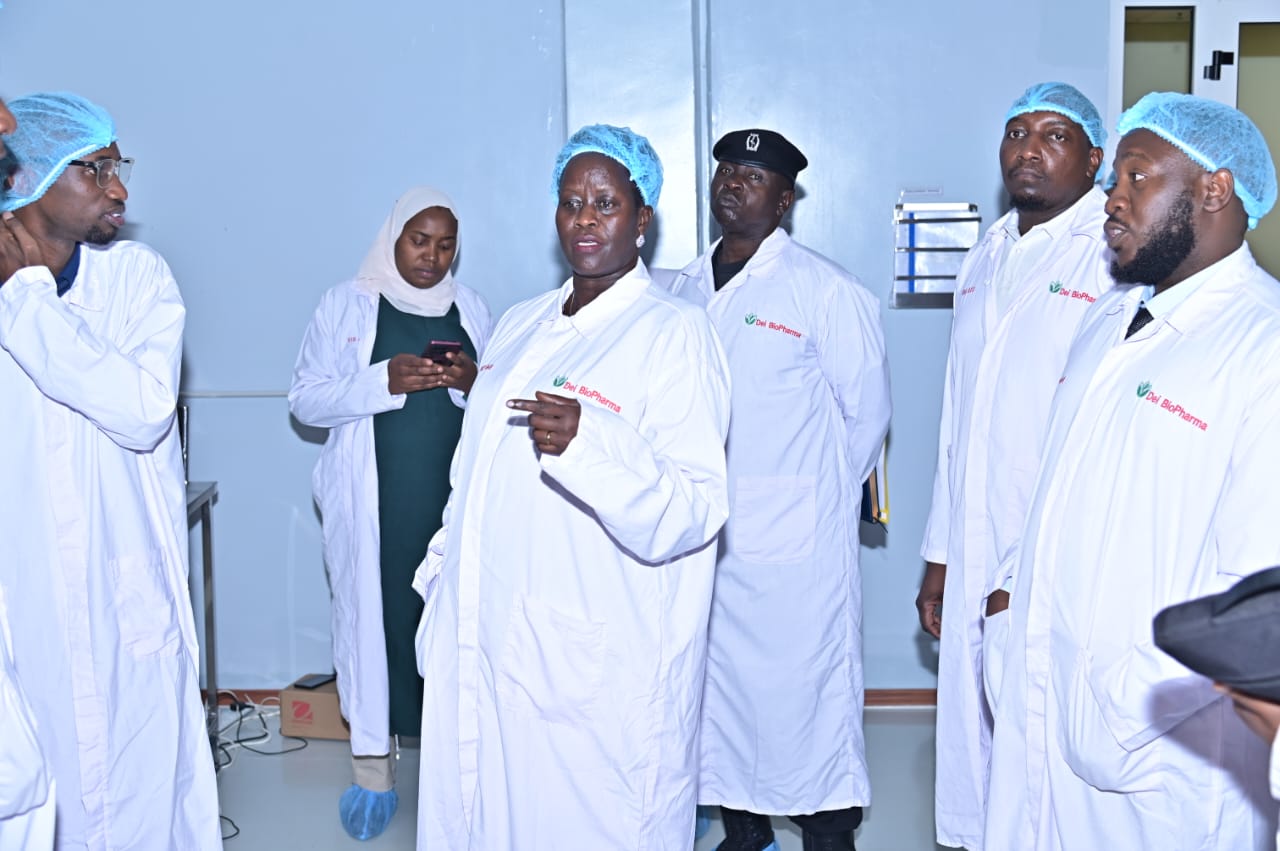
Minister of State for Economic Monitoring Sandra Alum (left) inspects one of the production lines at Dei BioPharma's manufacturing facility during a visit. (Courtesy photo)
Alum said giving local manufacturers priority in government procurement would strengthen the domestic market and position Ugandan firms to compete in the East African Community and other regional markets.
She also urged continued policy support for emerging industries, saying they should be nurtured until they become globally competitive.
Comparing Uganda’s industrialisation journey to a child learning to walk, Alum said local manufacturers should be encouraged rather than discouraged.
Dei Pharma chief executive officer Farouk Minawa said the company was investing in cutting-edge technologies, including mRNA vaccine production, an area in which no manufacturer currently operates on the African continent.
He dismissed suggestions that Uganda’s education system was to blame for the company’s decision to recruit some specialised expertise from abroad, saying the challenge lay in the rapid pace of technological advancement.
“There is no problem with the education system of Uganda,” said Minawa, explaining that universities cannot revise their curricula as quickly as new pharmaceutical technologies emerge.
“We cannot blame that on the education system because no one has been producing such drugs and vaccines.”
Minawa, however, praised Uganda’s higher education system for producing competent professionals to support conventional pharmaceutical manufacturing.
“If you talk of the normal medicines — the generic medicines, the tablets, the capsules, the ointments and the syrups — we really appreciate the education system of the country,” he said.