
Govt eyes tougher controls on unhealthy foods in schools and hospitals
Kyabayinze said breastfeeding remains an important component of early-life nutrition because it protects children against infections and different forms of malnutrition. However, health officials say protecting children from poor diets cannot stop at breastfeeding.
The Ministry of Health will need to clarify whether foods that fail the nutrient thresholds will eventually be prohibited from school canteens, whether advertising of such products around schools will be restricted and which government agencies will be responsible for enforcement.
The Ugandan government is considering tougher controls on the sale and promotion of processed foods high in sugar, salt and unhealthy fats in schools, hospitals and other public institutions to confront the growing burden of diet-related non-communicable diseases.
The proposed measures are being supported by a new National Nutrient Profile Model (NPM) revealed to the media at the Ministry of Health headquarters on Tuesday (August 11).
The model provides a scientific basis for identifying foods and drinks containing excessive levels of nutrients associated with poor health outcomes.
It will be used to guide decisions on the types of foods that should be sold, promoted or made available in settings where children and the wider public are routinely exposed to food products.
Dr Daniel Kyabayinze, the director of public health at the health ministry, said Uganda needs to move beyond telling individuals to make healthy choices and address the environments in which those choices are made.
Dr Laura Ahumuza (C) a senior nutritionist at the Ministry of Health.
“Breastfeeding is a national concern. It is not just about the mother and the child; the whole community has a role to play,” he said.
The ministry has linked the new nutrition approach to efforts to prevent diet-related diseases, including obesity, hypertension, diabetes and cardiovascular diseases.
The NPM will identify nutrients of public-health concern including free sugars, sodium, total fat, saturated fat, trans-fat and non-sugar sweeteners with caffeine also included among the criteria presented by nutrition stakeholders.
For liquids, the free-sugar threshold is at least 5% of total energy according to the ministry of health.
The push for stronger controls comes after a 2024 landscape survey found widespread levels of nutrients of concern in processed foods on the Ugandan market.
The survey found that 56% of processed foods assessed exceeded the sodium threshold, while 48% were high in free sugars and 46% exceeded the threshold for saturated fat. A further 38% of the products were high in total fat, while 8% exceeded the threshold for trans-fats.
Nutrition advocates said the findings point to an increasingly unhealthy food environment in which consumers, particularly children, can easily access products high in salt, sugar and unhealthy fats.
Nakiito Peace, an advocate and representative of the Centre for Food and Adequate Living Rights (CEFROHT) that advocates to promote social justice in food safety, health systems said the NPM is grounded in scientific and legal evidence and could provide the government with a basis for taking action against unhealthy food products.
The model is intended to help policymakers distinguish foods that pose greater public-health concerns and guide interventions aimed at reducing exposure to products high in sugar, salt and unhealthy fats.
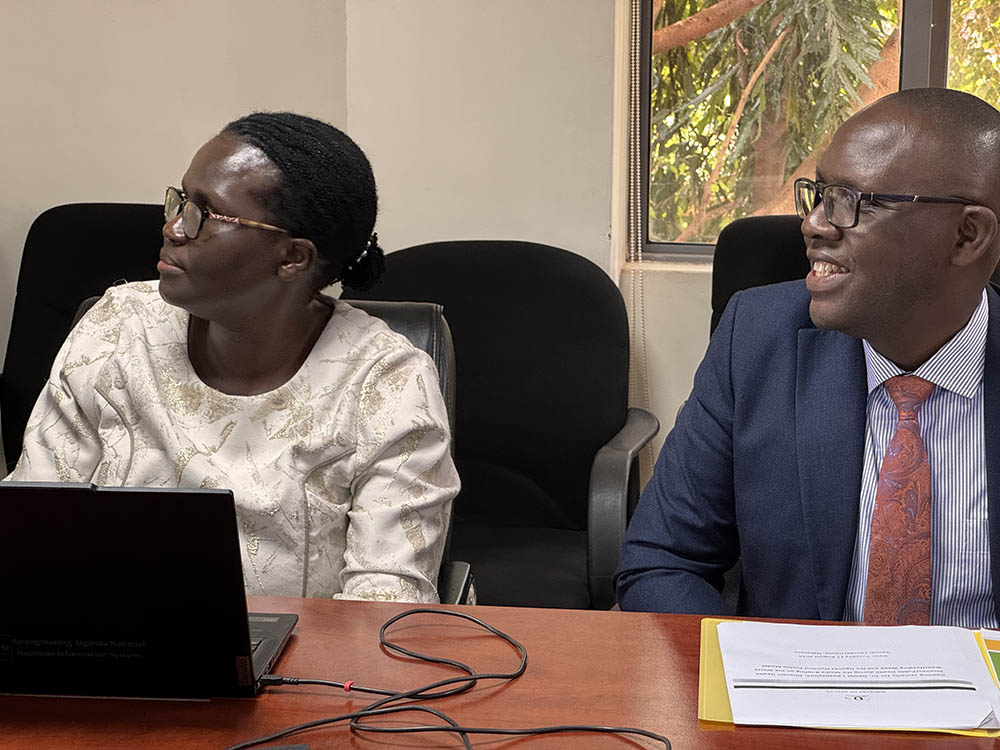
Dr Samalie Namukoze, the nutrition commissioner and Dr Daniel Kyabayinze, the Director of Health Services.
The Ministry of Health has linked the initiative to Uganda's broader efforts to address non-communicable diseases which are increasingly driven by unhealthy diets, physical inactivity and other lifestyle-related risk factors.
Experts said high consumption of sodium is associated with increased blood pressure and cardiovascular disease, while excessive intake of free sugars contributes to unhealthy weight gain, obesity and dental disease.
Diets high in saturated and trans-fats are also associated with increased cardiovascular risks.
He said the environment in which people live, work, study and access food has an important role in determining their health.
The ministry has also linked the new food policy approach to its wider nutrition agenda, including the Nutrition for All campaign, launched in April 2026 with a focus on improving nutrition during the first 1,000 days of life.
Kyabayinze said breastfeeding remains an important component of early-life nutrition because it protects children against infections and different forms of malnutrition. However, health officials say protecting children from poor diets cannot stop at breastfeeding.
According to Kyabayinze, as children grow, they are increasingly exposed to commercially produced foods, making the wider food environment an important determinant of their long-term health.
Dr Laura Ahumuza, a senior nutritionist at the ministry of health, said the government is also working to strengthen systems that support mothers and children, including workplace breastfeeding support.
According to the Ministry of Health, children can be exposed to sugary drinks, highly processed snacks and other foods high in salt, sugar and unhealthy fats through school canteens and vendors operating around learning institutions.
The proposed use of the nutrient profile model could therefore provide government with a basis for determining which products should be restricted or discouraged in such settings.
The Ministry of Health will need to clarify whether foods that fail the nutrient thresholds will eventually be prohibited from school canteens, whether advertising of such products around schools will be restricted and which government agencies will be responsible for enforcement.
Kyabayinze highlighted that hospitals and other health facilities are another setting where the emerging nutrition policy could have implications. Health facilities routinely advise patients to reduce their intake of salt, sugar and unhealthy fats, but some facilities also have canteens and vendors selling processed foods.
Nutrition advocates argued that public institutions should provide environments that reinforce, rather than undermine, health advice given to patients.